Trump Rejects Iran’s 7-Day Strait of Hormuz Plan
Trump Rejects Iran’s 7-Day Strait of Hormuz Plan — But New Talks Are Still Moving Through Mediators
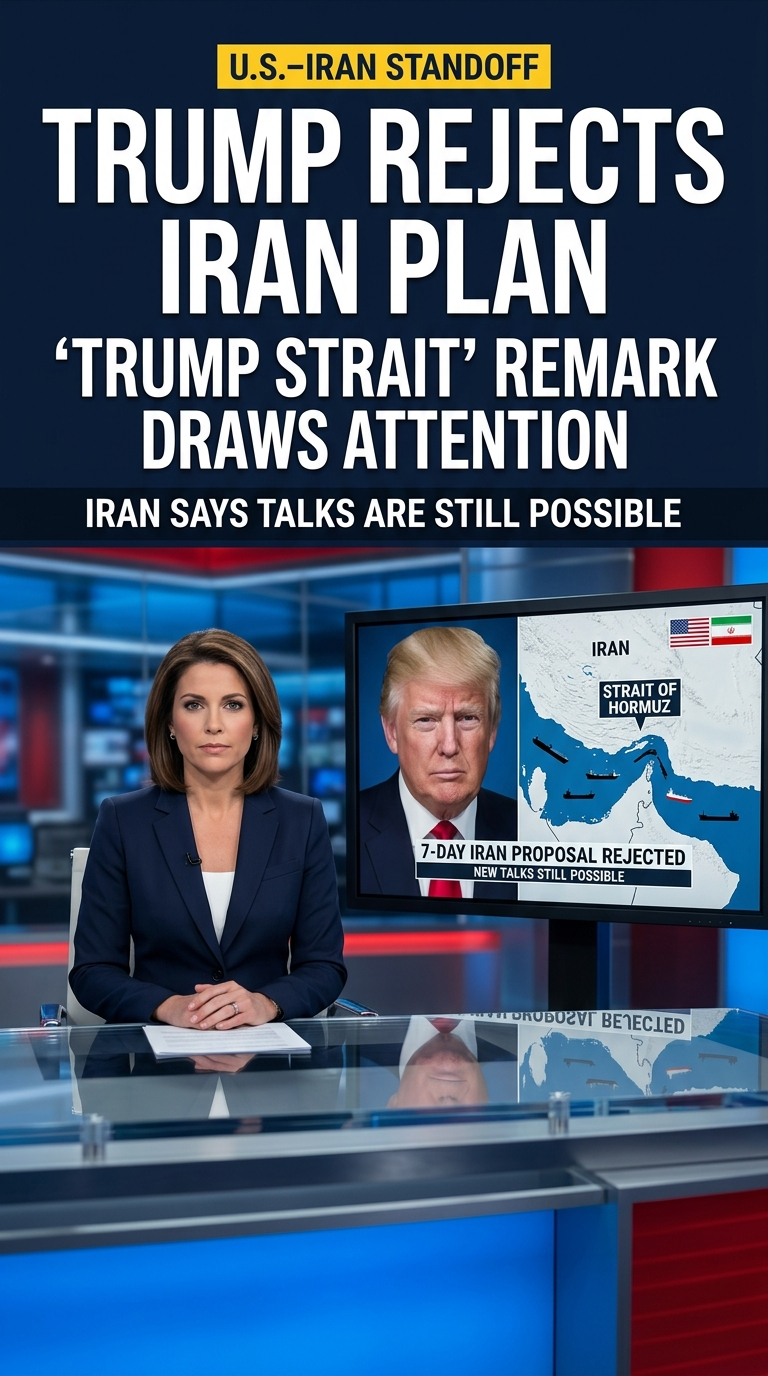
President Donald Trump has rejected Iran’s latest seven-day proposal to reopen the Strait of Hormuz and move toward a broader settlement, but the diplomatic channel between Washington and Tehran has not closed.
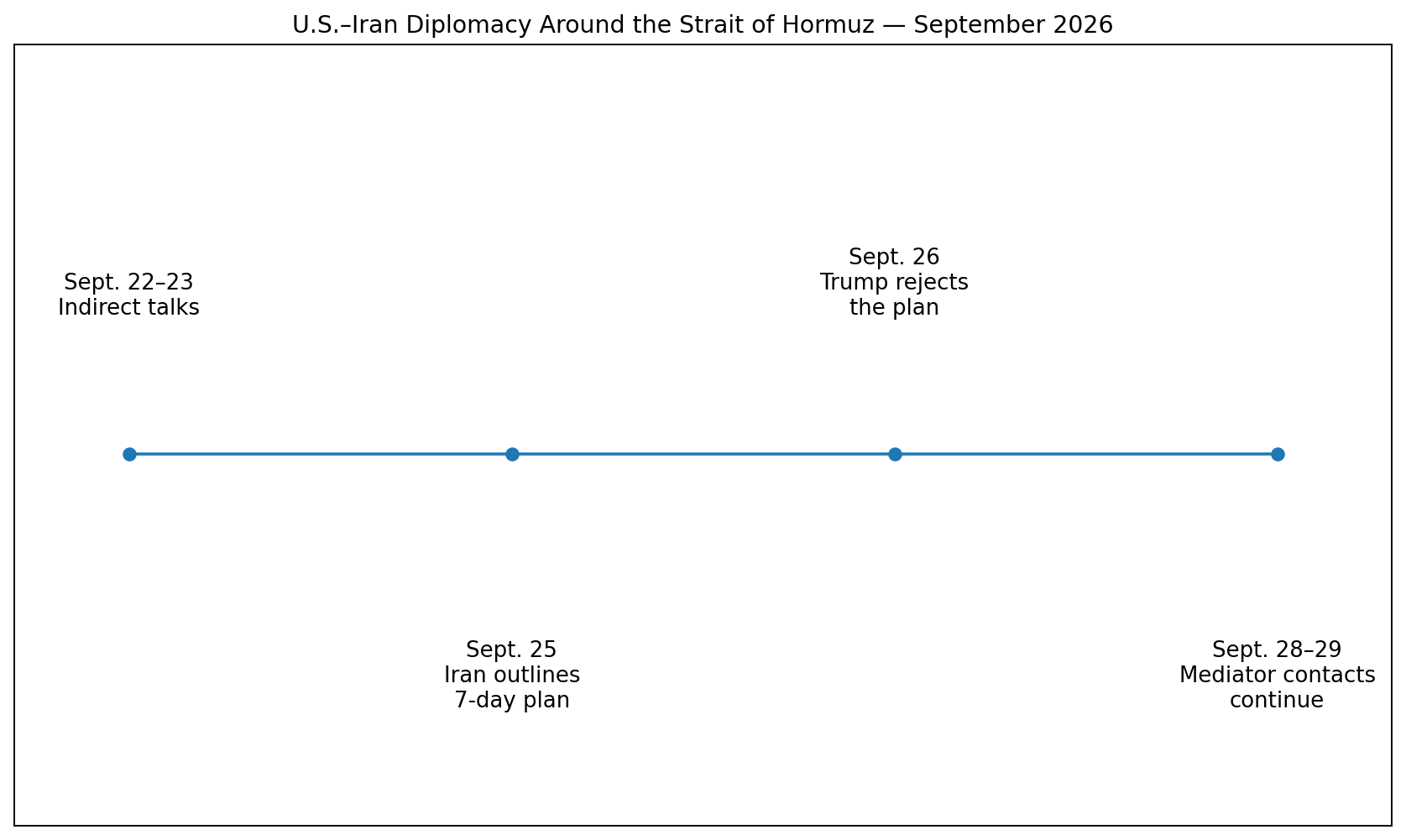
The proposal was presented during the United Nations General Assembly in New York and transmitted through mediators. Iran said the plan could reopen one of the world’s most important shipping routes within a week if the United States accepted a series of conditions.
Trump publicly dismissed the plan on September 26, saying the terms were not acceptable.
Yet within days, U.S. and Iranian officials were again speaking separately with mediators, and Iranian officials continued to say a negotiated solution was still possible.
That combination — rejection without a complete break in diplomacy — is the most important part of the story now.
What Iran Put on the Table
Iran’s proposal was built around a seven-day timetable.
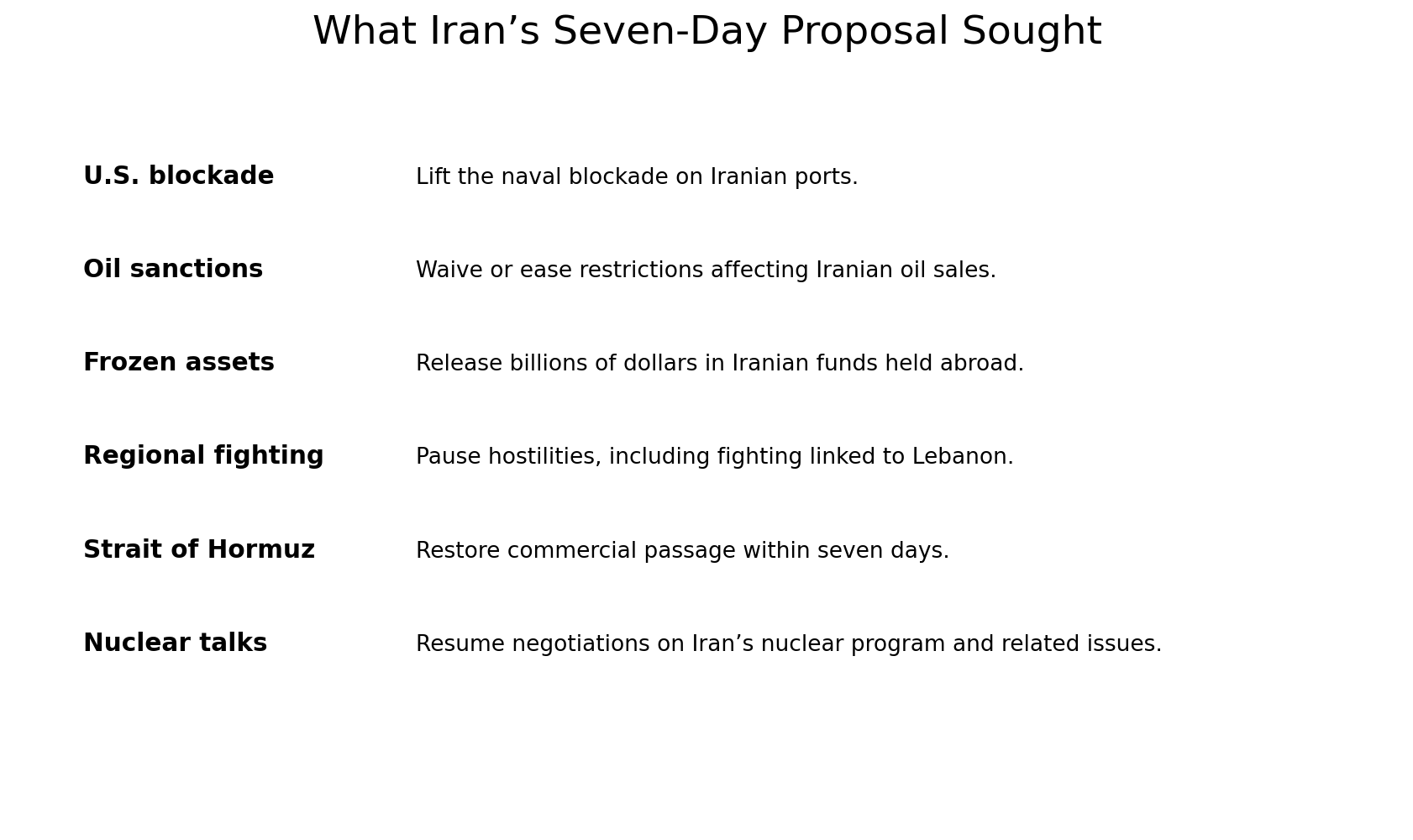
Foreign Minister Abbas Araghchi said Tehran was prepared to reopen the Strait of Hormuz and resume wider negotiations if Washington took several steps first.
Those conditions included lifting the U.S. naval blockade on Iranian ports, easing restrictions on Iranian oil sales, releasing frozen Iranian assets and agreeing to a halt in fighting that would extend beyond Iran itself.
The plan also envisioned renewed talks over Iran’s nuclear program and other disputed issues.
For Tehran, the proposal offered a path toward restoring oil exports and reducing economic pressure. For Washington, it would have meant giving up some of the tools the Trump administration has used to pressure Iran during the conflict.
Trump Rejected the Original Plan
Speaking to reporters outside the White House, Trump said he had rejected the proposal.
He argued that Iran was seeking a deal because of the economic pressure it was under and because Tehran wanted the Strait of Hormuz reopened quickly.
Trump also said he remained willing to make an agreement in principle, but not on the terms Iran had offered.
His comments did not amount to a rejection of diplomacy itself. They were a rejection of the specific package Iran had proposed.
The White House had already described earlier contacts with mediators as constructive, and Trump later indicated that additional discussions could take place.
The ‘Trump Strait’ Remark Added a Separate Flashpoint
The diplomatic dispute has been accompanied by unusually personal rhetoric over the Strait of Hormuz.
Before rejecting Iran’s seven-day plan, Trump posted an image on social media labeling the waterway the “Trump Strait.” He had used similar language earlier in September, suggesting that the strait should be renamed after him.
The name has no official international status. The waterway remains known internationally as the Strait of Hormuz, and no recognized renaming process has taken place.
Still, the phrase drew attention because it appeared at the same moment diplomats were trying to negotiate the future of the waterway.
Why the Strait of Hormuz Matters So Much
The Strait of Hormuz is one of the most strategically important waterways in the world.
It connects the Persian Gulf with the Gulf of Oman and the Arabian Sea, creating a narrow route used by major oil- and gas-exporting countries in the region.
Disruption there quickly affects global energy markets. The current conflict has sharply reduced normal shipping through the waterway and forced commercial operators to weigh new security risks.
Iran relies heavily on energy exports for revenue. The United States, meanwhile, faces the broader economic consequences of higher oil prices and disrupted shipping.
The strait is therefore both a military pressure point and a bargaining tool in negotiations.
Mediators Have Kept the Channel Open
After Trump rejected the original proposal, mediators continued working between the two sides.
U.S. and Iranian officials held separate contacts with mediators on September 28, and officials familiar with the process said any new discussions were expected to focus on a modified version of Iran’s seven-day plan.
Iran has continued to say that reopening the strait is possible if its conditions are addressed. Washington has continued to insist that Iran make meaningful concessions, particularly on its nuclear program.
Neither side has announced a final compromise.
That means the current diplomacy is still indirect and conditional.
Trump Says He Offered Iran ‘Nothing’
Another layer of confusion emerged on September 29 when Trump denied reports that he was prepared to offer sanctions relief or the release of frozen Iranian funds in exchange for progress on nuclear issues.
In a social media post, Trump said he had offered Iran “nothing.”
The denial came after media reports citing unnamed U.S. officials described possible economic incentives Washington might consider as part of a broader deal.
Iran, meanwhile, continued to say that diplomacy was the only realistic way to end the conflict.
The gap between those public positions shows how far apart the two sides still appear to be.
Iran Says Talks Are Still Possible
Iranian President Masoud Pezeshkian has said Tehran is prepared to negotiate over its nuclear program and other issues but will not accept what he describes as coercion.
Iran continues to deny that it seeks nuclear weapons and says it has a right to a civilian nuclear program.
The United States has made preventing Iran from obtaining a nuclear weapon one of its central objectives.
That issue remains linked to the Strait of Hormuz talks because Washington wants any broader settlement to include nuclear restrictions or verifiable steps by Tehran.
Iran, in turn, wants sanctions relief and an end to military pressure before it gives up leverage.
The Economic Pressure Is Growing on Both Sides
The seven-month conflict has placed significant pressure on the regional and global economy.
Oil prices have remained elevated as markets react to the risk of prolonged disruption through the Strait of Hormuz and other regional shipping routes.
Iran has faced severe economic strain from sanctions, the blockade and reduced energy exports.
The United States and its allies face a different kind of pressure: higher energy prices, shipping costs and the possibility that the conflict spreads further across the Middle East.
That creates a reason for both sides to keep talking even when political rhetoric suggests otherwise.
Why This Round of Talks Is Different
The current proposal is not the first effort to end the fighting.
Earlier mediated ceasefires and agreements have broken down, leaving both sides openly distrustful of each other.
What makes the latest Iranian proposal different is the compressed timetable.
Tehran said the strait could be reopened within seven days if the United States met its conditions.
That would offer an immediate economic benefit while pushing the more difficult nuclear negotiations into a later phase. Trump rejected that sequencing.
What Happens Next
The next phase will depend on whether mediators can turn the rejected seven-day plan into a package both sides are willing to discuss.
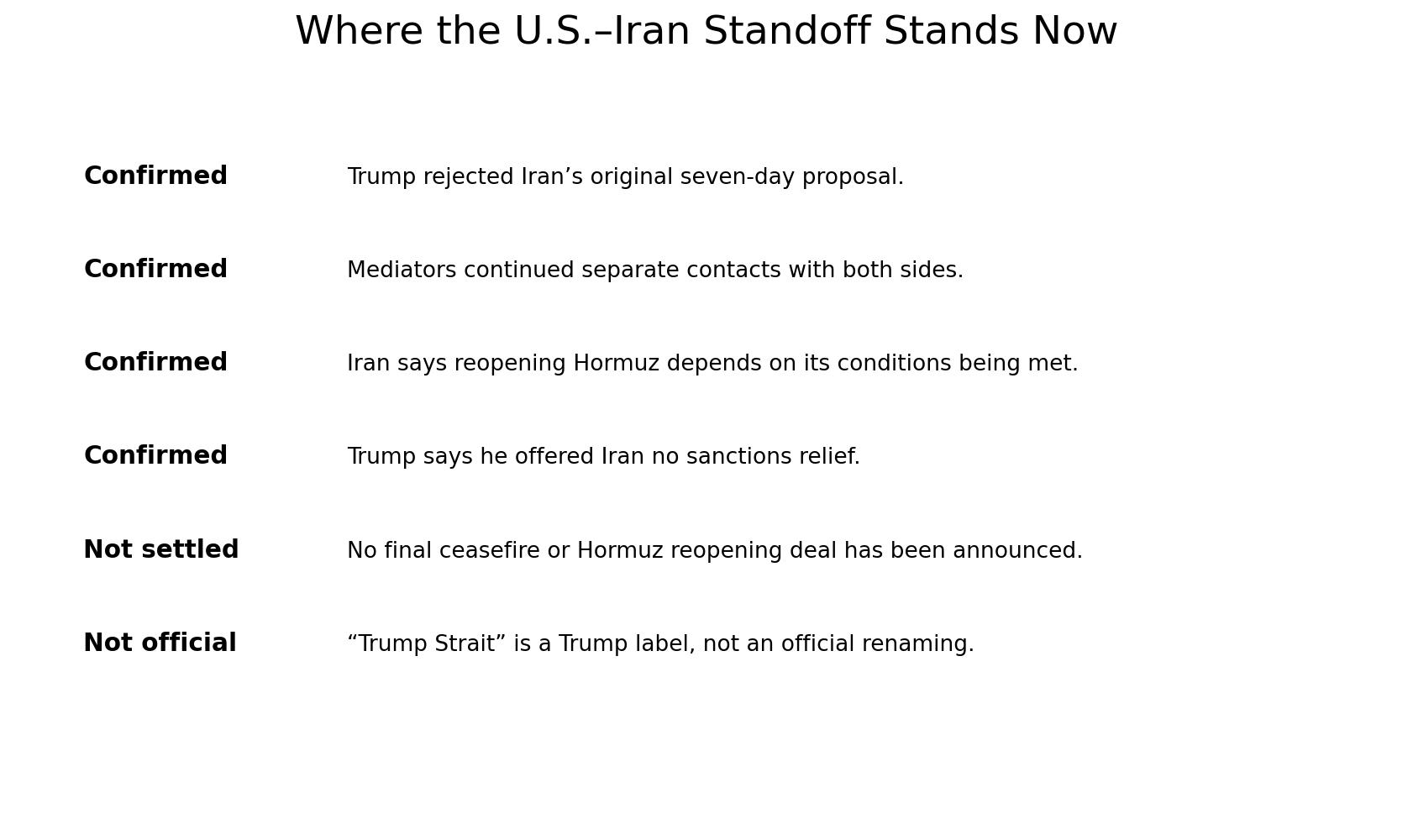
No agreement to reopen the Strait of Hormuz has been announced. No new ceasefire has been finalized. And there is no official change to the name of the waterway despite Trump’s “Trump Strait” posts.
What is confirmed is that the original Iranian plan was rejected and that diplomatic contacts continued afterward.
That leaves the United States and Iran in an unusual position: they remain locked in a military and economic confrontation, yet neither side has completely abandoned negotiations.
The central question is whether mediators can produce a second version that gives each side enough to keep talking without requiring either government to publicly retreat from its core demands.
Comments (0)
Loading comments...
May You Like

South Korea–Ukraine Rift Deepens Over North Korean POW Transfer as PURL Draws New Scrutiny

South Korea–Ukraine Rift Deepens Over North Korean POW Transfer as PURL Draws New Scrutiny

OBAMA STUNS ON INSTAGRAM: MESSAGE MARKING 34-YEAR MILESTONE SPARKS A BUZZ