Trump Revives His Controversial Immigration Remarks as Ilhan Omar Remains a Political Target
President Donald Trump's controversial remarks about immigration and the countries from which people come to the United States continue to attract attention, particularly because of his long-running political confrontation with Democratic Representative Ilhan Omar of Minnesota.
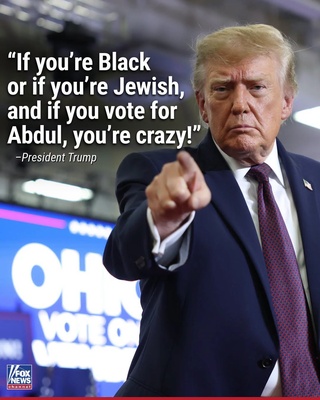
A widely circulated image features Trump speaking into a microphone alongside a quotation questioning why the United States accepts immigrants from countries he disparages rather than from wealthier nations. The graphic connects the remarks to Omar, one of the president's most prominent congressional critics.
The quotation echoes comments Trump made during a December 2025 speech in Pennsylvania. The remarks attracted criticism for describing certain countries in derogatory terms and suggesting that immigration from more prosperous nations would be preferable.

Trump's statements revived a debate that has followed his political career for years: whether immigration policy should primarily emphasize economic selection, border enforcement, humanitarian protection, or some combination of these priorities.
The president has consistently argued that the United States should prioritize immigration policies that benefit American citizens and strengthen national security. His supporters view stricter entry requirements as a legitimate exercise of the federal government's responsibility to control immigration.
Critics argue that evaluating immigrants through sweeping judgments about their countries of origin risks reinforcing prejudice and overlooking the contributions of people who arrive from economically disadvantaged or politically unstable nations.
Omar has become a central figure in this debate because her personal history reflects the experiences of refugees who eventually become American citizens and participate in public life.

Born in Somalia, Omar fled the country's civil war with her family and spent several years in a refugee camp in Kenya before resettling in the United States.
She later became a U.S. citizen and entered politics in Minnesota, eventually winning election to the House of Representatives in 2018.
Her election was historically significant. Omar became one of the first two Muslim women elected to Congress, alongside Michigan Representative Rashida Tlaib.
Her political career has focused on issues including immigration, healthcare, housing, foreign policy, and civil rights. She has also been a frequent critic of Trump's rhetoric and immigration policies.
The confrontation intensified during Trump's December 9, 2025, appearance in Mount Pocono, Pennsylvania. While discussing immigration, he recalled a private White House meeting from 2018 in which he had questioned why the United States accepted immigrants from countries he considered undesirable.
Trump also suggested that the United States should welcome more immigrants from Norway, Sweden, and Denmark. His comments prompted renewed discussion of the controversial language attributed to him during his first presidency.

The Pennsylvania remarks were especially significant because Trump had previously disputed reports about his language during the 2018 meeting. His later account appeared to confirm the substance of those reports.
Trump also singled out Omar during the speech, criticizing her political views and questioning her attitude toward the United States.
Omar responded by condemning the president's rhetoric. She argued that his repeated attacks were distracting from economic issues affecting American families.
The dispute returned to national attention on October 20, 2026, when Trump spoke to reporters in the Oval Office about Omar and renewed his criticism of Somalia.
During that exchange, Trump suggested that Omar could face imprisonment or deportation, although he did not present a court ruling establishing that she had committed a crime.

The remarks raised questions about the distinction between political criticism and legal accountability. Allegations against an elected official do not establish wrongdoing, and any criminal prosecution would require evidence and appropriate legal proceedings.
Omar's status as a naturalized American citizen is also important. Naturalized citizens possess constitutional rights, and the government cannot revoke citizenship or deport someone merely because the president disagrees with that person's political positions.
The controversy has broader implications for Somali American communities, particularly in Minnesota, where many families have established businesses, entered professional careers, and participated in local government.

Supporters of Trump's immigration agenda argue that the government has a responsibility to enforce immigration laws, investigate fraud, and establish clear requirements for admission to the United States.
Opponents counter that those objectives can be pursued without disparaging entire nationalities or suggesting that immigrants from certain countries are inherently less desirable.
The argument also raises a fundamental question about American identity. The country's immigration system has historically combined economic priorities, family reunification, humanitarian protections, and national security considerations.
Comments (0)
Loading comments...
May You Like
Latest Posts

Popular Posts