
Trump Revives Obama-Era Iran Claims — But the Viral Story Leaves Out Key Facts
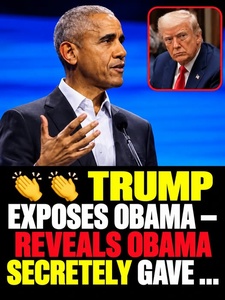
President Donald Trump is again attacking Barack Obama’s Iran policy, reviving a political dispute over frozen assets, the nuclear agreement and claims that have circulated online for years.
WASHINGTON — President Donald Trump has renewed his criticism of former President Barack Obama over Iran, arguing that decisions made during the Obama administration provided Tehran with resources that strengthened the Iranian government.
Trump has repeatedly returned to the issue during his second term, contrasting his own Iran strategy with the diplomatic approach pursued by Obama and then-Vice President Joe Biden.
During a July 2026 Fox interview, Trump specifically highlighted the $1.7 billion cash settlement delivered to Iran in 2016, portraying the transaction as an example of Obama empowering Tehran.
The payment itself was real, but its history is more complicated than many political posts suggest. It concerned a decades-old dispute over Iranian money paid for military equipment before the 1979 revolution.
The Obama administration announced a $1.7 billion settlement consisting of approximately $400 million in principal plus roughly $1.3 billion in interest connected to that unresolved pre-revolutionary arms dispute.
Trump has frequently described that episode as Obama simply giving American money to Iran, while critics of that characterization emphasize that the settlement resolved an existing financial claim rather than creating an unrestricted foreign-aid program.
The dispute became politically explosive because the initial $400 million payment occurred around the same period that Iran released several American prisoners, prompting accusations that Washington had effectively paid ransom.
Obama administration officials rejected that characterization, saying the settlement and prisoner negotiations were separate matters even though officials acknowledged using timing surrounding the payment as leverage to ensure Americans were released.
The larger controversy surrounds the 2015 Joint Comprehensive Plan of Action, commonly called the Iran nuclear deal, negotiated between Iran, the United States and several other world powers.
Under that agreement, Iran accepted restrictions on its nuclear program and international monitoring in exchange for sanctions relief and renewed access to some assets that had previously been frozen.
Trump strongly opposed the agreement and withdrew the United States from it in 2018, arguing that its restrictions were insufficient and that sanctions relief provided Iran with economic resources.
Obama has defended the agreement, arguing that international inspections and restrictions provided a diplomatic mechanism for limiting Iran’s nuclear capabilities without immediately resorting to military confrontation.
The disagreement has returned to prominence during Trump’s second presidency as Iran again became a central foreign-policy issue and Trump repeatedly contrasted his strategy with decisions made under Obama.
But social-media accounts have also attached substantially more dramatic claims to that history, including allegations that Obama secretly granted thousands of Iranians American citizenship as part of the nuclear agreement.
One widely circulated version claimed the Obama administration “secretly gave citizenship to 2,500 Iranians as part of [the] nuke deal.” That allegation circulated widely online during Trump’s first presidency.
PolitiFact investigated the claim in 2018 and rated it false, finding no evidence demonstrating that Obama secretly granted citizenship to 2,500 Iranians in exchange for the nuclear agreement.
The allegation originated with comments attributed to Iranian politician Hojjat al-Islam Mojtaba Zolnour, who claimed senior Iranian officials ha
But the underlying allegation was never substantiated with records establishing that the Obama administration actually carried out a secret mass-citizenship arrangement connected to the JCPOA.
That distinction matters when evaluating graphics such as the one circulating now. The words “Trump exposes Obama — reveals Obama secretly gave...” do not themselves identify a verified government record or documented presidential action.
There is another reason Trump–Obama “secret files” headlines are currently receiving attention: the Trump administration has released several batches of declassified intelligence material concerning investigations conducted during and after the 2016 election.
In August, the White House publicized newly declassified FBI records concerning an investigation opened after Trump fired FBI Director James Comey in May 2017.
Those records show investigators examined whether Trump’s firing of Comey could be connected to activity benefiting Russia, an inquiry Trump and his allies have portrayed as evidence of misconduct by federal officials.
Separately, the Office of the Director of National Intelligence released material in 2025 challenging aspects of the intelligence process used to assess Russian interference surrounding the 2016 election.
The Trump administration has characterized those documents in highly accusatory terms toward Obama-era officials. Those descriptions represent the administration’s interpretation and should be distinguished from independently established criminal findings.
A similar distinction emerged this summer when Trump presented newly declassified election-related records as supporting his longstanding claims concerning the 2020 presidential election.
The Associated Press reviewed those materials and reported that they did not establish Trump’s claims of widespread election fraud, despite the president presenting them as evidence of serious wrongdoing.
That episode illustrates why declassified documents require examination of what the records actually say rather than relying solely on political descriptions offered by either Trump’s administration or its opponents.
The same standard applies to Obama. A document showing an administration discussed an issue does not automatically establish criminal conduct, corruption or a secret presidential order.
It also applies to Trump: disagreement with Obama’s Iran policy does not establish that the former president secretly transferred citizenship, taxpayer money or other benefits unless documentary evidence supports the specific allegation.
Trump’s criticism of Obama’s Iran policy nevertheless rests on genuine policy differences. He argues sanctions relief and financial settlements strengthened Tehran, while defenders of diplomacy emphasize the nuclear restrictions obtained in return.
Those competing interpretations have shaped American foreign policy for more than a decade, with successive administrations repeatedly changing sanctions, diplomacy and military strategy toward Iran.
The viral graphic turns that complicated history into a mystery sentence: “Obama secretly gave...” Without the missing words and supporting source, however, it cannot establish what alleged revelation the publisher intended.
What the public record does establish is narrower: Obama reached a nuclear agreement with Iran, his administration settled a longstanding $1.7 billion financial dispute, and Trump has repeatedly condemned both decisions.
What the evidence does not establish is the viral claim that Obama secretly granted U.S. citizenship to 2,500 Iranians as part of the nuclear agreement. That allegation has circulated for years without supporting evidence.
The Trump–Obama dispute over Iran therefore remains a legitimate major policy story, but sensational claims about secret benefits require evidence beyond a cropped social-media graphic.
Comments (0)
Loading comments...
May You Like

Obama Steps Back Into the Political Spotlight as Democrats Target Trump’s Senate Majority

FIGHT OVER OBAMA’S IRAN POLICY
Jack Smith Defends His Integrity as Trump Investigations Face Renewed Political Firestorm













