
TRUMP SAYS "DUMBASSES, DUMP BITCH" TO MANILA FLAG-BURNING PROTESTERS NEAR THE PRESIDENTIAL PALACE!
American Flags Burn Near Manila Palace as Trump Visit Fuels Protests, Arrests and Political Tensions
MANILA, Philippines — November 19, 2026 — Protesters burned American flags and confronted police barricades near the Philippine presidential palace on Wednesday as President Donald Trump met President Ferdinand Marcos Jr., bringing disagreements over U.S. foreign policy, economic development and civil liberties into the streets of Manila.
The November 18 demonstrations unfolded near Recto Avenue and the route toward Mendiola, a traditional site of political protests close to Malacañang Palace.
Organizers said more than 2,000 people participated in the march, which police prevented from reaching its intended destination.
The flag burning was documented by local television reporters and international news photographers. The demonstrations followed several days of unrest during which human rights organizations reported hundreds of arrests.
The dispute centered on Trump's visit, the proposed U.S.-led Pax Silica technology initiative, concerns about Indigenous communities and opposition to American military policies.
The demonstrations also produced a question about Trump's response. While the president's visit and the flag burning were widely documented, the published accounts reviewed did not establish that he directed the insults circulating in the headline at protesters.
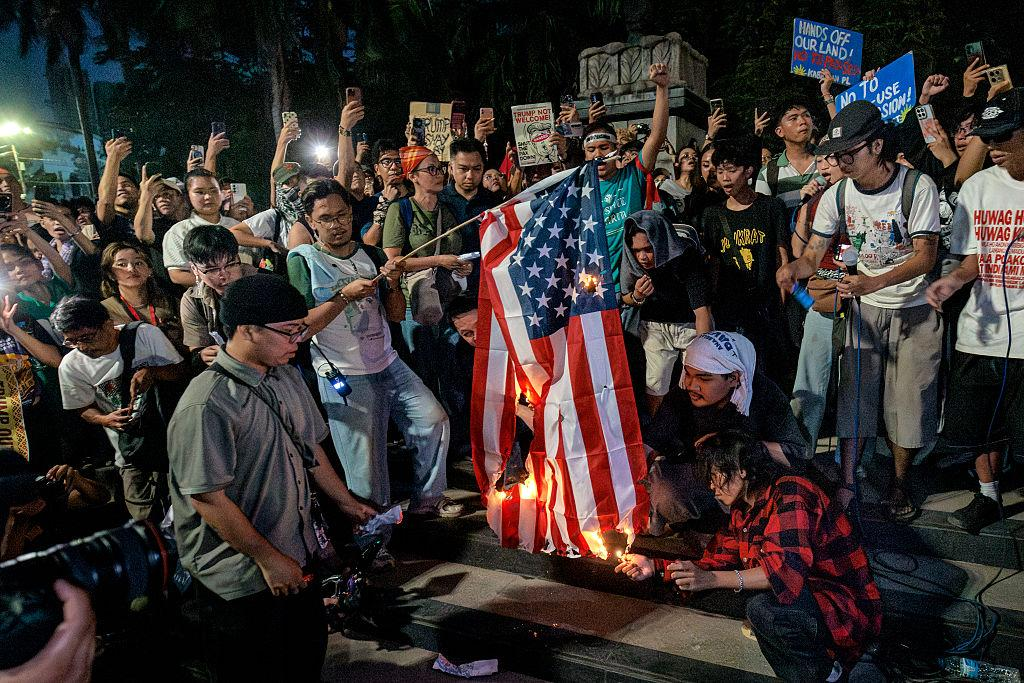
The protest took place as Trump visited the Philippine presidential palace for talks with Marcos.
Inside the official venue, the two leaders were participating in a diplomatic program involving trade, security and bilateral cooperation.
Outside, demonstrators carried placards criticizing the U.S. government and the Philippine administration.
GMA News reported that protesters marched from the Morayta area toward Mendiola.
They encountered a police barricade at San Sebastian Street along Recto Avenue.
The barriers prevented the crowd from reaching the palace approach.
Protesters then held a program on the road.
BAYAN Secretary-General Raymond Palatino described the march as successful despite the restrictions imposed by police.
The events created a sharp contrast between the official welcome for Trump and the opposition expressed by organizations protesting his policies.
The burning of American flags became the defining image of the November 18 demonstration.
Palatino told GMA News that protesters burned a U.S. flag as Trump arrived at Malacañang.
Photographs showed the flag burning on a roadway while demonstrators gathered behind police barricades.
The act was intended as a political symbol.
Organizers used it to express opposition to American foreign policy and what they described as U.S. interference in Philippine affairs.
It was a protest carried out by participating individuals and organizations.
The distinction matters because the event occurred during an official visit in which the Philippine government continued to welcome the American president.
The immediate trigger was Trump's presence in Manila during the regional diplomatic meetings.
But the underlying disagreements were broader.
Protesters opposed the proposed Pax Silica initiative, a U.S.-led effort to strengthen advanced technology supply chains.
They also criticized American military policy, the effects of international conflicts on energy prices and the treatment of communities near a proposed industrial development site.
The Philippine government viewed the visit as an opportunity to strengthen diplomatic and economic cooperation.
The demonstrators challenged that approach.
Police sought to maintain a security perimeter around the visiting president and official venues.
The resulting confrontation was therefore about more than a march toward a government building.
It reflected disagreements over foreign policy, economic priorities and the boundaries of public protest.
Security authorities placed barriers along routes leading toward Malacañang.
Local reporting described container vans, concrete barriers and concertina wire.
Police also closed or restricted access to certain roads.
The measures were part of a larger security operation surrounding the ASEAN summit and the visits of foreign leaders.
Associated Press reported that nearly 23,000 security personnel had been deployed during the summit period.
The large operation reflected the presence of multiple heads of government and diplomatic delegations.
Protest organizers criticized the restrictions.
Palatino accused police of using excessive security measures to prevent demonstrators from expressing opposition near the palace.
Police had responsibility for maintaining public order and protecting visiting officials.
The competing positions raised questions about whether the restrictions were proportionate to the security requirements.
Despite the barricades, demonstrators continued their protest along Recto Avenue.
They carried banners criticizing Trump's visit and calling for the rejection of Pax Silica.
Some chanted slogans opposing American military influence.
Others called for the release of people detained during earlier demonstrations.
The crowd did not reach Mendiola.
DZRH reported that the November 18 protest along Recto Avenue ended peacefully after demonstrators held their program.
Before leaving, some participants wrote protest messages in chalk along the road.
That account is important because it distinguishes the Wednesday march from earlier incidents involving confrontations and arrests.
The broader protest movement experienced several different encounters with police.
Not every demonstration followed the same course.
The flag burning and the peaceful conclusion of the Recto Avenue march can both be part of an accurate account.
Trump made public remarks during his Manila visit, including comments at the presidential palace.
His diplomatic appearances received coverage from international news organizations.
However, the accounts reviewed do not contain a verified statement in which Trump used the two quoted insults against the Manila demonstrators.
The absence of an authenticated recording or reliable transcript matters because a direct quotation makes a specific claim about a person's words.
Such a claim requires more than a social media caption or an unattributed video clip.
The documented political confrontation did not depend on those alleged remarks.
Protesters were already opposing the visit before Trump arrived at the palace.
The demonstrations were organized around identifiable political and economic grievances, rather than a confirmed exchange of insults between the president and the crowd.
The November 18 march was the culmination of several days of demonstrations.
Human Rights Watch reported that protests began on November 15, with opposition to the proposed Pax Silica industrial hub among the central issues.
Activists also staged rallies during the ASEAN summit.
Some demonstrations featured banners, performances and symbolic displays criticizing Trump.
On November 17, GMA News reported that an artist collective displayed an effigy depicting the American president in a coffin.
The group said the installation represented opposition to U.S. policies.
Such imagery reflected the demonstrators' political message.
It did not establish a threat against the president or an intention shared by every participant.
The demonstrations involved students, labor organizations, farmers, Indigenous representatives and other activist groups.
Human Rights Watch reported on November 18 that Philippine police had arrested or detained at least 245 people during demonstrations associated with Trump's visit and the ASEAN summit.
The organization estimated that approximately 6,000 people participated in the wider protest movement.
That estimate covered multiple events, not solely the march near Malacañang.
The rights organization questioned the grounds for mass arrests and urged authorities to release anyone detained only for peaceful protest.
The reported detentions became another grievance for demonstrators.
Activists began demanding not only changes to government policy but also the release of people arrested during earlier rallies.
The police response consequently became part of the political controversy.
The Philippine Commission on Human Rights raised concerns about reports involving minors and injuries during the summit protests.
GMA News reported that 11 people, including one minor, were arrested in Manila during one confrontation.
More than 200 others were detained at Camp Bagong Diwa following arrests connected to demonstrations in Muntinlupa.
Activists alleged that minors were among those detained.
The commission called attention to the need to protect the rights of protesters, particularly children.
The reported circumstances of the arrests required separate examination.
Being present at a demonstration does not establish that a person committed a criminal offense.
Likewise, the existence of a protest does not eliminate police authority to respond to specific unlawful conduct.
One of the most significant developments came on the evening of November 18.
News5 reported that prosecutors in Muntinlupa City had ordered the release of more than 200 people arrested during the earlier demonstrations.
The report cited lawyers working with the human rights group Defend Southern Tagalog.
According to the group's spokesperson, the release order was issued pending further investigation of the cases.
That development provided a concrete answer to one of the immediate questions raised by protesters.
It did not mean every case had been permanently dismissed.
A release pending investigation is different from a final judicial ruling.
Nevertheless, the decision changed the situation for a substantial number of detainees and demonstrated that the legal consequences of the protest arrests were still developing.
The arrests prompted criticism from human rights organizations and religious figures.
Human Rights Watch urged Philippine authorities to respect freedom of assembly.
Filipino Catholic leaders also criticized the reported detention and treatment of protesters.
Their concerns included the arrest of students and allegations of harassment.
The government and police faced responsibility for maintaining security during an international diplomatic gathering.
However, public-order responsibilities must be balanced against the rights of individuals to express political disagreement.
The legal assessment depends on the circumstances of particular arrests and the conduct involved.
A large protest can include peaceful participants as well as isolated confrontations.
Treating all participants as responsible for the actions of a few would obscure those distinctions.
The public debate therefore focused increasingly on the proportionality of police measures.
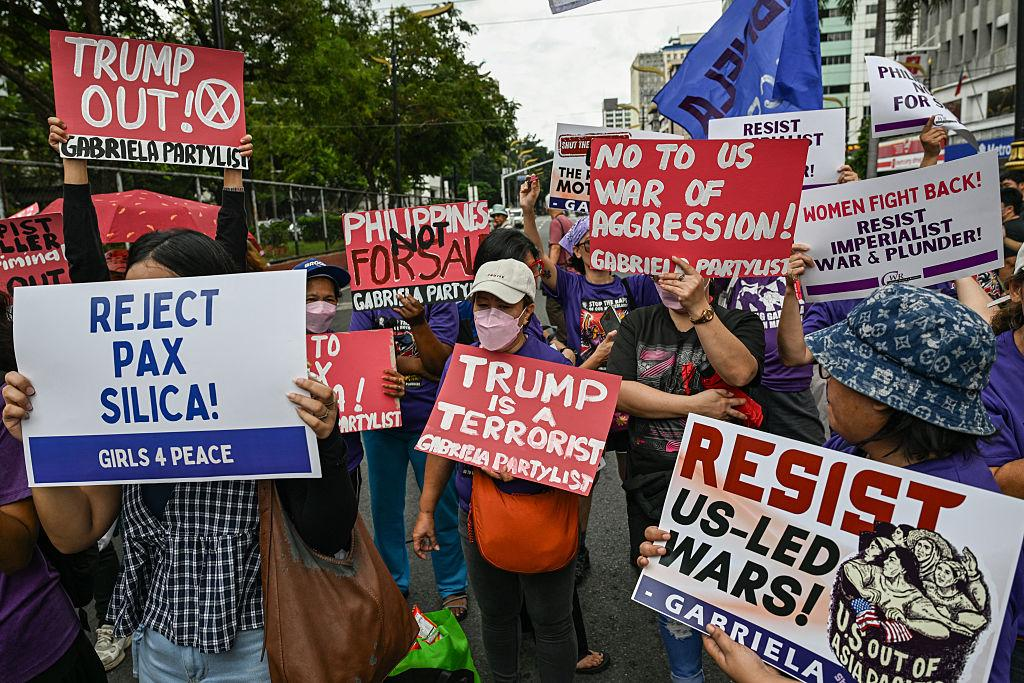
Pax Silica is a U.S.-led initiative intended to strengthen cooperation in advanced technology supply chains.
Its focus includes areas such as semiconductors, artificial intelligence infrastructure and critical minerals.
Governments involved in such efforts aim to reduce dependence on concentrated sources of strategically important materials and components.
For the Philippines, participation could create opportunities for investment and industrial development.
However, critics question how the benefits and costs would be distributed.
The proposed technology hub in Central Luzon became a central issue during the Manila protests.
Activists argued that the project could affect land, water and communities already living in the proposed development area.
Those concerns transformed a technology policy initiative into a broader debate about economic sovereignty and social protection.
The project has been associated with the New Clark City area in Tarlac province.
Government supporters have presented advanced manufacturing and technology investment as opportunities for employment and economic growth.
Such projects can attract companies seeking industrial facilities, transport links and access to skilled workers.
But large-scale development also requires land, electricity, water and infrastructure.
Those requirements can create disputes over existing land use.
Human Rights Watch reported that Indigenous communities and small farmers feared displacement associated with the proposed hub.
The organization said the construction plans could affect hundreds of residents.
These are significant concerns because the consequences would be local, even if the project served international technology markets.
The dispute therefore involves both foreign economic policy and domestic development decisions.
Human Rights Watch
Aeta communities and farming groups were among those raising concerns about the proposed development.
Their objections included the possibility of losing access to homes, agricultural land and resources.
For affected residents, the question was not simply whether a technology hub might attract investment.
It was also whether existing communities would retain meaningful rights and opportunities.
Development plans may involve competing claims about land ownership, ancestral territory and public infrastructure.
Resolving those issues requires consultation, legal review and information about the project's actual footprint.
Protest organizers brought these concerns into the demonstrations against Trump.
They argued that the international initiative should not advance without addressing the people who could be affected.
The government, meanwhile, has emphasized the potential economic benefits of investment and industrial growth.
The United States has sought stronger relationships with partners involved in critical technology supply chains.
Advanced semiconductors, artificial intelligence systems and strategic minerals are important to both commercial industries and national security.
Governments increasingly view access to these technologies as a matter of economic resilience.
Closer cooperation with the Philippines could potentially support manufacturing, investment and research.
The country already participates in electronics production and international trade.
However, the proposed benefits depend on investment decisions and successful implementation.
Projected jobs are not the same as jobs already created.
Similarly, announcing an industrial initiative does not settle questions about land rights or environmental protection.
Those distinctions help explain why a proposal promoted as an economic opportunity could become the focus of substantial opposition.
The status of the initiative was another important question during the visit.
Reporting on the November 18 meetings indicated that Trump and Marcos did not sign a new Pax Silica agreement during that trip.
That does not necessarily mean the broader initiative had been abandoned.
Diplomatic and industrial projects often involve discussions extending across several meetings.
However, it does distinguish the political controversy from a completed agreement announced at the palace.
Protesters opposed the direction of the proposed cooperation.
The governments continued discussing their economic relationship.
The future of the project would depend on additional decisions, including financing, implementation and the handling of community concerns.
Another major source of disagreement was the longstanding security relationship between Washington and Manila.
The two countries are linked by a mutual defense treaty signed in 1951.
Their cooperation includes military exercises, defense consultations and regional security coordination.
Supporters of the alliance argue that it helps protect Philippine interests amid tensions in the South China Sea.
Critics question whether close alignment with Washington increases the country's exposure to conflicts involving major powers.
The demonstrations reflected those competing views.
Activist organizations criticized American military influence and called for a different approach to foreign relations.
The Philippine government continued to treat the United States as a major security partner.
The dispute therefore involved the future direction of a relationship that has shaped Philippine foreign policy for decades.
The Philippines also faces continuing maritime disputes with China.
Confrontations involving Chinese and Philippine vessels have influenced Manila's defense priorities.
Washington has repeatedly reaffirmed its security commitments to the Philippines.
That context complicates the debate over American military cooperation.
Some organizations oppose both Chinese actions in disputed waters and the expansion of U.S. military influence.
DZRH reported that Bayan Muna Chairman Teddy Casiño rejected claims that his organization protested only against Washington.
He said the group had also opposed Chinese activities in the West Philippine Sea for years.
The statement illustrates why opposition to a U.S. president's visit should not automatically be interpreted as support for another foreign power.
The positions of individual organizations require examination on their own terms.
Protest organizers also connected the visit to rising living costs.
They criticized American foreign policy involving Iran and its possible effects on energy prices.
The Philippines relies on imported petroleum products, making international oil prices important to domestic transportation and household expenses.
Higher fuel prices can influence public transport fares and the cost of moving goods.
Those costs may eventually affect food prices and other everyday purchases.
However, domestic inflation has multiple causes.
Exchange rates, taxes, supply conditions and local distribution costs also matter.
The demonstrators' argument was that international conflicts and American policy contributed to economic pressures already facing Filipino households.
That argument formed part of their broader criticism of Trump's visit, alongside opposition to Pax Silica and U.S. military influence.
While protesters gathered outside the security perimeter, Trump and Marcos continued their diplomatic engagement.
The American president's Asian trip included discussions on trade, technology and regional security.
Associated Press reported that Trump met leaders from Australia, India and Japan during the regional meetings.
The agenda included maritime cooperation and artificial intelligence development.
The president also pursued commercial and diplomatic arrangements with Southeast Asian partners.
The Philippine government treated the visit as an opportunity to reinforce its relationship with Washington.
That official program continued despite the street demonstrations.
The contrast illustrated the different roles of government diplomacy and public protest.
One reflected the priorities of elected leaders conducting foreign policy.
The other reflected organized opposition seeking to influence those priorities.
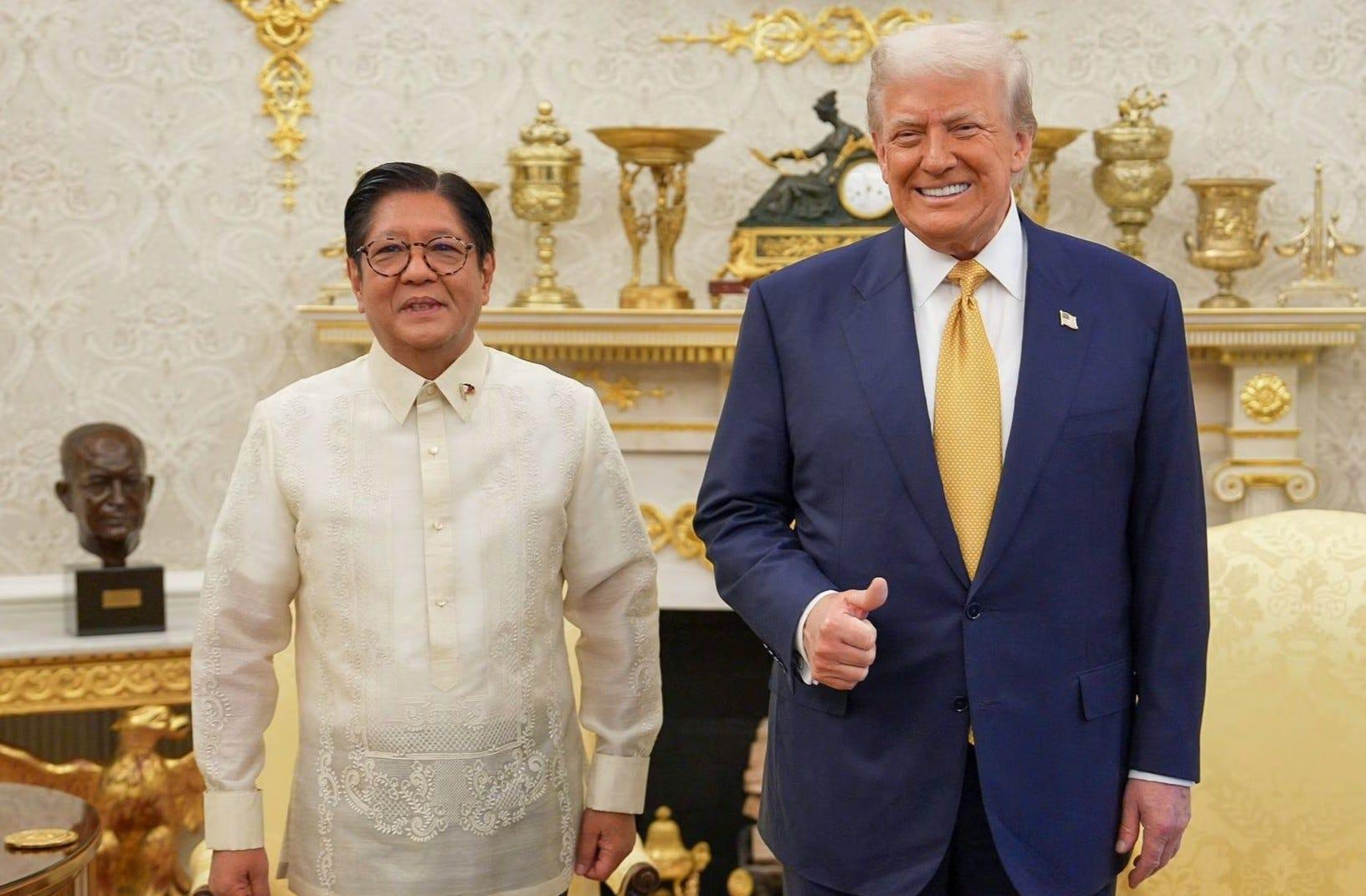
The immediate aftermath involved several developments rather than a single dramatic confrontation.
The November 18 march ended without protesters reaching the palace.
More than 200 people detained during earlier demonstrations were ordered released pending further investigation, according to News5.
Human rights organizations continued questioning the police response.
The proposed Pax Silica development remained a source of disagreement.
Meanwhile, the American and Philippine governments continued their diplomatic relationship.
The available reporting did not establish a new U.S. policy retaliation against protesters or a verified presidential statement using the alleged insults.
The next developments therefore concerned legal proceedings, the future of the industrial proposal and the wider debate over the alliance.
Large demonstrations can draw attention to issues that governments might otherwise discuss primarily through diplomatic channels.
The Manila protests highlighted concerns about land rights, industrial development, military cooperation and civil liberties.
Whether those concerns influence future policy will depend on government decisions and continued public debate.
The demonstrations did not, by themselves, terminate the mutual defense treaty.
They also did not establish that the United States would suspend assistance or withdraw from its economic initiatives.
Diplomatic relationships involve agreements, institutions and long-term interests that extend beyond a single presidential visit.
However, public opposition can shape domestic political discussions about those relationships.
The November demonstrations made clear that the direction of U.S.-Philippine cooperation remains contested among different groups within the country.
The allegation that Trump personally insulted the protesters is distinct from the documented confrontation.
The flag burning is supported by photographs and eyewitness reporting.
The march route, police barricades and protest demands are described by multiple local news organizations.
The arrests and subsequent release orders are documented by human rights groups and Philippine media.
By contrast, the specific insults attributed to Trump have not been established by an authenticated public recording, transcript or reliable contemporaneous report.
The difference matters because a direct quotation can substantially change how readers interpret an event.
The verified story already contains a significant political dispute without requiring additional words to be attributed to the president.
The confrontation began with organized opposition to Trump's visit and the policies associated with it.
Protesters challenged the Pax Silica initiative, criticized U.S. military influence and expressed concern about economic pressures and the treatment of detained activists.
Police prevented the march from reaching the presidential palace.
American flags burned along Recto Avenue as Trump and Marcos met nearby.
The immediate aftermath included the release order for more than 200 detainees and continuing debate over the rights of protesters.
The broader questions remain unresolved: how the proposed industrial development will proceed, whether affected communities will have their concerns addressed and how Philippine authorities will handle future demonstrations.
Those issues, rather than an authenticated exchange of insults, define the documented political consequences of the Manila standoff.
Comments (0)
Loading comments...
May You Like

THANKSGIVING NIGHTMARE: OVER 1M BLACKOUTS, NEARLY 2M WATER ALERTS!

IOWA ENVIRONMENTAL DISASTER: 5-TON WASTE BLAST DISPLACES 3,000 FAMILIES!

AMERICA’S NEW-GENERATION AIRCRAFT CARRIERS — MILITARY MIGHT BUILT AT THE EXPENSE OF THE PEOPLE









Popular Posts





