Trump Says He Regrets His Three Supreme Court Picks After Series of Rulings Against His Agenda
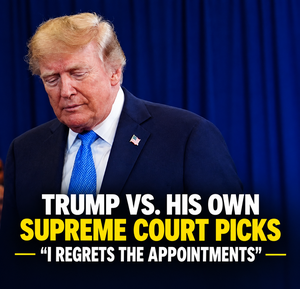
WASHINGTON — President Donald Trump has said he regrets nominating the three Supreme Court justices he appointed during his first term, criticizing Neil Gorsuch, Brett Kavanaugh and Amy Coney Barrett for ruling against his administration in a series of important cases.
The comments, made in a Time magazine interview published Oct. 1, mark a striking change in Trump's rhetoric toward the judges who helped create the Supreme Court's current 6-3 conservative majority. Trump said the three justices had voted against him “too often,” while also acknowledging that he wants judges to make good decisions rather than simply follow his preferences.
Trump Directly Says He Regrets the Appointments
Trump was asked whether he regretted nominating Gorsuch, Kavanaugh and Barrett.
“Yeah. Yeah. What can I do? I put them in,” Trump said, according to the interview transcript reported by Reuters and Bloomberg. He added that he had given the justices “the position of a lifetime” but complained that they had frequently ruled against him.
The three justices were appointed during Trump's first presidency.
- Neil Gorsuch was confirmed in 2017.
- Brett Kavanaugh was confirmed in 2018.
- Amy Coney Barrett was confirmed in 2020.
Their appointments shifted the ideological balance of the Court and established a conservative majority that remains in place as the 2026-27 term begins.
Trump's latest remarks do not mean that the three justices have consistently opposed his administration. They have also joined decisions supporting positions associated with Trump and other conservative legal priorities.
Instead, his frustration has focused on several high-profile cases in which his administration lost or received less authority than it sought.
The Tariff Case Became a Major Point of Frustration
One of Trump's complaints concerns his administration's use of emergency powers to impose broad tariffs.
The Supreme Court ruled against Trump's tariff policy in a major decision earlier this year. The case became one of the most significant legal setbacks for the administration's trade program.
Trump has criticized the ruling because of its potential financial consequences for the federal government and businesses. In his Time interview, he argued that the justices could have written the decision differently to prevent the government from having to return large amounts of money collected under the tariffs.
The case illustrates the central tension between Trump's political objectives and the judicial role of the Supreme Court.
A president can nominate a justice, but Supreme Court justices receive lifetime appointments and are not required to support the policies of the president who nominated them.
Birthright Citizenship Created Another Split
Trump also expressed anger over the Court's handling of his attempt to restrict birthright citizenship.
The administration sought to limit automatic U.S. citizenship for certain children born in the United States to parents who are not U.S. citizens or lawful permanent residents.
The Supreme Court issued a ruling against Trump's position in June. The decision involved the Court's interpretation of the Citizenship Clause of the 14th Amendment.
The voting in that litigation also demonstrated that the Court's conservative justices do not always vote as a unified bloc.
Court records show instances in which Gorsuch, Kavanaugh and Barrett have taken different positions from one another and from the other conservative justices.
For Trump, however, the result was another example of a policy initiative encountering resistance from members of the Court he helped shape.
The Mail-Ballot Fight Intensified the Conflict
The dispute became even more public in September after the Supreme Court blocked a Trump administration effort involving mail-in voting ahead of the 2026 midterm elections.
Trump responded angrily on social media, saying the justices he had appointed were no longer the people he had expected them to be when he selected them.
Reuters reported that the Court's decision prevented the administration from implementing the disputed Postal Service rule. Justices Clarence Thomas and Samuel Alito dissented and were praised by Trump afterward.
The episode was particularly significant because it came shortly before the midterm elections, when voting procedures were already becoming a major political issue.
Trump's criticism also highlighted a fundamental difference between presidential expectations and the constitutional structure of the federal judiciary: Supreme Court justices are not presidential representatives once they take office.
Trump Has Questioned the Loyalty of His Own Nominees
Trump's criticism has gone beyond individual rulings.
In the Time interview, he contrasted his three appointees with the three justices appointed by Democratic presidents, saying the Democratic-appointed justices generally remain more unified.
When asked whether loyalty was important to him, Trump initially indicated that he liked loyalty but then clarified that he wanted “good decisions.”
That distinction is important because Supreme Court justices are constitutionally independent from the president who nominates them.
The Court's decisions therefore cannot be treated simply as extensions of the administration's political agenda.
The Court Has Not Simply Opposed Trump
Despite Trump's complaints, the record is more complicated than a simple conflict between Trump and the Court.
The six conservative justices — including Trump's three appointees — have participated in numerous decisions producing outcomes favorable to conservative legal positions.
The Court's current majority has ruled on issues involving executive authority, immigration, religious freedom, gun rights and other major questions. Reuters reported as the new term began that the Court had generally supported significant portions of Trump's agenda while also imposing limits in several important areas.
The justices Trump appointed have likewise not consistently opposed his administration.
For example, Supreme Court records show Kavanaugh and Barrett joining conservative-majority opinions in several cases during the 2026 term, while Gorsuch has sometimes taken different positions.
That voting pattern illustrates why Supreme Court nominations can produce political consequences that are difficult to predict over the long term.
A Conservative Court, but Not a Presidential Court
Trump's first-term appointments fundamentally changed the Supreme Court's composition.
But the current Court is not institutionally controlled by the White House.
Once confirmed, Supreme Court justices serve lifetime terms and decide cases based on the legal questions before them. Their votes can align with the administration that appointed them in one case and diverge from it in another.
That independence is now becoming a recurring issue as Trump's second administration brings major questions about executive authority before the Court.
The new Supreme Court term includes cases involving immigration, presidential power, gun regulation, voting rights and other contentious issues. Reuters reported that the Court will again be asked to determine how far Trump's executive authority extends.
More Confrontations Could Follow
Trump's frustration with Gorsuch, Kavanaugh and Barrett comes at a moment when the Supreme Court is expected to play a major role in several disputes involving his administration.
The president has already criticized the Court over tariffs, birthright citizenship and voting regulations.
At the same time, the justices Trump appointed remain part of the conservative majority that has produced many decisions consistent with conservative legal positions.
The emerging conflict is therefore not simply Trump versus a liberal Supreme Court. It is increasingly a dispute over how closely a president can expect even his own judicial appointees to follow his preferred policies.
What Happens Next?
The Supreme Court's new term will provide additional tests of that relationship.
Trump cannot remove Gorsuch, Kavanaugh or Barrett because they rule against him, and he cannot direct how they vote. Their lifetime appointments give them institutional independence from the White House.
For Trump, the issue is increasingly about whether the Court will permit the administration to exercise the level of executive authority it claims.
For the justices, the cases present legal questions that extend beyond the president who appointed them.
The three justices who helped create the Court's conservative majority are therefore now at the center of an unusual political moment: the president who selected them says he regrets those choices, while the Court they helped shape continues to exercise independent authority over his administration.
Comments (0)
Loading comments...
May You Like


Test