Trump Says U.S. Action Prevented Iran From Getting a Nuclear Weapon, Calls Tehran “Crazy”
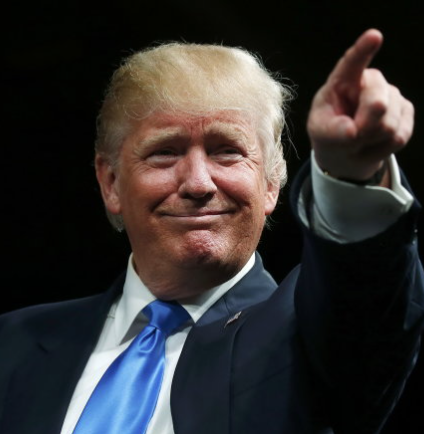
WASHINGTON — President Donald Trump has renewed his justification for the U.S. military campaign against Iran, arguing that American strikes prevented Tehran from obtaining a nuclear weapon and warning that Iran would have used one if it had succeeded.
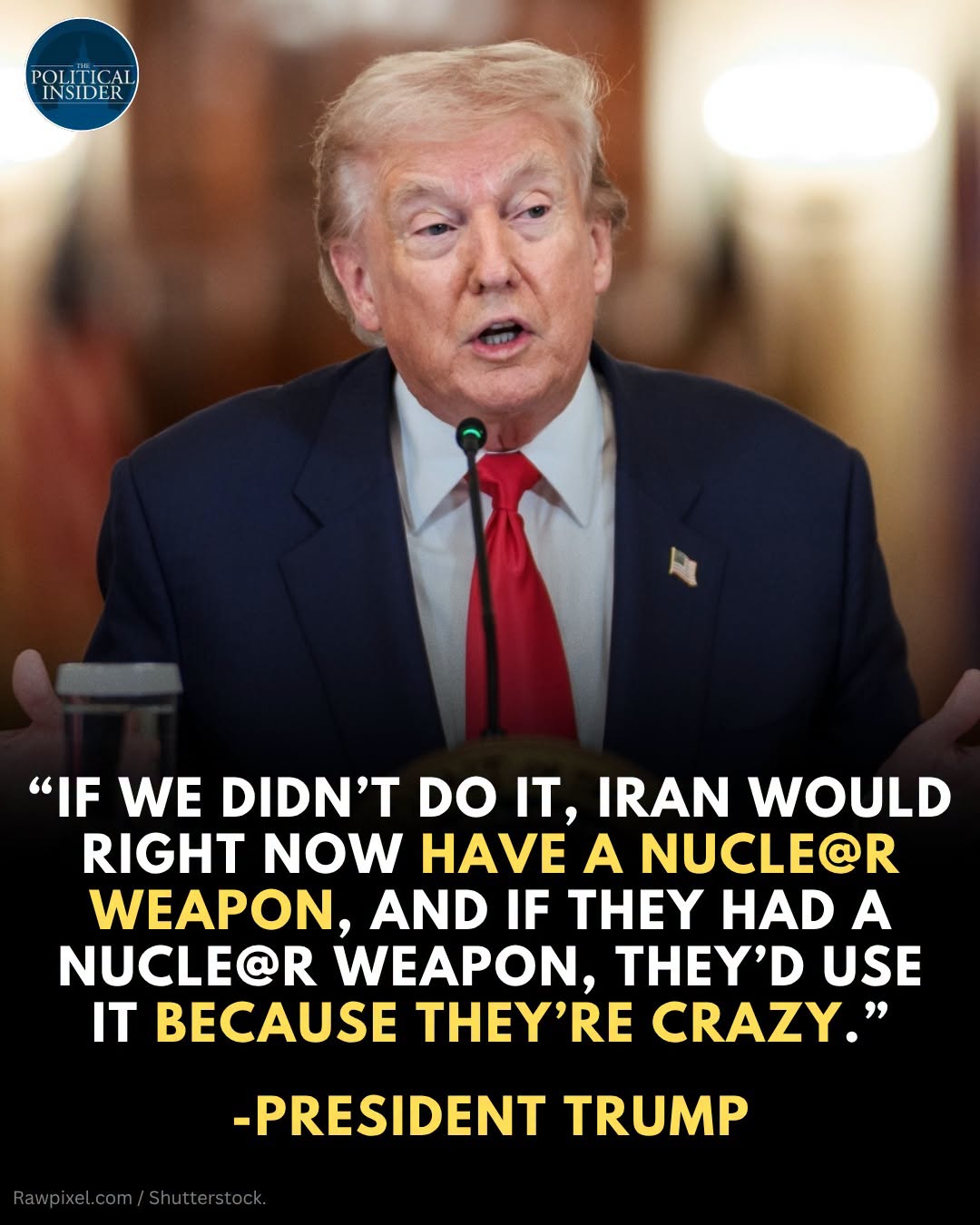
The comments, made during a Sept. 2 interview with Texas Lt. Gov. Dan Patrick on the Lt. Dan podcast, have since circulated widely online. The quote featured in the viral graphic is broadly consistent with Trump's remarks, although the graphic presents a shortened version of what he said.
Trump's claim comes as the U.S.-Iran conflict enters another dangerous phase, with fighting resuming after a period of relative calm and Washington continuing to pressure Tehran over its nuclear program and military capabilities.
Trump: Iran Would Have a Nuclear Weapon Without U.S. Action
During the interview, Trump argued that the United States had acted before Iran could cross what he described as a critical nuclear threshold.
“If we didn't do it, Iran would right now have a nuclear weapon,” Trump said, according to a transcript of the interview circulated by the White House's political allies.
He went further, arguing that an Iranian nuclear weapon would inevitably be used.
“If they had a nuclear weapon, they'd use it because they're crazy,” Trump said.
In another portion of the interview, Trump warned that the consequences would extend far beyond the Middle East.
“If they had a nuclear weapon, Israel would be gone, the Middle East would be gone, and they would be hitting cities in the United States,” he said, according to Fox News' account of the interview.
Trump's central argument was therefore not simply that Iran might eventually acquire a nuclear weapon, but that preventing such an outcome justified the military campaign itself.
The Claim Has Been a Central Justification for the War
The nuclear issue has been at the heart of Trump's argument for confronting Iran.
In May, Trump told an audience in Florida that Iran could not be allowed to obtain a nuclear weapon and said such a weapon could be used against Israel, Europe and eventually the United States. The official presidential transcript records those remarks.
Trump has repeatedly portrayed the Iranian nuclear program as an existential threat. His administration has argued that the military campaign was designed to prevent Tehran from rebuilding the capabilities damaged in earlier U.S. and Israeli strikes.
But the president's assertion that Iran would definitely have possessed a nuclear weapon without U.S. intervention is a political and intelligence claim, not an independently established fact.
That distinction is important.
Iran's Nuclear Capability Remains a Major International Concern
There is nevertheless substantial evidence that Iran had accumulated significant quantities of highly enriched uranium before the latest escalation.
Reuters reported this week that the International Atomic Energy Agency estimated Iran had possessed about 440.9 kilograms of uranium enriched to 60% before the 2025 attacks — material that could potentially be used to produce several nuclear weapons if further enriched to weapons-grade levels. At the same time, the IAEA has not been able to regain full access to key Iranian nuclear facilities since the strikes.
That creates a serious verification problem.
The international community does not currently have complete visibility into the location and condition of Iran's nuclear material.
The question is therefore no longer simply whether Iran wanted a nuclear weapon, but how much of its nuclear infrastructure and material remains, where it is located and whether inspectors can verify what Tehran is doing.
Washington Says the Nuclear Program Was Set Back
The Trump administration has repeatedly argued that American military action severely damaged Iran's nuclear infrastructure.
Trump previously described the facilities as having been essentially destroyed. However, independent assessments have been more cautious, and the precise condition of Iran's remaining nuclear material has become increasingly difficult to determine because international inspectors have not had unrestricted access.
That uncertainty has become one of the most dangerous aspects of the confrontation.
A military campaign can destroy visible facilities, but nuclear knowledge, personnel and some forms of equipment are much harder to eliminate permanently.
The Conflict Is Far From Over
Trump's latest comments come as U.S. and Iranian forces have again exchanged attacks.
Reuters reported that the United States launched another significant series of strikes on Iranian targets on Sept. 1, while Iran retaliated with missile and drone attacks against U.S.-linked facilities in the region.
The fighting has also threatened one of the world's most important energy chokepoints: the Strait of Hormuz.
The waterway carries a major share of global oil shipments, meaning every escalation between Washington and Tehran has consequences far beyond the battlefield.
Trump has warned repeatedly that Iran cannot be allowed to use the strait as leverage against the United States or its allies.
Trump Is Now Threatening Further Strikes
The president has also suggested that the military campaign could intensify.
On Sept. 4, Trump said the United States could strike Iran's Pickaxe Mountain site “very soon,” although he did not provide a specific timeline. The facility is associated with Iran's nuclear infrastructure and has become one of the remaining sites of concern following earlier attacks.
The warning came only days after Trump described the broader confrontation as “small potatoes” for the United States, even as the conflict continued to impose significant military and economic costs.
That combination — escalating military threats while simultaneously minimizing the scale of the conflict — has become a defining feature of Trump's public messaging.
A Nuclear Crisis With an Uncertain Endgame
The nuclear question also complicates any effort to end the conflict.
The United States and its allies are demanding that Iran abandon any effort to acquire a nuclear weapon and allow international inspectors to verify its activities.
Iran, meanwhile, has consistently maintained that its nuclear program is peaceful.
The lack of inspections has made it increasingly difficult for outside governments to independently verify Tehran's claims.
On Sept. 4, Reuters reported that the United States, Britain, France and Germany were pushing for an IAEA resolution that could refer Iran's nuclear noncompliance to the U.N. Security Council.
That represents another potential escalation — this time through international institutions rather than military force.
Trump's Argument Is Clear — But the Evidence Is More Complicated
Trump's message is straightforward: the United States had to act because Iran was approaching a nuclear capability, and allowing Tehran to acquire such a weapon would have created an unacceptable danger.
There is a real nuclear proliferation concern. Iran had accumulated substantial quantities of highly enriched uranium, and international inspectors currently lack complete access to key facilities.
But that does not automatically establish Trump's strongest assertion — that Iran would certainly have built and used a nuclear weapon without the U.S. strikes.
That remains a prediction about what Tehran would have done under different circumstances.
Experts and international inspectors therefore face two separate questions: what Iran was capable of doing, and what Iran actually intended to do.
Those are not necessarily the same thing.
The Political Stakes Are Growing
The timing is also politically significant.
The United States is approaching the November 2026 midterm elections, and the Iran conflict has increasingly become a domestic political issue.
Reuters reported that Trump's advisers have sought to prevent further escalation ahead of the elections, amid concerns that the war, casualties and higher energy prices could damage Republican candidates. A Reuters/Ipsos poll cited in the report found only 31% of Americans approved of the war, while 63% disapproved.
Trump, however, has insisted that the elections will not determine his Iran strategy.
The president continues to frame the conflict primarily as a national-security mission: preventing Iran from obtaining a nuclear weapon.
The Bigger Question: What Happens Next?
Trump's latest statement captures the fundamental logic behind his Iran policy: strike first, rather than wait for Iran to potentially acquire a nuclear weapon.
But that strategy creates its own dilemma.
If the United States has successfully destroyed Iran's nuclear infrastructure, Washington must still determine what happened to Iran's enriched uranium, whether hidden facilities remain and whether inspectors can verify the outcome.
If significant elements of the program survived, the military campaign may have delayed rather than permanently eliminated Iran's nuclear ambitions.
And if the conflict continues to expand, the original question — whether Iran might someday possess a nuclear weapon — could be replaced by an even more immediate one:
How far is Washington prepared to go to make sure it never does?
For Trump, the answer remains uncompromising. He argues that the alternative would be an Iran armed with a nuclear weapon — and that, in his words, would be a threat too dangerous for the United States and its allies to accept.
Comments (0)
Loading comments...
May You Like
Obama Steps Back Into the Political Spotlight as Democrats Target Trump’s
FIGHT OVER OBAMA’S IRAN POLICY
Shocking news from Ohio: an unexpected development ahead of Trump's rally