
Trump Says US Isn't to Blame for Iran War
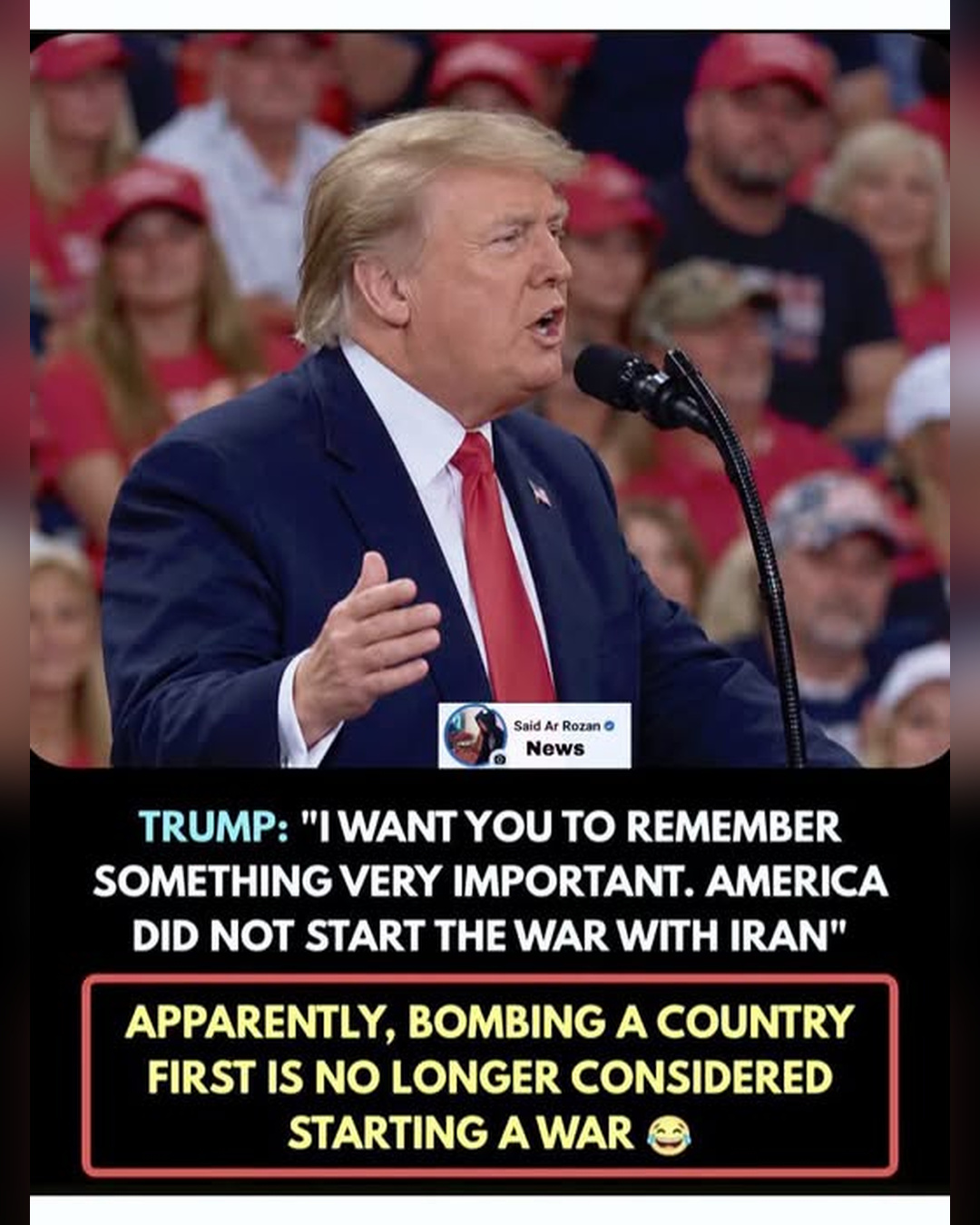
Trump Says America Did Not Start the Iran War, but the Timeline Tells a More Complicated Story
November 4, 2026 | International Politics
President Donald Trump is defending America's military campaign against Iran with a familiar argument: the United States did not start the conflict, but has been responding to Iranian hostility spanning decades.
The statement has reignited debate over responsibility for the war, particularly because the current military campaign began with American and Israeli airstrikes against Iranian targets.
Trump made the remarks during a campaign rally in Corpus Christi, Texas, on October 27, telling supporters, “America did not start the war with Iran.”
He immediately expanded on that argument, claiming Iran had been waging war against the United States since 1979 and had killed or wounded thousands of American military personnel.
The president pointed to the Iranian Revolution, attacks on American interests, and the activities of armed groups supported by Tehran as evidence of a decades-long confrontation.
His argument reflects a broader administration position: that the February military operation should be understood as part of an existing conflict rather than an entirely new war.
However, the chronology of the current war presents a significant challenge to that framing.
On February 28, 2026, the United States and Israel launched coordinated airstrikes against Iran, targeting military infrastructure, nuclear-related facilities, and senior Iranian leadership.
Trump himself publicly announced the operation that day, stating that American forces had begun “major combat operations in Iran” and describing the military objectives of the campaign.
The strikes killed Iran's Supreme Leader Ayatollah Ali Khamenei and several other senior officials, marking a dramatic escalation in the confrontation between Tehran and Washington.
Iran responded with missile and drone attacks against Israel, American military targets, neighboring countries, and regional infrastructure, widening the conflict across the Middle East.
This sequence is central to understanding the controversy: although tensions and hostile actions predated 2026, the immediate military campaign began with American and Israeli attacks on Iranian territory.
The administration has rejected that interpretation as incomplete. Its officials argue that Iranian-backed attacks, threats against American forces, and decades of regional violence constitute an ongoing armed conflict.
In April, State Department legal adviser Reed Rubinstein defended the campaign as an exercise of collective self-defense, arguing that the United States was responding to Iranian aggression over many years.
That legal justification remains disputed. More than 100 international law experts argued that the initiation of the conflict violated the United Nations Charter, questioning whether Iran posed an imminent threat.
The disagreement therefore extends beyond political messaging. It concerns how international law defines self-defense, when military force can be justified, and whether historical hostility can justify launching a new campaign.
For Trump, emphasizing 1979 allows his administration to portray the conflict as the latest chapter in a long struggle rather than a war initiated by his own decision.
For critics, that explanation shifts attention away from the immediate events that triggered the present fighting: the February 28 decision to launch American and Israeli strikes.
The distinction is important because responsibility for decades of hostility and responsibility for initiating a specific military operation are separate questions, even when both involve the same countries.
The viral image captures this contradiction through sarcasm, but its lower caption is commentary rather than a separate statement from Trump or an official government response.
Ultimately, Trump's quotation is authentic, while the interpretation of who started the current war depends on whether one is discussing decades of confrontation or the opening military strikes of 2026.
Comments (0)
Loading comments...
May You Like


IOWA CRISIS — 150+ WITH LEAD AND MERCURY POISONING, 69 CRITICAL!

TRUMP NAMES PICKAXE TARGET AS NETANYAHU PUSHES FOR MORE IRAN STRIKES

Latest Posts








Popular Posts



