
Trump Signals Preemptive Pardons for Allies Ahead of Midterms
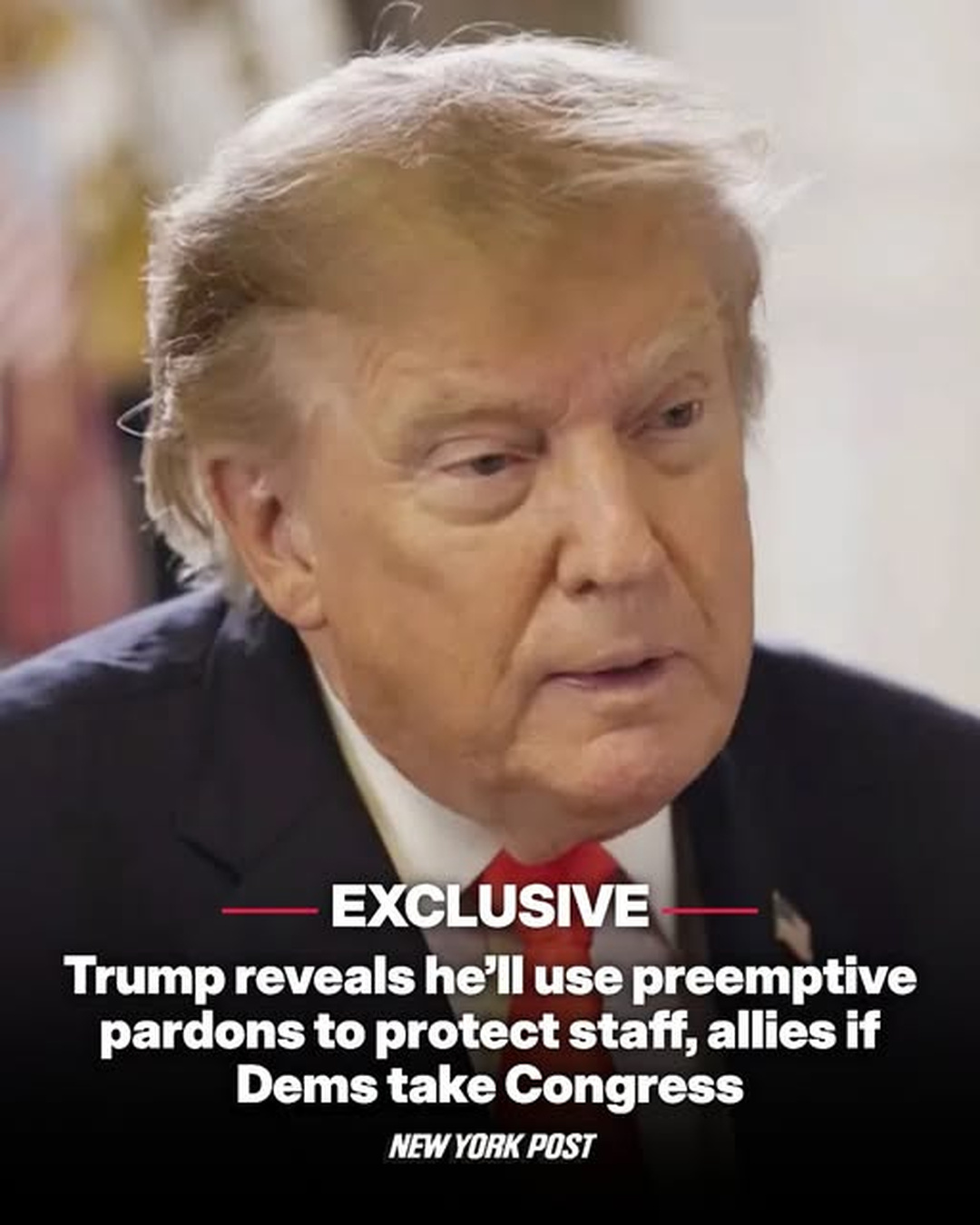
Trump Says He Would Issue Preemptive Pardons to Protect Administration Officials If Democrats Win Congress
November 3, 2026 | Washington, D.C., United States | U.S. Politics & Government
Trump Signals Readiness to Protect His Political Allies
President Donald Trump has indicated that he would consider issuing preemptive presidential pardons to members of his administration and political allies if Democrats gain control of Congress in the November 3 midterm elections.
In an interview published November 2, Trump discussed the possibility of protecting administration officials who could face investigations or criminal prosecution under a Democratic-controlled Congress. His comments immediately attracted national attention.
When asked whether he would pardon people who had worked for his administration, Trump responded affirmatively, saying, “I would if I needed to. Sure.” He subsequently reinforced his position, indicating that he would take action if necessary.
The discussion took place during an interview with journalist Miranda Devine for her political podcast. The conversation focused on potential Democratic investigations, the president's relationship with influential allies, and the consequences of a possible Republican defeat.
Trump's remarks came just one day before Americans headed to the polls. The elections will determine the composition of the next Congress and could significantly change the political environment during the remaining two years of his presidency.
Why Trump Is Concerned About a Democratic Congressional Victory
The political background involves growing Democratic discussions about investigating decisions made by the Trump administration. Democratic lawmakers have indicated that congressional oversight could become more aggressive if their party regains control of either chamber.
Senator Elissa Slotkin of Michigan previously discussed pursuing significant accountability cases against individuals she believes enabled Trump's policies. She argued that investigations could discourage future political figures from accepting positions in administrations.
Representative Jamie Raskin of Maryland has also discussed investigating alleged systemic corruption within the administration. His potential leadership role on the House Judiciary Committee could make congressional oversight particularly important.
Trump has interpreted these statements as indications that Democratic lawmakers intend to target people associated with his administration. He has repeatedly characterized such investigations as politically motivated rather than legitimate efforts to examine government conduct.
However, congressional investigations and criminal prosecutions are legally different processes. Congress can conduct hearings, issue subpoenas, request documents, and refer potential criminal conduct to federal authorities, but it cannot independently prosecute individuals.
The possibility of renewed investigations nevertheless creates political uncertainty for administration officials. Former and current government employees could face congressional questioning, document requests, and potential legal scrutiny depending on the circumstances.
Elon Musk and Other Political Allies Enter the Discussion
One particularly significant aspect of Trump's interview involved billionaire entrepreneur Elon Musk. The interviewer raised concerns about possible Democratic efforts to investigate Musk's businesses or pursue government action against his companies.
Trump dismissed suggestions that Democrats would actually arrest Musk or seize his factories, describing such possibilities as political talk. Nevertheless, he emphasized that his administration would protect individuals if those threats became serious.
When the conversation expanded to other people associated with his administration, Trump indicated that protective pardons could extend beyond senior officials. His comments suggested a potentially broad interpretation of whom he would consider protecting.
The discussion also referenced Edward Coristine, a former employee associated with the Department of Government Efficiency. His involvement illustrated how the potential consequences could extend to individuals who previously worked within controversial government restructuring initiatives.
Biden's Preemptive Pardons Become Part of Trump's Defense
Trump justified his position by referring to former President Joe Biden's use of presidential pardons during the final hours of his administration in January 2025.
Biden issued preemptive pardons to several individuals, including Anthony Fauci, former Chairman of the Joint Chiefs of Staff Mark Milley, and members and staff of the House committee investigating January 6.
Those pardons covered potential federal offenses relating to specified periods and circumstances. Biden explained that his decisions were intended to protect individuals from what he considered possible politically motivated investigations.
Trump repeatedly criticized those decisions during his interview, describing Biden's actions as justification for considering similar protections for people associated with his own administration.
The comparison highlights how presidential clemency has increasingly become a politically contentious issue. Both administrations have used the constitutional pardon authority in circumstances involving prominent political figures and potential investigations.
However, the circumstances surrounding individual pardons differ considerably. Each decision must be examined according to its legal scope, the conduct covered, and the constitutional authority under which it was issued.
What Presidential Pardons Can Actually Protect
Under Article II, Section 2 of the United States Constitution, the president possesses broad authority to grant pardons for federal offenses, except in cases of impeachment.
This authority allows presidents to issue pardons before criminal charges are formally filed, provided the relevant federal offense has already been committed. It does not extend to future criminal conduct.
Importantly, presidential pardons cannot eliminate every form of legal exposure. They do not protect individuals from state criminal prosecutions, civil lawsuits, or congressional impeachment proceedings.
A pardon also does not automatically prevent Congress from conducting investigations, requesting testimony, or examining government records. Legislative oversight remains a separate constitutional responsibility.
These limitations are particularly relevant to Trump's proposal because Democratic lawmakers could pursue investigations involving multiple jurisdictions and different categories of alleged misconduct.
Consequently, even extensive presidential pardons would not necessarily provide complete protection for administration officials or private individuals facing legal and political scrutiny.
A Midterm Election With Major Consequences for Trump
The November 3 midterm elections represent an important test of Trump's political influence and the Republican Party's ability to maintain control of Congress.
If Democrats win control of the House of Representatives, they could obtain committee leadership positions, expand investigations, and exercise greater authority over congressional oversight.
A Democratic-controlled Senate would also significantly change the legislative balance, potentially complicating Trump's ability to advance appointments, legislation, and other administration priorities.
Trump has indicated that he would respond to a Democratic congressional majority by resisting legislation and potentially relying more heavily on presidential vetoes.
The election's consequences therefore extend beyond the immediate question of which party controls Congress. They could shape the relationship between the executive and legislative branches throughout the remainder of Trump's current term.
The Broader Implications for American Politics
Trump's comments have raised broader questions about the relationship between presidential authority, political loyalty, and accountability within the federal government.
Supporters may view his position as a commitment to defend officials against what they consider politically motivated investigations. Critics may interpret the same proposal as an attempt to shield political allies from legitimate legal scrutiny.
The controversy also places renewed attention on the limits of executive clemency and the importance of maintaining independent institutions capable of investigating potential wrongdoing.
Ultimately, whether Trump follows through on his remarks will depend on future circumstances, the legal considerations surrounding individual cases, and the political balance in Washington.
His interview nevertheless signals that the possibility of presidential pardons could become an important part of the next phase of America's political confrontation, particularly if Democrats secure greater congressional power.
Comments (0)
Loading comments...
May You Like

CAIRO INFERNO — CAR CARRYING SENIOR U.S. OFFICIAL SLAMS INTO FUEL TANKER, 31 DEAD, 21 INJURED!


WARNING: OVER 1 MILLION COULD LOSE POWER AND NEARLY 2 MILLION FACE WATER ALERTS ON THANKSGIVING!

Latest Posts








Popular Posts




