
TRUMP STRIKES IRAN
Trump Faces a New Iran Test as Limited U.S. Strikes Collide With Fragile Peace Talks
President Donald Trump faces a consequential choice in the confrontation with Iran after limited U.S. strikes near the Strait of Hormuz renewed fears that a fragile pause in major combat could break down. The immediate question is whether Washington and Tehran can convert indirect negotiations into an agreement before another military incident escalates.
U.S. officials described the latest American operation near Iran's Qeshm Island as a limited defensive response to a threat against an American aircraft. The action was not presented as the start of a new, large-scale bombing campaign, an important distinction in a region already facing months of disruption.
The strikes came at a politically sensitive moment surrounding the November 3 U.S. midterm elections. Trump had previously said he would avoid new attacks before the vote, but tensions around the narrow shipping passage created pressure for military commanders to respond to incidents on the ground.
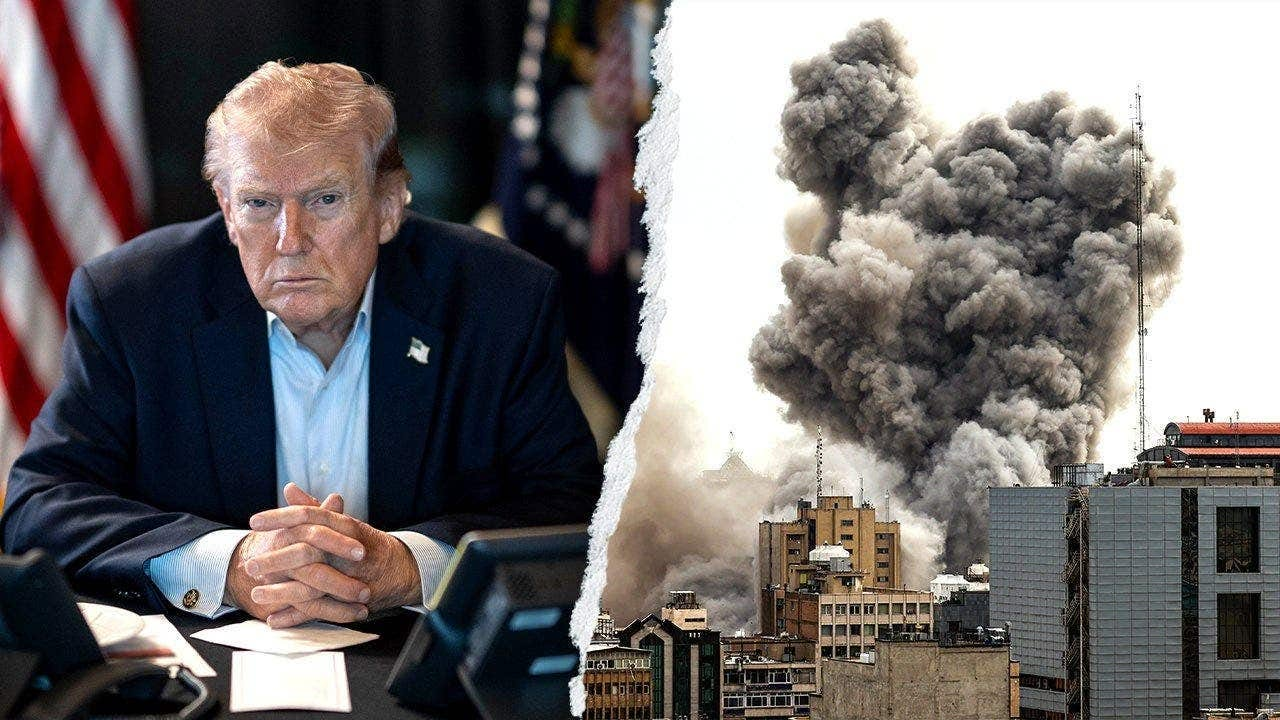
User-supplied editorial composite featuring Donald Trump and smoke
The photograph circulating alongside reports about the confrontation shows Trump paired with a large column of smoke rising above a city. That composite illustrates the wider conflict but does not, by itself, establish where or when the explosion took place.
The Strait of Hormuz remains central to the standoff. Its shipping lanes connect Gulf energy exporters to international markets, and even intermittent threats to commercial tankers can influence insurance costs, freight rates and crude oil prices around the world.
Iran has repeatedly insisted that reopening commercial passage requires concessions from Washington, including an end to hostile operations and relief from economic restrictions. American officials, meanwhile, have argued that maritime security cannot be conditioned on threats to civilian shipping.
Negotiations have continued through intermediaries, with Qatar playing a prominent diplomatic role. Iranian officials have described their proposals as a path to ending the war, while U.S. representatives have indicated significant disagreements remain over the sequence and scope of concessions.
Editorial infographic: STRAIT OF HORMUZ
Editorial explainer graphic — not a photograph of the incident.
One proposal discussed publicly would speed up implementation of a broader arrangement so that commercial traffic could resume through the strait within days. That timeline would depend on both sides agreeing to the terms rather than simply announcing competing commitments.
The questions extend well beyond the shipping channel. Iran's nuclear program, frozen assets, U.S. sanctions, regional militia activities and Israeli operations all complicate negotiations, making a narrow maritime arrangement difficult to separate from the wider conflict.
Trump has alternated between statements signaling openness to a settlement and warnings that American forces remain ready if talks collapse. Those messages can serve as leverage in negotiations, but they also make it difficult to predict when restraint could give way to force.
According to recent reporting, the president said the United States had no immediate plan to launch another broad attack, even while maintaining military readiness. That does not mean future operations are ruled out; it means a major new campaign had not been publicly announced at that point.
Editorial infographic: MILITARY RISK
Editorial explainer graphic — not a photograph of the incident.
For Iran, the political stakes are equally high. Its leaders have presented resistance to U.S. pressure as a matter of sovereignty and have warned that another extensive strike would draw a broader response, potentially involving locations beyond the immediate Gulf confrontation.
The possibility of retaliation worries neighboring governments that depend on secure ports, airports and energy facilities. A single exchange of attacks can place civilian infrastructure at risk and trigger reactions from other regional powers or armed groups.
Israel is another important part of the diplomatic picture. Reports have described debate among regional officials over whether additional force would weaken Tehran's position or instead undermine the possibility of a negotiated settlement.
Shipping companies and energy traders have become unusually sensitive to military announcements. A rumor of escalation can push prices higher, while promising signals from negotiators can prompt sharp declines, demonstrating how quickly geopolitical uncertainty filters into household expenses.
Editorial infographic: ENERGY & TRADE
Editorial explainer graphic — not a photograph of the incident.
In the United States, the cost of gasoline and broader inflation were major public concerns during the midterm campaign. That makes developments in the Gulf relevant to domestic political debates even when voters are primarily focused on wages, groceries and the economy.
Yet the electoral result alone does not establish the president's military intentions. Claims that a change in congressional control automatically triggers an attack should be treated with skepticism unless supported by direct evidence of an actual decision.
The humanitarian consequences of the conflict remain substantial. Repeated attacks, displacement and disruptions to medical and commercial networks affect people across the region, and civilians would pay the highest price if the fighting expanded again.
Diplomacy could still produce a limited agreement on shipping before resolving the deeper disputes. A step-by-step arrangement would face difficult verification questions but might reduce the risk of another accidental confrontation while broader talks continue.
Editorial infographic: DIPLOMATIC OPTIONS
Editorial explainer graphic — not a photograph of the incident.
For now, the central uncertainty is whether the United States and Iran can avoid turning each military incident into a larger confrontation. Trump's next move will be measured not only by threats or public statements, but by what happens to attacks, negotiations and traffic through the Strait of Hormuz.
Comments (0)
Loading comments...
May You Like


BANGCHAK REFINERY IN THAILAND SHUT DOWN, U.S. OIL PRICES JUMP 10%!

WARNING: OVER 1 MILLION COULD LOSE POWER AND NEARLY 2 MILLION FACE WATER ALERTS ON THANKSGIVING!

Latest Posts









Popular Posts




