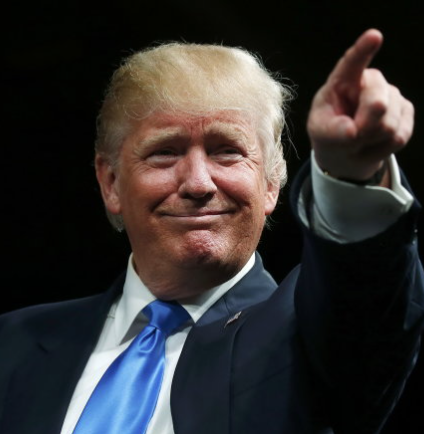
Trump Tells United Nations America Will “Never, Ever, Ever Surrender” Its Freedom
In a sweeping address to world leaders, President Donald Trump defended his Iran war, emphasized American sovereignty, rejected global governance and presented military strength as the foundation of his foreign policy.
UNITED NATIONS, Sept. 22, 2026 — President Donald Trump delivered a forceful defense of American sovereignty Tuesday, telling world leaders that the United States would never surrender freedoms secured across 250 years.
Speaking before the 81st United Nations General Assembly in New York, Trump used the address to present his second-term foreign policy as an alternative to multilateral approaches he considers ineffective.
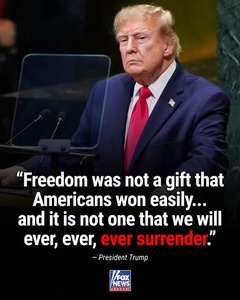
Near the conclusion, Trump declared that America has never retreated from difficult frontiers or challenges, before turning to the historical struggle involved in establishing and preserving American liberty.
The president said freedom was not something Americans obtained easily and insisted that, after 250 years, the country would never surrender it, repeating “ever” three times for emphasis.
The remark matches the Fox News graphic circulating online. It was part of Trump’s broader argument about national sovereignty rather than an announcement of a specific new domestic policy.
Trump opened his address by declaring that “America is back” and arguing that the United States is stronger than ever, a characterization reflecting his administration’s assessment of its record.
Much of the speech centered on Iran, where the United States has been engaged in a conflict approaching seven months and where Trump faces difficult decisions about the next phase.
Trump strongly defended his decision to initiate the war, arguing that Iran represented a nuclear and regional threat that previous diplomatic efforts had failed to resolve.
He characterized Iran’s government as weakened by the conflict and rejected suggestions that Tehran’s continued resistance demonstrated strength, describing its current behavior instead as evidence of desperation.
Yet Trump also introduced the possibility of renewed diplomacy, saying Iran could reopen the Strait of Hormuz and return to negotiations over a settlement capable of ending the conflict.
The president framed the choice in stark terms, contrasting an agreement allowing Iran to rebuild with the possibility of substantially greater American military action against the Islamic Republic.
Most members of Iran’s delegation walked out while Trump criticized their government, providing one of the most visible diplomatic reactions during his appearance before the General Assembly.
The Iran conflict has significant economic consequences beyond the battlefield. Disruptions involving the Strait of Hormuz and other regional shipping routes have contributed to elevated global energy prices.
Trump’s speech therefore came as his administration faces domestic pressure over gasoline prices and broader living costs, while Republicans prepare for November’s congressional midterm elections.
The president also highlighted the American military operation that removed Venezuelan leader Nicolás Maduro, presenting that intervention as another example of his willingness to use American power rather than prolong unresolved threats.
Another major subject was Greenland. Trump celebrated the recently negotiated security arrangement expanding the American military presence there, emphasizing the Arctic’s strategic importance to United States national security.
The agreement strengthens America’s security role without transferring Greenland’s sovereignty to Washington, an important distinction from Trump’s earlier rhetoric about obtaining control of the territory.
Trump also addressed artificial intelligence, rejecting proposals for what his administration characterizes as a centralized global regulatory structure governing increasingly powerful AI systems.
The White House quoted Trump as saying the United States “totally rejects” attempts to create a globalist control system for artificial intelligence, which he referred to as “Super Intelligence.”
That position reflects a recurring theme throughout the address: international cooperation may be useful, Trump argued, but it should not override the authority of individual sovereign governments.
Trump made that argument explicit when discussing global institutions, declaring there would be no global government and promising that no global taxes would be imposed while he remained president.
Immigration became another major component of the sovereignty message. Trump sharply criticized international organizations and officials who have objected to elements of his administration’s immigration enforcement policies.
He argued that countries possess a fundamental right to maintain borders and determine who enters their territory, while rejecting the idea that unauthorized immigration constitutes an internationally protected entitlement.
Trump also attacked the U.N. Human Rights Council, accusing it of focusing disproportionately on American policies while failing, in his view, to respond adequately to abuses committed by authoritarian governments.
Those remarks came only days after U.N.-appointed independent investigators said there were reasonable grounds to believe two American strikes in Iran constituted war crimes, findings Washington has rejected.
The speech also contained Trump’s familiar opposition to communism. He pledged that communism would not come to America while predicting political change in Cuba and discussing security problems involving Mexico.
Trump described drug cartels as terrorist organizations and defended his administration’s use of American military power against cartel operations, including strikes on vessels suspected of transporting narcotics.
The White House presented the address under the theme “While Others Have Talked, I Have Acted,” emphasizing Trump’s argument that unresolved international threats require decisive action rather than prolonged diplomacy.
That framing represents the administration’s interpretation of its foreign-policy record. Critics of Trump’s approach have challenged the costs and legality of several military actions and questioned whether they have increased long-term stability.
Trump nevertheless told the General Assembly that he has little interest in allowing threats to grow until future presidents must confront them, portraying delayed action as potentially making problems more difficult.
The freedom quote therefore served as a concluding expression of that larger worldview: national independence, military strength and resistance to external control were presented as interconnected components of American sovereignty.
It was not a declaration that the United States was leaving the United Nations, nor did Trump announce the suspension of American participation in the international organization during the address.
Instead, Trump used the U.N.’s own global stage to argue against international institutions acquiring authority he believes properly belongs to sovereign nations and their elected governments.
His message also combined two potentially competing themes: willingness to employ substantial military power and willingness to negotiate when Trump believes an agreement can satisfy American security objectives.
Iran provides the clearest current test of that approach. Trump simultaneously defended starting the conflict, threatened further military action and raised the possibility of negotiations that could bring it toward an end.
Comments (0)
Loading comments...
May You Like
Russian Drone Strikes Kyiv Bridge as German Chancellor Arrives in Ukraine
FIGHT OVER OBAMA’S IRAN POLICY