
Trump to Return to Kansas for Second Midterm Rally as Republicans Face a Tough Political Test
Trump to Return to Kansas for Second Midterm Rally as Republicans Face a Tough Political Test
The president is scheduled to speak in Salina on October 31, returning to a state where economic pressures and a competitive Senate race are testing Republican enthusiasm.
Published October 28, 2026 · News feature
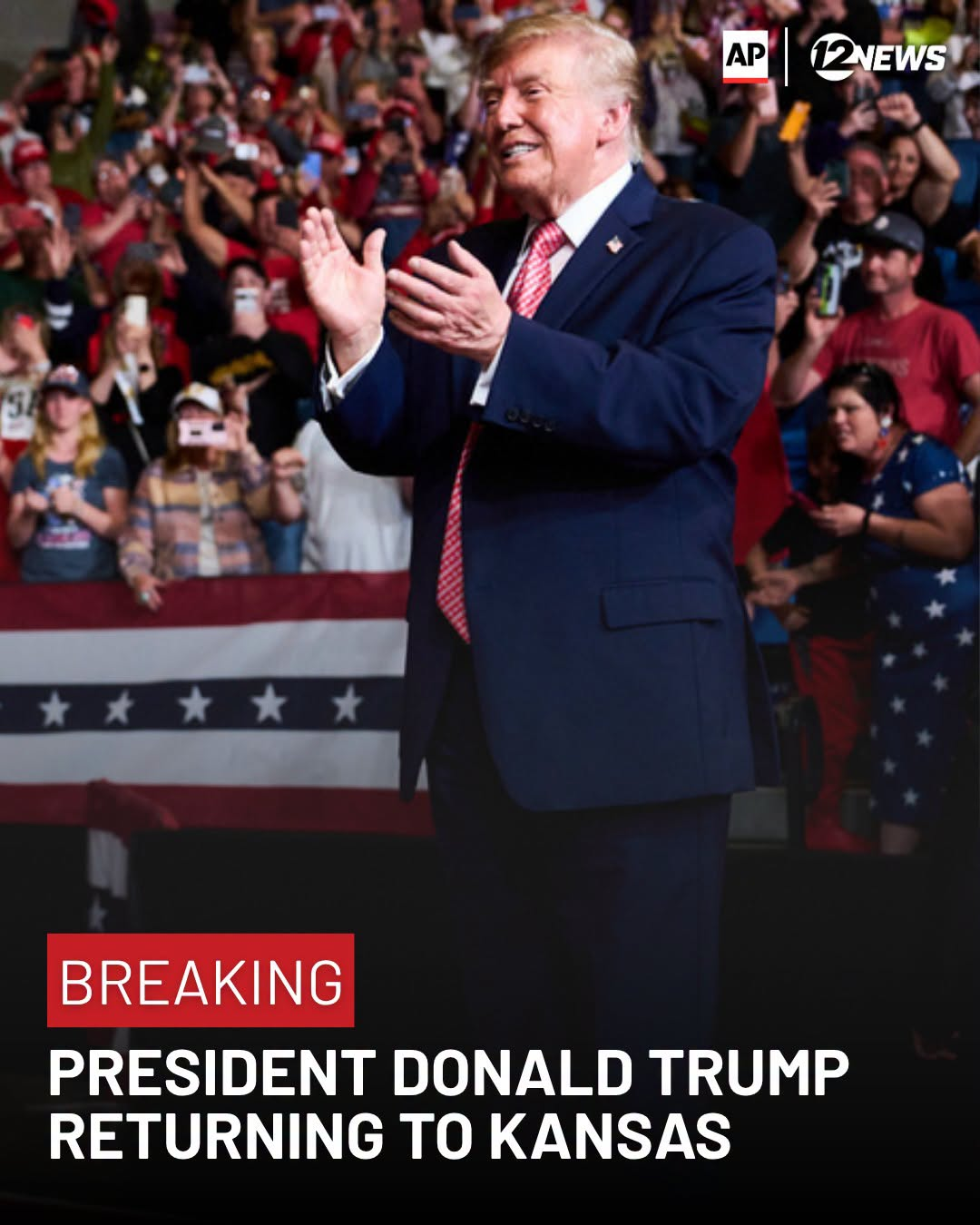
President Donald Trump is scheduled to return to Kansas on Saturday, October 31, for a second campaign rally in the state this month, as Republicans work to energize voters ahead of the November 3 midterm elections. The event is planned for Salina Regional Airport, where Trump is expected to address supporters around noon local time.
Local television reports say the rally will take place at Hangar 509, at 2734 Arnold Court. Doors are scheduled to open at 8:30 a.m., with the program beginning at 10:30 a.m. Attendees are required to RSVP, and organizers have promoted the event as part of the president’s broader midterm campaign push.
The visit comes less than two weeks after Trump appeared at a rally in Park City, near Wichita, on October 19. At that event, he endorsed Republican Senator Roger Marshall, who is seeking reelection, and urged supporters to treat the midterm contest as if Trump himself were on the ballot.
The repeated visits underline how seriously Republicans are taking the Senate race in a state that has traditionally voted Republican in federal elections. Marshall faces Democrat Adam Hamilton, a pastor and political newcomer whose campaign has attracted attention from some voters who have previously supported Republicans.
Kansas has not elected a Democrat to the U.S. Senate in decades, but party strategists are concerned about voter enthusiasm and the cost-of-living pressures affecting households and businesses. A close contest would be unusual in the state, yet it could matter to the national balance of power in a Senate where every seat counts.
Trump’s October 19 rally focused on the administration’s economic record and its support for farmers. He also criticized Democrats and sought to frame the election as a referendum on his policies, reflecting a familiar strategy of nationalizing local races and making his own political standing central to the campaign.
The agricultural economy is a particularly important issue in Kansas. Farmers have faced higher fuel and input costs, volatile commodity markets and uncertainty tied to trade policy. The harvest season makes those costs especially visible, as producers rely on diesel to run machinery and transport crops.
The Associated Press reported after Trump’s earlier Kansas visit that some farmers and rural Republicans were frustrated by rising expenses and the impact of tariffs on their businesses. Those concerns do not necessarily mean voters will switch parties, but they may affect whether some supporters feel motivated to turn out.
At the Park City rally, Trump announced a proposed harvest fuel relief program that he said would provide $8 billion in support for farmers. The administration has also promoted other forms of agricultural assistance. The effect of any new program will depend on its final design, eligibility rules and how quickly help reaches producers.
For Marshall, the challenge is to maintain the loyalty of Trump’s base while convincing voters that he can address the financial strain facing farms and families. His campaign is competing in a political environment where Republican voters may broadly support the party but still express dissatisfaction with the cost of living or particular administration policies.
Hamilton has tried to broaden his appeal beyond traditional Democratic voters. He has said that people who supported Trump should still feel welcome in his campaign, an approach aimed at voters who may be dissatisfied with the direction of the economy but remain culturally or politically conservative.
Trump’s visit also gives Marshall an opportunity to connect his campaign directly to the president’s national following. Presidential rallies can attract large crowds and generate media attention, but they do not guarantee that supporters will vote in a midterm election, when turnout is often lower than in presidential contests.
The rally in Salina is part of a broader sequence of campaign stops across competitive or politically important states. Trump’s public schedule lists appearances in South Carolina and Florida around the same period, underscoring the administration’s focus on building momentum before Election Day.
The Kansas visit is also a reminder that a state’s reputation as a safe Republican stronghold does not eliminate political uncertainty. Candidate quality, local issues, turnout and national economic conditions can all reshape a race, even where one party has dominated statewide elections for generations.
For farmers, the central question is whether the policies announced in Washington will ease the immediate pressures of harvest season. Fuel, fertilizer, seed and equipment costs can absorb a large share of farm revenue, leaving producers vulnerable when prices fall or overseas markets become less predictable.

Trade policy remains part of that debate. Tariffs can be presented by the administration as leverage in negotiations, but retaliatory measures and shifts in international demand may also make it harder for some agricultural producers to sell their products abroad. The effects vary by crop, market and farm operation.
Trump’s supporters are likely to hear a message about tax cuts, investment, rural communities and the administration’s efforts to support agriculture. Critics, meanwhile, will point to costs and uncertainty they associate with the administration’s decisions. The rally will offer a fresh opportunity for both sides to frame the economic debate before voters make their choices.
The timing matters. With Election Day approaching on November 3, the campaign has little time left to change perceptions or convert enthusiasm into votes. The Salina appearance could help Republicans reach voters who did not attend the earlier Park City event, while also generating local and national news coverage.
Attendance at a rally, however, is not a reliable forecast of the final result on its own. Campaign events tend to draw people who are already engaged, and the outcome will depend on the broader electorate, including voters who do not attend political events or closely follow campaign appearances.
The location at Salina Regional Airport gives organizers a large venue for a rally in central Kansas. Local reporting says the public event is planned for Hangar 509, although attendees should check the organizer’s RSVP information for any updated entry instructions, security requirements or schedule changes.
Trump’s return to Kansas therefore carries both a practical and symbolic purpose: it is a show of support for a Republican senator facing a serious challenge and an attempt to reinforce the party’s message on the economy. Whether the visit changes the race will become clearer only when voters cast their ballots and the results are counted.
Comments (0)
Loading comments...
May You Like

STAR DIED AT 38, $10M LIFE INSURANCE INCREASED JUST 30 DAYS BEFORE WWE BRONSON REED'S DEATH!

MINNESOTA NIGHTMARE—UNDERGROUND GAS LEAK, HUNDREDS OF HOMES AT RISK, $300M DAMAGE!

WEYMOUTH HORROR — FIRE TRUCK BRAKES TO SAVE DOG, ONE FIREFIGHTER DEAD, TWO CRITICAL!









Popular Posts




