TRUMP SAYS HE COULD HAVE WON VIETNAM IN A WEEK — HISTORY HAS A FEW QUESTIONS
TRUMP SAYS HE COULD HAVE WON VIETNAM IN A WEEK — HISTORY HAS A FEW QUESTIONS
Donald Trump has offered a bold assessment of one of America's most painful wars: he believes he could have won the Vietnam War in just a week if he had been president at the time. It is the kind of claim that sounds wonderfully simple—until it meets nearly two decades of history, millions of lives disrupted, and the enormous difficulty of turning military power into a lasting political victory.
The remark invites an obvious question: if winning a war were as easy as declaring that you would win it, why did the United States struggle for so long in Vietnam?
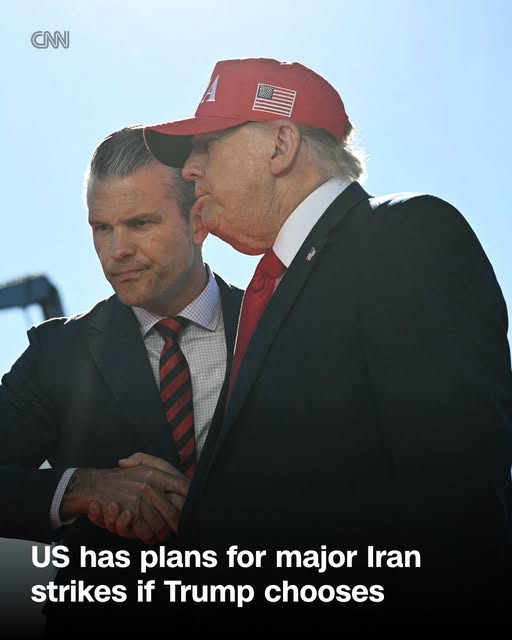
Trump made the boast while discussing the ongoing conflict with Iran, comparing the length of past American wars with his administration's military campaign. But his confidence has drawn attention to a sharp contrast between his sweeping claims and the complicated realities faced by the leaders and soldiers who actually fought in Vietnam.
A WAR THAT LASTED YEARS, NOT A WEEK

The Vietnam War was not a short military operation waiting for the right president to arrive. The conflict grew out of Vietnam's struggle over colonialism, national independence, communism and the future of the country after French rule ended. North Vietnam and the communist-led Viet Cong fought South Vietnam, which received extensive American military and financial support.
The United States expanded its direct military involvement during the 1960s. American forces had enormous firepower, advanced aircraft and overwhelming technological advantages in many engagements. Yet battlefield superiority did not automatically translate into political success.
US forces faced guerrilla warfare, difficult terrain, a determined opponent and a conflict whose outcome depended on the strength and legitimacy of South Vietnam's government. The war also became increasingly unpopular at home as casualties mounted and public confidence eroded.
The major timeline alone complicates Trump's claim. The conflict lasted for years, American combat involvement escalated over the 1960s, US combat troops withdrew in 1973, and Saigon fell to North Vietnamese forces in April 1975.
A week might be enough to launch an operation. It was not enough to resolve the political and military problems that defined Vietnam.
THE UNITED STATES HAD THE FIREPOWER — BUT COULD NOT SECURE THE OUTCOME

One of the central lessons of Vietnam is that winning battles and winning a war are not the same thing.
American forces inflicted heavy losses on enemy forces and conducted large-scale operations, but the opposing side continued fighting. The Tet Offensive of 1968, despite being a costly military setback for communist forces, profoundly damaged American public confidence in official claims that victory was approaching.
The war was also shaped by political realities. South Vietnam's government faced serious problems of legitimacy, corruption and internal division. Meanwhile, North Vietnam remained committed to reunification under its leadership and was willing to absorb enormous losses to pursue that goal.
No president could simply remove those conditions with a confident speech or a rapid military order. Strategy had to account for local politics, allied capacity, public support, regional dynamics and the question of what a sustainable end to the war would look like.
That is why historians continue to study Vietnam as a warning against assuming that superior military strength guarantees a favorable political outcome.
THE IRONY: TRUMP DID NOT SERVE IN THE VIETNAM WAR

Perhaps the most striking detail surrounding Trump's boast is his own history during the Vietnam era.
Trump received four student deferments while attending college and a fifth deferment on medical grounds after a diagnosis of bone spurs in his heels in 1968. The medical exemption kept him from being drafted into military service. His deferments have been widely reported and scrutinized over the years.
The contrast is politically awkward: Trump is now confidently explaining how quickly he could have won a war in which he did not serve.
That fact does not, by itself, prove that his hypothetical strategy would have failed. Presidents do not need to have served in combat to make military decisions, and military experience alone does not guarantee good judgment. But the history makes the certainty of his claim an obvious target for satire.
It is one thing to criticize the decisions made by previous administrations. It is quite another to claim that a conflict that defeated America's political objectives could have been wrapped up in a week—without explaining how.
THE REAL ENDING WAS FAR LESS TRIUMPHANT

The war did not end with the decisive American victory Trump imagines. The Paris Peace Accords were signed in January 1973, and the last US combat troops withdrew later that year. Fighting between North and South Vietnam continued after the American withdrawal.
In April 1975, North Vietnamese forces captured Saigon, the capital of South Vietnam. The South Vietnamese government collapsed, and the country was eventually reunified under communist rule.
The human cost was devastating. The US National Archives records more than 58,000 American military deaths associated with the Vietnam War. Vietnamese military and civilian deaths were far higher, although estimates vary considerably. Millions of people experienced displacement, injury, bereavement and the long-term consequences of the conflict.
That is the history behind the boast. The United States did not lack weapons or military resources. It struggled to achieve its political objectives in a conflict where military operations alone could not secure a lasting outcome.
IF WINNING WERE THAT EASY, WHY DID IT TAKE SO LONG?

Trump's comment is an easy target for political humor because it reduces a complicated historical tragedy to a hypothetical personal victory. The implied message is that previous leaders failed because they lacked the right person in charge. But that explanation avoids the hard questions: What would his strategy have been? How would he have secured South Vietnam? What would have prevented the fighting from continuing? And what would a sustainable victory actually have required?
Trump has not publicly provided a detailed alternative strategy in the remarks reported about his claim. Without one, the assertion remains a boast rather than a serious historical argument.
There is also a lesson for today's conflicts. A president can promise a quick victory, but the real test is whether military action produces a stable and lasting political settlement. That is true whether the conflict lasts a week or a decade.
The Vietnam War deserves more than a punchline. The people who fought and died there, the Vietnamese civilians who endured its devastation, and the families who lived with its consequences deserve to be remembered with seriousness.
Trump says he could have won Vietnam in a week. History offers a rather inconvenient reminder: the United States had enormous military power, fought for years, withdrew without achieving its original objectives, and watched South Vietnam fall in 1975. Confidence is easy. Explaining how you would have changed history is much harder.
Comments (0)
Loading comments...
May You Like