
Trump Waives Sweeping Russia Sanctions at the Last Minute — Zelenskyy Warns of Consequences for Ukraine
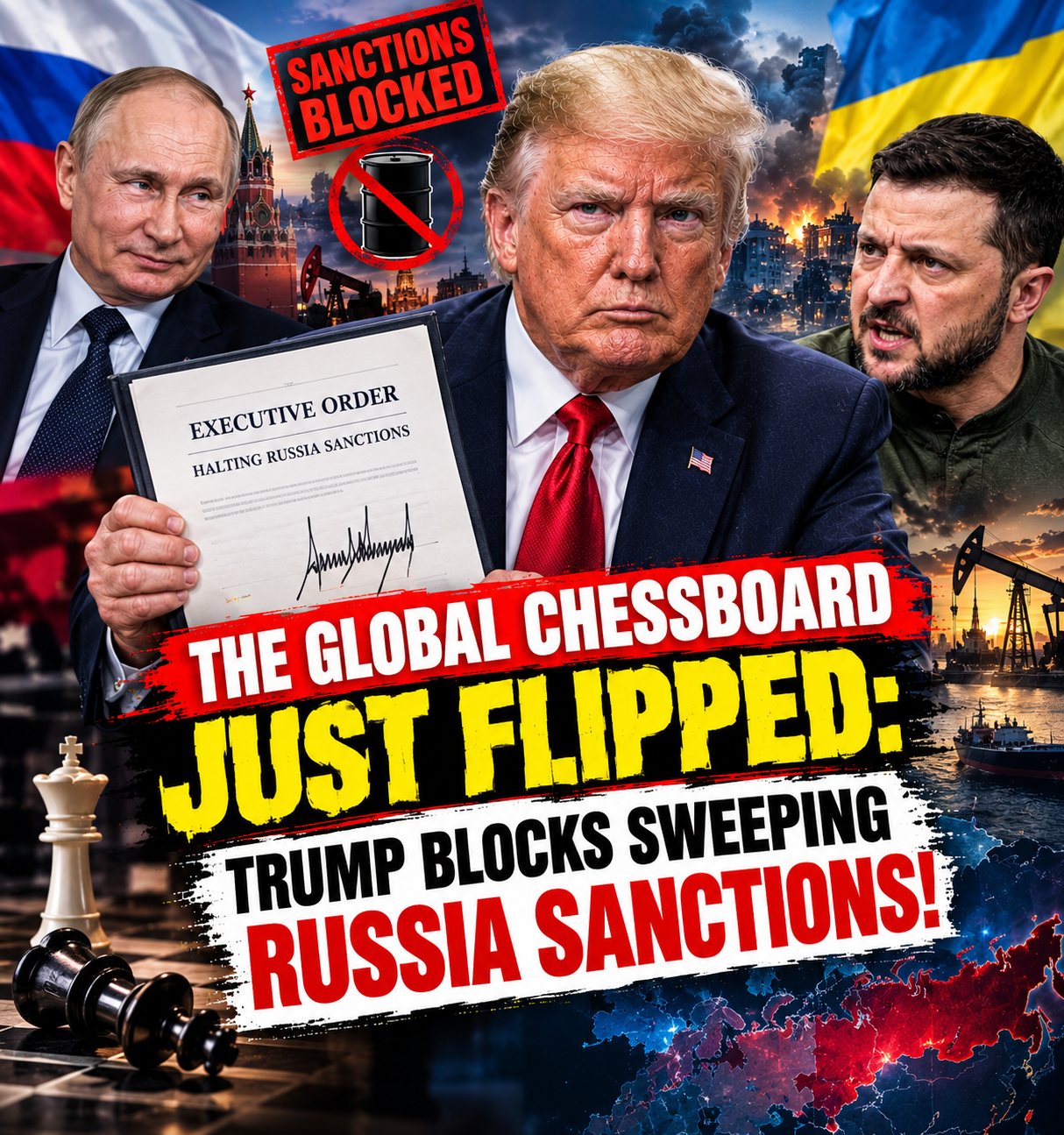
President Donald Trump has suspended major provisions of a new Russia sanctions law just days before they were due to take effect, citing U.S. national interests. The decision has drawn criticism from Ukraine and lawmakers in Washington while Moscow welcomes the prospect of renewed economic cooperation.
WASHINGTON, October 17, 2026 — President Donald Trump’s decision to waive key provisions of the recently enacted Russia sanctions law has opened a new dispute over American policy toward Moscow, the future of support for Ukraine and the balance between energy affordability and geopolitical pressure.
On October 16, Trump signed an executive order invoking a national-interest waiver under the Lindsey O. Graham Sanctioning Russia and Iran Act of 2026. The law had been signed on September 18, and some of its most consequential measures were scheduled to take effect on October 18. The order waives several new sanctions, restrictions and tariff provisions, including measures targeting Russian interests and certain countries purchasing Russian oil and gas.

The White House, where the executive order was issued. Illustrative photograph, not an image of the signing itself.
The decision does not repeal the entire law or terminate every existing U.S. sanction against Russia. The executive order explicitly preserves sanctions imposed under earlier executive orders addressing Russian government activities. Instead, it pauses specified provisions of the new law, leaving the administration with room to reconsider its approach later.
The distinction is important because the law was intended to increase economic pressure on Russia over its continued war against Ukraine. It includes provisions for steep tariffs on certain goods linked to Russian energy purchases and sanctions targeting foreign persons and entities under specified conditions. By issuing the waiver before the deadline, Trump has delayed the immediate implementation of those additional measures while preserving the possibility of future action.
The most direct criticism has come from Ukrainian President Volodymyr Zelenskyy, who argued that easing the pressure could benefit Moscow while Russian attacks on Ukraine continue. The dispute comes amid wider tensions between the two presidents over energy policy, military support and the conditions for ending the war. Reuters reported on October 17 that the disagreement had intensified as Washington sought to reduce fuel-price pressure and Kyiv pushed for continued support against Russia.

Ukrainian President Volodymyr Zelenskyy at a public appearance. The image is illustrative and is not necessarily from his October 17 response.
For Kyiv, the timing is especially sensitive. Ukraine continues to face Russian attacks on energy infrastructure and relies on international military and financial assistance to sustain its defense. Zelenskyy has argued that economic concessions to Moscow risk weakening the leverage available to Ukraine and its partners. His position reflects the Ukrainian government’s stated concern, rather than proof that the waiver will necessarily alter the course of the war.
Russian officials, by contrast, have welcomed the shift. Kremlin envoy Kirill Dmitriev described the waiver as a significant development for U.S.–Russia relations, viewing it as an opportunity to preserve economic cooperation after years of sanctions and diplomatic confrontation. Moscow’s response underscores the potential economic benefits it sees in Washington’s decision, though it does not establish the administration’s underlying motive.

The Kremlin in Moscow. Illustrative photograph used to accompany the section on Russia’s response.
The dispute also follows a separate announcement by Trump concerning Russian diesel supplies. The reported arrangement was presented as a way to increase fuel availability and ease price pressures. Critics in the United States have argued that purchases of Russian energy could provide revenue to a government continuing its invasion of Ukraine, while the administration’s approach reflects its stated interest in managing domestic energy costs. These are competing policy considerations: the potential near-term effect on fuel supply must be weighed against the wider strategic consequences of easing economic pressure on Moscow.
The political response in Washington has not been uniform. Some lawmakers have criticized the waiver as undermining Congress’s intention to increase pressure on Russia, while the administration has relied on a national-interest provision explicitly included in the law. The executive order states that the president submitted the required certification to Congress. Whether lawmakers seek additional oversight or propose further legislation will help determine how much room the administration retains to modify the policy.

The U.S. Capitol, where lawmakers debate sanctions legislation and oversee executive-branch policy. Illustrative image.
Beyond Washington and Kyiv, the decision matters to countries that buy Russian oil and gas. The law’s tariff provisions were designed to make continued purchases more costly for certain major importers and countries accused of facilitating sanctions evasion. Suspending the measures avoids an immediate escalation in trade pressure, but it also leaves international businesses and governments uncertain about whether the provisions might later be activated. The possibility of changing tariff rules can affect commercial planning even before the measures are applied.
For European governments, the waiver raises questions about coordination with Washington on Russia policy and continued support for Ukraine. European countries have their own sanctions and aid commitments, but U.S. decisions remain important because of America’s financial influence, military capabilities and role in international diplomacy. If Washington’s policy diverges further from that of European allies, governments may face new debates over defense spending, sanctions enforcement and longer-term security arrangements.
The broader issue is how sanctions should be used as an instrument of foreign policy. Supporters argue that sustained economic pressure can constrain a government’s ability to finance a war and encourage negotiations. Critics of broad sanctions, however, point to their potential impact on energy prices, trade relationships and the economies of countries that impose them. The effectiveness of any particular measure depends on its scope, enforcement, international cooperation and the response of the government being targeted.
Trump’s order has therefore created a significant change in the immediate implementation of the new law, but it does not, by itself, establish a new U.S.–Russia alliance or resolve the war in Ukraine. The administration has invoked a legal authority provided by Congress, Russia has welcomed the prospect of economic cooperation, and Ukraine has warned that easing pressure could undermine its security. Those positions remain in direct tension.
The next developments will depend on whether the White House provides additional details about its national-interest determination, how Congress responds and whether diplomatic engagement produces changes in Russia’s actions. For now, the waiver leaves a central question unresolved: how Washington intends to balance fuel affordability and potential economic cooperation with Moscow against its stated concerns about Russia’s invasion and its relationships with Ukraine and European partners.
Comments (0)
Loading comments...
May You Like

WWE BRONSON REED DEAD AT 38, STIMULANTS DETECTED, $11M INSURANCE PAYOUT FROZEN!

WEYMOUTH HORROR—80-MPH WIND GUSTS, FIRE TRUCK FLIPS, 3 FIREFIGHTERS CRITICAL!

EAST COAST STORM CRISIS—5 MILLION AT RISK OF BLACKOUTS, WATER, AND HEATING FAILURES!









Popular Posts




