
Trump Warns He Could Be the “Last Republican President” If GOP Fails to Pass Voting Bill
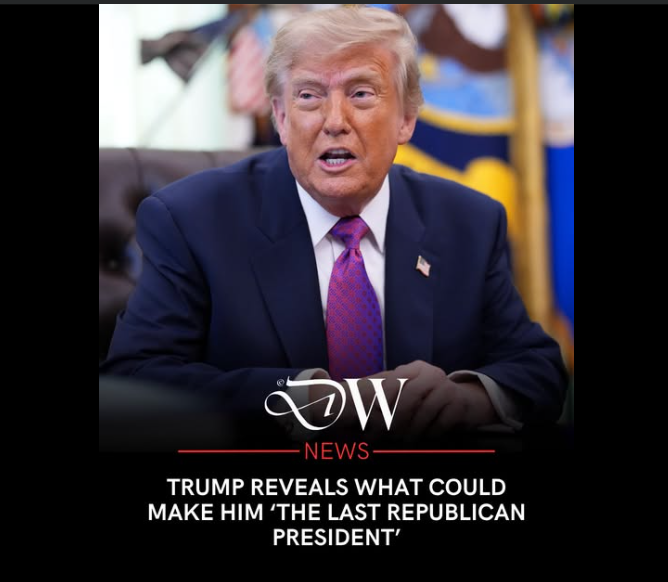
WASHINGTON — President Donald Trump is warning Republicans that the party could lose its ability to win the White House if Democrats regain control of Congress and dismantle the Senate filibuster, allowing them to advance a sweeping election bill and expand Democratic representation.
Trump has repeatedly argued that the SAVE America Act, a Republican-backed measure that would require proof of U.S. citizenship for voter registration and impose additional voting requirements, is essential to the GOP's future.
His warning became particularly stark in recent weeks.
“If he succeeds … I will be, sadly, despite the great job we are doing, the last Republican President!” Trump wrote in a Truth Social post in August, referring to Michigan Democratic Senate nominee Abdul El-Sayed and his support for ending the filibuster.
Trump repeated the broader warning again Wednesday during an appearance with Texas Lt. Gov. Dan Patrick, saying Republicans could face an existential political problem if Democrats regain power.
Trump Links the GOP’s Future to the SAVE America Act
Trump's argument centers on a chain of political events he believes could follow a Democratic takeover.
The president has urged Senate Republicans to pass the Safeguard American Voter Eligibility (SAVE) Act, which would require proof of citizenship for voter registration and impose additional restrictions related to voting procedures.
Trump argues that if Republicans fail to enact the legislation, Democrats could eventually regain control of Congress and then change Senate rules to eliminate the legislative filibuster.
That, he says, could allow Democrats to enact policies that would make it significantly harder for Republicans to win future presidential elections.
The president has therefore repeatedly urged Senate Republicans to abandon the filibuster if necessary to pass the voting bill.
Trump Has Warned About This Before
The “last Republican president” warning is not new.
In June, Trump wrote that Republicans would “never win another Election” without passing the SAVE America Act and said he would “sadly” be the last Republican president.
His August comments followed the same logic.
After progressive Democrat Abdulrahman Mohamed El-Sayed won Michigan's Democratic Senate primary, Trump used El-Sayed's support for ending the filibuster to pressure Republicans.
Trump argued that Democrats could use the elimination of the filibuster to add new states, expand the number of Democratic senators and representatives, and reshape the Supreme Court. He claimed that such changes could permanently alter the electoral balance against Republicans.
Why the Filibuster Matters
The Senate's legislative filibuster generally means that most major legislation requires 60 votes to overcome procedural obstruction and advance.
Republicans currently hold a narrow 53-47 Senate majority, meaning they do not have enough senators to reach 60 votes on their own.
That mathematical reality has become a major obstacle to Trump's voting legislation.
Trump has repeatedly demanded that Senate Majority Leader John Thune either find the votes to pass the SAVE America Act or change the Senate rules.
Thune, however, has consistently rejected eliminating the filibuster.
Thune Has Resisted Trump's Pressure
The dispute has exposed an unusual tension between Trump and the Republican-controlled Senate.
Thune has said Republicans do not have enough votes either to pass the SAVE America Act through the normal process or to eliminate the filibuster.
Trump nevertheless continued pressing the Senate throughout the summer.
In July, he even called on Thune to cancel the Senate's August recess until lawmakers passed the voting legislation or, preferably, terminated the filibuster.
The Washington Post reported that the Senate ultimately left Washington without advancing Trump's preferred version of the legislation, despite weeks of pressure from the president.
That setback did not end Trump's campaign for the measure.
What Is the SAVE America Act?
The SAVE America Act is designed to change federal election rules, particularly the process for registering to vote.
Among its central provisions is a requirement for proof of U.S. citizenship when registering for federal elections.
Trump and his supporters argue that the measure is necessary to prevent noncitizens from voting and strengthen confidence in elections.
Critics argue that noncitizen voting is already illegal and extremely rare, and that additional documentation requirements could create obstacles for eligible citizens who do not have immediate access to the required documents. The Associated Press recently reported that election officials and researchers have challenged some of the administration's claims about the scale of noncitizen voting.
The disagreement has made the bill one of the most divisive election-policy issues heading into the 2026 midterms.
Democrats Could Benefit From Changes Trump Predicts
Trump's argument goes beyond voter identification.
He has warned that if Democrats regain power, they could push to grant statehood to Washington, D.C., and Puerto Rico.
Trump argues that doing so could produce additional Democratic-leaning senators and representatives, potentially changing the balance of power in Congress for years.
He has also warned that Democrats could eliminate the filibuster and expand the Supreme Court.
In his August Truth Social post, Trump claimed Democrats could gain four senators and eight House members through the changes he described, while also pursuing a much larger Supreme Court.
Those are Trump's political predictions, rather than events that have been approved or are guaranteed to occur.
The Senate Has So Far Refused to “Nuke” the Filibuster
For now, Trump's preferred route has run into resistance from members of his own party.
Senate Republicans have repeatedly indicated that they do not have the votes to eliminate the filibuster.
Thune has maintained that changing the Senate's legislative rules is not a realistic option without sufficient Republican support.
The issue has created a difficult choice for Republican senators: follow Trump's demand for a rules change or preserve a Senate procedure that has historically been used by both parties to block legislation.
The debate has also exposed differences within the GOP over how aggressively Republicans should use their current congressional majority.
Trump’s Warning Comes Ahead of the 2026 Midterms
The political stakes are especially high because the 2026 midterm elections are approaching.
Trump has made election rules a central part of his message to Republican voters and has repeatedly warned that Democrats could use a future congressional majority to reverse many of his policies.
At the same time, Democrats are attempting to capitalize on dissatisfaction with the Trump administration and Republican control of Washington.
Recent reporting has described Trump's aggressive efforts to reshape voting rules ahead of the midterms, including restrictions involving voter registration, mail ballots and election administration.
The midterms will determine control of Congress, but they will also influence the political environment heading into the 2028 presidential election.
Trump’s Own Future Is Already Part of the 2028 Debate
The irony of Trump's “last Republican president” warning is that Trump himself is already talking about what happens after his current term.
The 22nd Amendment generally prevents a person from being elected president more than twice.
Trump has nonetheless repeatedly teased the possibility of seeking another term in 2028, while at other times acknowledging the constitutional barrier. Recent Associated Press reporting said Trump has increasingly discussed life after the White House even as he continues to play with the idea of another campaign.
Republicans are already beginning to look toward the post-Trump era.
Vice President JD Vance and Secretary of State Marco Rubio have emerged as prominent potential contenders for the 2028 Republican nomination, according to polling and political reporting.
That means Trump's warning is not necessarily about whether he personally can run again.
It is fundamentally about whether the Republican Party can continue winning presidential elections after Trump's presidency ends.
What Trump’s “Last Republican President” Claim Really Means
Trump is not predicting that the Republican Party will literally cease to exist.
His argument is that a combination of Democratic victories, changes to Senate rules, new states entering the union and changes to election laws could create a political structure in which Republicans would struggle to win the presidency.
That is a political prediction, not an established fact.
Whether such a scenario could actually occur would depend on future elections, congressional majorities, Senate rules, statehood legislation, constitutional questions and the preferences of voters.
Still, the warning reveals how seriously Trump views the fight over election legislation and the Senate filibuster.
The Bigger Battle Inside the Republican Party
The immediate question is whether Republicans can find a path forward on the SAVE America Act without dismantling the filibuster.
So far, the answer has been no.
Trump wants the legislation passed before the midterm elections and has repeatedly pressured Senate Republicans to act.
Thune and other Republican senators have resisted eliminating the filibuster, arguing that there are not enough votes and that abandoning the rule could have consequences for the party in the future.
For Trump, however, the stakes are much larger than one election bill.
He is framing the fight as a question of whether Republicans will remain electorally competitive for generations.
“I will be, sadly, the last Republican President,” Trump has warned.
Whether that becomes a memorable political prediction or simply another unsuccessful campaign argument will depend largely on what happens in November — and on whether Republicans ultimately decide to change the Senate rules Trump has spent months demanding they abandon.
Fact Check: What the Viral Image Gets Right
✅ Trump really made the “last Republican president” warning.
He used the phrase in connection with the SAVE America Act and the potential elimination of the Senate filibuster.
✅ Trump has repeatedly demanded action on the SAVE America Act.
He has pressured Senate Republicans, particularly Majority Leader John Thune, to advance the bill.
✅ Trump has pushed to eliminate the filibuster.
He has argued that Republicans should remove the 60-vote barrier if necessary to pass the legislation.
⚠️ “Last Republican president” is a prediction, not a fact.
There is currently no evidence that Trump will actually be the last Republican elected president. His statement describes a political scenario he believes could result from Democratic control and changes to election rules.
Comments (0)
Loading comments...
May You Like

South Korea–Ukraine Rift Deepens Over North Korean POW Transfer as PURL Draws New Scrutiny

South Korea–Ukraine Rift Deepens Over North Korean POW Transfer as PURL Draws New Scrutiny













