
Trump Weighs a “Big Decision” on Iran as War Enters Seventh Month
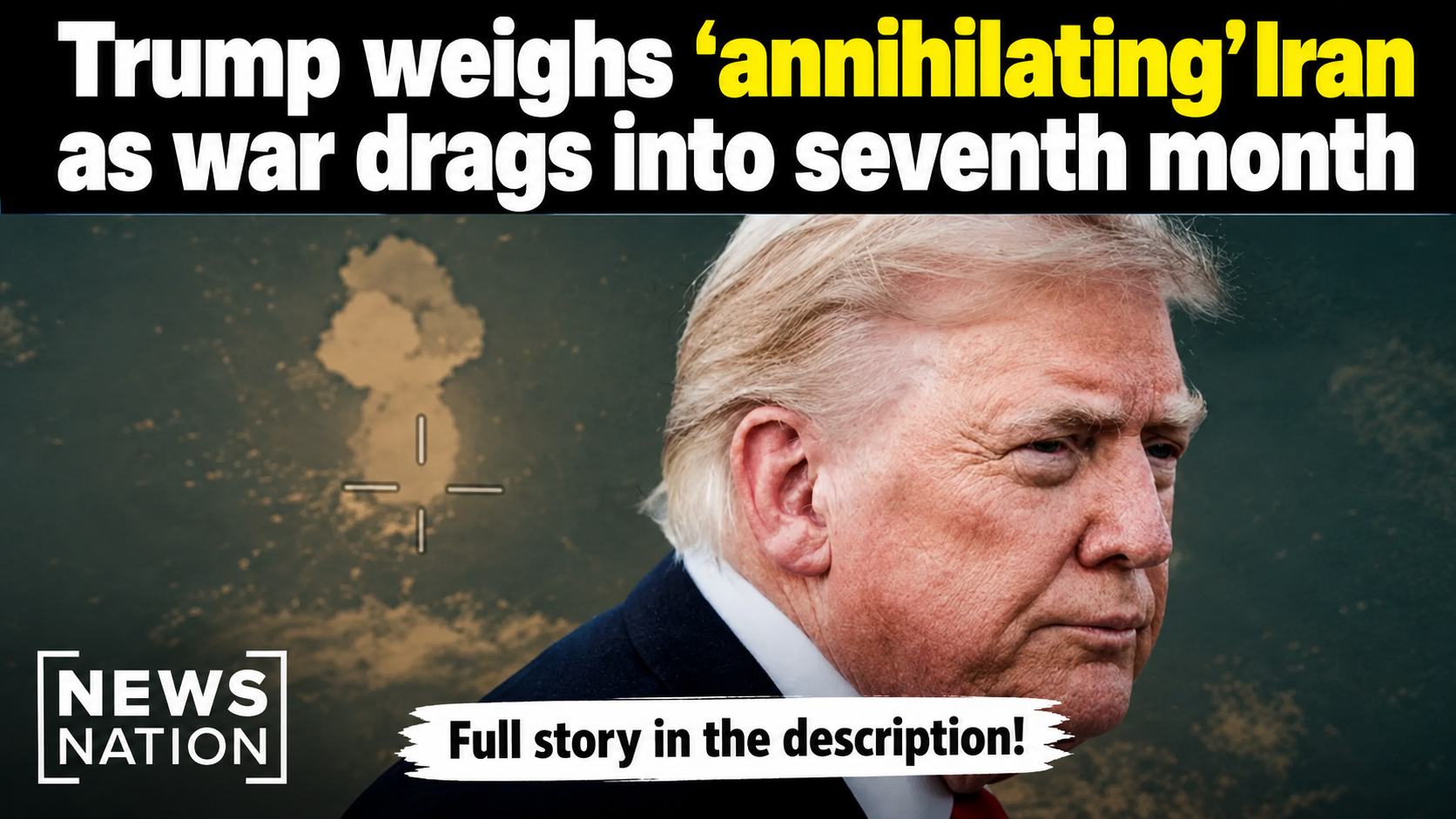
President Donald Trump says he is approaching a critical decision over whether to resume major military operations against Iran, raising the possibility of renewed strikes as the conflict enters its seventh month. The warning comes as the war has cost the United States an estimated $38 billion and disrupted vital shipping routes through the Strait of Hormuz.
President Donald Trump says he is facing a major decision over the next phase of the U.S.-Iran conflict, including whether to launch another large-scale military campaign aimed at forcing the Iranian regime to an end.
In an interview with Axios published September 17, Trump was asked whether he would escalate the conflict. He replied that he had a “big decision” ahead and asked whether he wanted to “go in and annihilate” the Iranian regime or not.
The comments came as the conflict approaches its seventh month and as Washington weighs military pressure against renewed diplomatic efforts.
Trump is scheduled to meet leaders from six Gulf countries — Saudi Arabia, the United Arab Emirates, Qatar, Bahrain, Kuwait and Oman — on the sidelines of the United Nations General Assembly in New York next week. According to Axios, Trump wants their views before deciding the next phase of the conflict.


Trump’s “Annihilate” Comment Signals a New Decision Point
Trump's latest language is significant because the administration had previously shifted away from an immediate return to the most intense phase of the fighting.
The president has repeatedly said in recent days that he hopes the conflict is nearing an end. But the latest Axios interview indicates that a larger military operation remains under consideration.
Trump told Axios that he wants to hear directly from regional partners before determining what comes next.
The six Gulf states have been deeply affected by the conflict. Their territories and energy infrastructure have faced Iranian attacks or threats, while disruption to regional shipping has affected oil and gas markets.
The administration therefore faces a complicated calculation: whether to intensify military pressure on Iran or continue efforts aimed at reopening diplomatic channels and stabilizing regional shipping.
The War Has Lasted Far Longer Than Originally Expected
The United States and Israel launched military operations against Iran on February 28, 2026.
At the beginning of the campaign, Trump administration officials described a series of specific military objectives, including destroying Iran's ballistic-missile capabilities, destroying its naval forces, preventing it from obtaining a nuclear weapon and disrupting its ability to support regional armed groups.
Trump initially described the campaign as an operation that could be completed relatively quickly.
Instead, lower-intensity fighting has continued for months.
Reuters reported September 18 that the conflict has now lasted more than six months, with Iran still capable of retaliating against U.S. interests and allies while the United States continues to maintain substantial forces in the region.
The prolonged conflict has also complicated Trump's stated objective of bringing the fighting to an end.
The $38 Billion Price Tag
One of the biggest developments surrounding the conflict came earlier this week, when the Congressional Budget Office estimated that the war had cost the Department of Defense approximately $38 billion through August 1.
The figure includes the cost of replacing expended munitions and equipment lost in combat, increased flying hours, other operational expenses and additional fuel costs.
CBO estimates that continuing combat could cost another $2 billion to $3 billion per month, depending on the intensity of fighting.
The agency also cautioned that its $38 billion estimate does not represent the total cost of the conflict to the federal government. Some costs — including certain expenses outside the Defense Department and future borrowing costs — are not included in that number.
That means the figure in the viral image is based on a real government estimate, but it should not be interpreted as the final cost of the war.


U.S. Weapons Stocks Are Also Under Pressure
The financial cost is only one part of the calculation.
CBO said the conflict's main military opportunity cost has been the large number of missile-defense interceptors used during the fighting.
The agency warned that the United States will have a reduced inventory of some interceptors for several years. That could become particularly important if Washington faces another major conflict involving an opponent with a large missile arsenal. CBO specifically identified China as an example of a potential future contingency in which missile-defense inventories could matter.
Defense News reported that CBO estimated the conflict had consumed between half and two-thirds of U.S. inventories of certain missile-defense interceptors since June 2025 and that replenishing those stocks could take at least five years even if production increases.
The issue has therefore expanded beyond the immediate battlefield.
The administration must also consider the readiness of U.S. forces for other potential security challenges.
The Strait of Hormuz Remains a Central Pressure Point
The conflict's economic consequences are closely tied to the Strait of Hormuz, a crucial route for global energy shipments.
Shipping traffic through the strait has fallen sharply during the conflict.
Reuters reported September 18 that only four commodity vessels transited the Strait of Hormuz on Thursday, compared with a 10-day average of 16. The figure was based on preliminary Kpler shipping data.
The disruption has contributed to higher energy prices and increased uncertainty for international shipping.
CBO said the reduction in oil and natural-gas shipments through Hormuz, together with disruptions in the Red Sea, has created significant inflationary pressure in the U.S. economy.
The agency estimated that the conflict could leave inflation around 0.5 percentage points higher during the first quarter of 2027 than it otherwise would have been.
Iran Is Still Able to Threaten Regional Shipping
The latest developments underline why the Strait of Hormuz remains central to Trump's decision.
On September 18, Iran claimed that it had struck the Togo-flagged oil tanker Trend after accusing it of attempting an unauthorized crossing of the strait.
The claim could not immediately be independently verified. U.K. Maritime Trade Operations also reported incidents involving vessels in the waterway.
Reuters reported that shipping through Hormuz remains far below normal levels, while the parallel disruption around the Bab el-Mandeb Strait is also affecting maritime traffic.
That creates a difficult strategic problem for Washington.
Military action designed to force Iran to reopen the waterway could also risk further escalation that keeps shipping disrupted.
Gulf Allies Could Influence Trump's Next Move
The upcoming meeting with Gulf leaders is therefore particularly important.
Saudi Arabia, the United Arab Emirates, Qatar, Bahrain, Kuwait and Oman have all faced different consequences from the conflict.
Several have experienced attacks or threats from Iranian forces or Iran-aligned groups. At the same time, their economies depend heavily on stable energy exports and functioning maritime routes.
Axios reported that Gulf leaders previously expressed concerns about a major U.S. strike because of the possibility of Iranian retaliation against their oil and gas infrastructure. Those concerns contributed to Trump's decision in August to hold off on another major attack.
The next meeting could therefore help determine whether the administration again considers a major escalation or focuses more heavily on diplomacy.


Diplomacy Has Not Completely Disappeared
Despite Trump's latest warning, diplomatic channels have not disappeared.
The Trump administration recently approved visas for Iranian President Masoud Pezeshkian and Foreign Minister Abbas Araghchi to attend the U.N. General Assembly in New York.
The United States is imposing strict restrictions on the Iranian delegation, but Washington cited its obligations as host of the United Nations under the 1947 U.N. Headquarters Agreement.
Their presence creates an unusual diplomatic setting.
Senior Iranian officials will be in the same city as Trump and other world leaders while the two countries remain in conflict.
That does not mean a peace agreement has been reached.
But the U.N. General Assembly provides an opportunity for bilateral meetings and indirect diplomatic contacts that would be more difficult while the leaders remain separated geographically.
The United Nations Is Also Investigating the Conflict
Another major development this week has increased international scrutiny of the U.S. campaign.
A U.N.-mandated fact-finding mission said September 17 that there were reasonable grounds to believe that two U.S. strikes in Iran constituted war crimes.
The mission examined a February strike on the Shajareh Tayyebeh Primary School in Minab and another strike in Lamerd. It said the Minab attack killed more than 150 people, including approximately 120 children, and accused the United States of failing to take adequate precautions to verify the military targets.
The mission also accused Iranian authorities of crimes against humanity during a crackdown on protests.
The findings are not a criminal conviction. The fact-finding mission does not itself prosecute individuals or determine criminal liability through a court.
The report nonetheless adds another layer of international pressure as Trump prepares to address world leaders at the United Nations.
Russia and China Are Challenging Washington at the U.N.
The diplomatic environment is also becoming more complicated.
On September 17, Russia and China vetoed a U.S.-backed Security Council resolution seeking to extend independent monitoring of international sanctions on Iran.
Western countries argued that continued monitoring was necessary to document sanctions violations.
Russia and China disputed the legal basis of the sanctions framework and said the Iranian nuclear issue should be addressed through diplomacy.
The vote does not determine the military outcome of the war.
But it demonstrates that Washington faces opposition from two other permanent members of the Security Council as it attempts to maintain international pressure on Tehran.
What Is Trump Actually Deciding?
Trump's latest comments do not establish that a new major attack has been ordered.
Instead, they indicate that the administration is considering different paths.
Option 1: Renew major military operations
A large-scale campaign could attempt to further degrade Iran's military infrastructure and increase pressure on Tehran to accept U.S. demands.
That approach would carry the possibility of additional military spending, casualties and attacks on U.S. forces or regional partners.
Option 2: Continue the current pressure campaign
Washington could maintain its military presence, naval blockade and economic pressure without immediately launching another major offensive.
That would preserve pressure on Tehran while avoiding an immediate expansion of combat.
However, the current approach has not restored normal shipping through the Strait of Hormuz.
Option 3: Increase diplomatic efforts
Trump could use the U.N. General Assembly and his meetings with Gulf leaders to push for another diplomatic arrangement.
The administration's challenge would be securing terms that address the U.S. concerns over Iran's nuclear program, missiles, military forces and regional activity while also obtaining Iranian agreement to end the conflict.
The Conflict Is Now at a Crucial Crossroads
Trump's latest “annihilate” comment should therefore be understood in the context of a conflict that has evolved considerably since February.
The United States has already spent approximately $38 billion on combat operations through August 1. CBO expects another $2 billion to $3 billion per month if fighting continues.
U.S. missile-defense inventories have been reduced, energy markets remain vulnerable, shipping through Hormuz remains far below normal, and international criticism of the conflict has intensified.
At the same time, Iran has not agreed to the terms Washington has sought, and regional fighting involving Iran-backed forces continues.
The next major diplomatic moment will come at the U.N. General Assembly, where Trump will meet Gulf leaders and where senior Iranian officials are expected to appear.
Whether that produces another round of negotiations or precedes a return to large-scale military action remains unresolved.
For now, Trump's own words make one point clear: the next phase of the Iran conflict has not yet been decided.
What the Viral Image Gets Right — and What It Leaves Out
What it gets right:
- Trump said he faces a “big decision” over whether to launch another major attack against Iran.
- He specifically used the word “annihilate” when discussing the possibility of further action against the Iranian regime.
- The conflict has entered its seventh month.
- CBO estimated approximately $38 billion in direct Defense Department costs through August 1.
- CBO estimates continuing operations could cost $2 billion to $3 billion per month.
- Trump is preparing to meet leaders from six Gulf states at the U.N. General Assembly.
What needs context:
- Trump has not announced that a new major attack has been ordered.
- The $38 billion is a CBO estimate of Defense Department costs, not the total economic cost of the war.
- The conflict has not been continuous at the same intensity since February; CBO says the initial intense phase lasted just over a month, followed by lower-intensity combat.
- The U.N. fact-finding mission's war-crimes findings are investigative conclusions, not a judicial conviction.
- The Strait of Hormuz remains heavily disrupted, but some commercial traffic continues.
Comments (0)
Loading comments...
May You Like

Shocking news from Ohio: an unexpected development ahead of Trump's rally


South Korea–Ukraine Rift Deepens Over North Korean POW Transfer as PURL Draws New Scrutiny












