
TRUMP, XI AND PUTIN SIGN HISTORIC APEC DEAL ON IRAN—30-DAY DEADLINE SET!
Trump, Xi and Putin Discuss Iran at APEC as Questions Grow Over a Possible Peace Framework
SHENZHEN, China — November 19, 2026 — U.S. President Donald Trump met Chinese President Xi Jinping and Russian President Vladimir Putin on Thursday at the Asia-Pacific Economic Cooperation summit, bringing together three major powers with competing interests in the war involving Iran. Their discussions raised questions about whether Washington, Beijing and Moscow could establish a common diplomatic approach to ending the conflict.
The meeting followed days of preparations by the White House, the Kremlin and Chinese officials.
Trump had identified Iran and nuclear arms control as important subjects for the summit.
China and Russia, meanwhile, maintain significant economic and strategic relationships with Tehran, creating both opportunities and obstacles for diplomatic cooperation.
The White House confirmed the trilateral meeting in advance, while senior American officials cautioned that a major agreement was not expected.
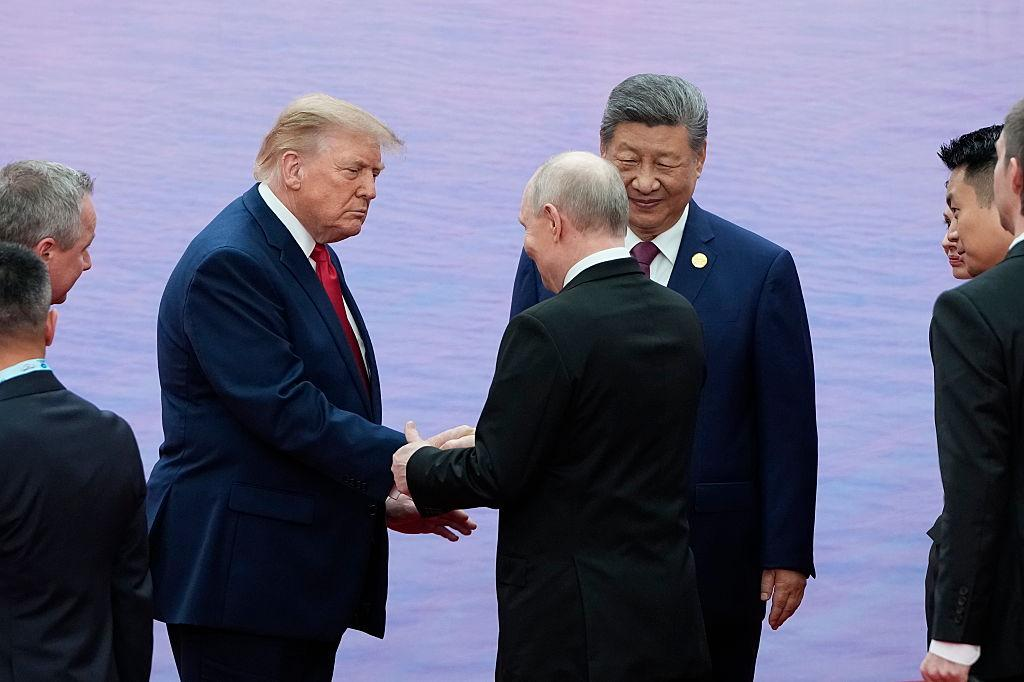
The gathering brought together the presidents of the United States, Russia and China in a rare three-way diplomatic setting.
All three governments have substantial military capabilities and significant influence over international security.
Their relationships are complicated by economic competition, sanctions and disagreements over regional conflicts.
The Shenzhen meeting offered an opportunity for direct communication despite those tensions.
For Trump, the talks provided a chance to seek cooperation on ending the war involving Iran.
For Putin, they offered a platform to discuss Russia's strategic interests with Washington and Beijing.
For Xi, hosting the meeting reinforced China's role in international diplomacy.
The event was significant because of who participated, but the presence of powerful leaders did not itself establish that they had reached a binding agreement.
The war involving Iran has affected international security and energy markets.
The United States has been directly involved in the conflict, while Russia and China maintain relationships with Tehran.
Those differences make the three countries important participants in discussions about a possible settlement.
Washington wants an end to the fighting under conditions it considers compatible with American security interests.
Moscow and Beijing have emphasized their own diplomatic positions and relationships in the region.
Any common approach would require reconciling those priorities.
It would also require engagement with Iran itself.
A proposal discussed by outside powers cannot automatically end a war without decisions by the governments and forces directly involved.
That limitation is central to understanding the Shenzhen talks.
Trump had spoken publicly about the possibility of meeting Xi and Putin to discuss ending the Iran war.
He also identified nuclear arms reduction as a priority.
The White House subsequently confirmed the trilateral meeting.
American officials described it as an opportunity to begin conversations on major security questions.
Before the summit, they cautioned against expecting immediate breakthroughs.
That position is important because it establishes the administration's publicly stated expectations.
The meeting was intended to create diplomatic opportunities.
It was not presented in advance as a ceremony at which a completed Iran agreement would necessarily be signed.
Trump's willingness to discuss the conflict with Russia and China reflected the belief that both countries could influence the wider diplomatic environment.
Russia and Iran have developed substantial cooperation in recent years.
Their relationship includes diplomatic coordination and security-related interests.
Western governments have raised concerns about military cooperation between Moscow and Tehran.
Russia has also maintained a role in international discussions about Iran's nuclear program.
These connections give Moscow channels of communication with Iranian officials.
They do not guarantee that Tehran would accept Russian recommendations.
Iran has its own political institutions, military priorities and negotiating positions.
Putin could potentially help convey proposals or discuss security arrangements.
But Russian participation alone would not make a peace agreement binding on Iran.
The distinction matters when evaluating claims that Moscow and Washington could settle the conflict without Tehran's approval.
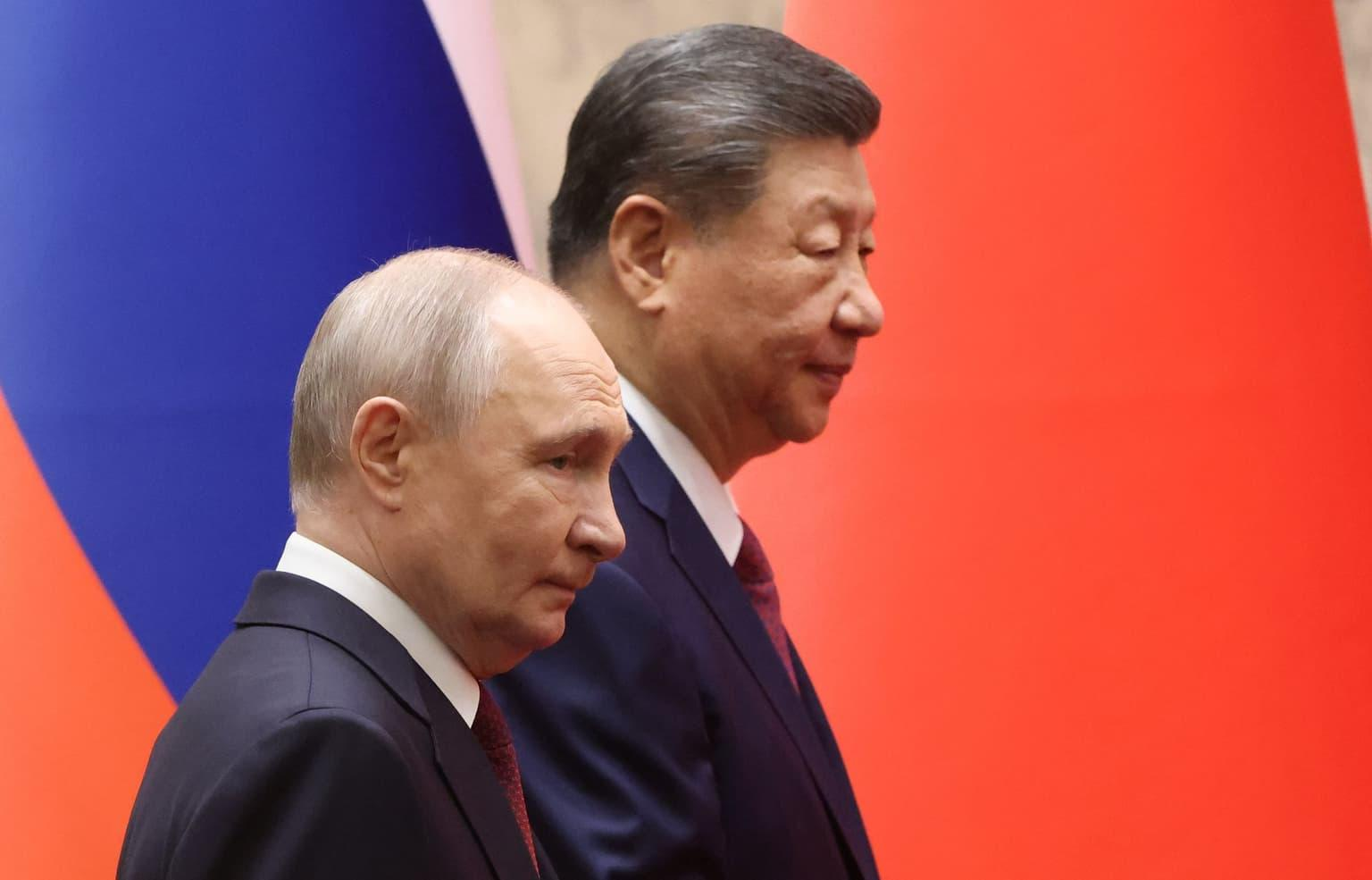
China is an important economic partner for Iran.
Energy trade is a major component of the relationship.
Beijing also has strong commercial interests in the wider Middle East and depends on stable international shipping routes.
The Iran war has created risks for energy supplies and transportation.
Those developments give China an interest in reducing regional instability.
However, Beijing must balance its relationship with Tehran against its ties with other Middle Eastern governments and the United States.
Chinese participation in a peace initiative could provide diplomatic support and economic incentives.
But China cannot independently determine Iran's response.
Any arrangement would need to account for Tehran's decisions and the interests of other countries affected by the war.
The United States, China and Russia share an interest in avoiding uncontrolled escalation.
Beyond that general objective, their priorities differ.
Washington is concerned about Iranian military capabilities and regional security.
Moscow seeks to preserve its strategic relationships and influence.
Beijing wants stable energy markets, trade routes and regional economic conditions.
These interests can overlap without becoming identical.
An agreement would require the governments to identify measures all three could support.
Those might include diplomatic contacts, monitoring arrangements or broader discussions involving regional governments.
But the details would determine whether a proposal could be implemented.
A statement supporting peace is different from an enforceable agreement with clearly defined obligations.
The available reporting establishes that Iran was part of the summit's diplomatic agenda.
It does not establish that Trump, Xi and Putin signed a binding Iran peace agreement.
Associated Press described the talks as an opportunity to discuss ending conflicts and addressing nuclear risks.
Before the summit, American officials had warned that major breakthroughs were unlikely.
A formal agreement would ordinarily be supported by a published text, an official announcement or an authenticated record of the signing.
Those elements are not established in the reports reviewed.
This distinction does not mean the discussions were unimportant.
High-level talks can influence later negotiations even when no treaty is signed.
But the difference between discussing a possible framework and signing one is fundamental to understanding what happened.
A 30-day response period would be a diplomatic timetable rather than an automatic peace settlement.
Its meaning would depend on the document establishing it.
A deadline could require a government to accept or reject a proposal, submit amendments or agree to further negotiations.
Those are different obligations.
A response deadline also differs from a ceasefire deadline.
One requires an answer; the other concerns the conduct of military operations.
Without a published agreement, it is impossible to establish which obligation the proposed 30 days would cover.
There is also no verified starting date for such a countdown.
The November 19 summit date should not automatically be treated as the beginning of a deadline that has not been formally announced.
Diplomatic deadlines require precise language.
A period of 30 days could begin when an agreement is signed, when a proposal is delivered or when all parties acknowledge receipt.
Those dates may differ.
The document would also need to specify whether the deadline expires at a particular hour and which time zone applies.
More importantly, it would need to identify what happens if no response is received.
A deadline without defined consequences may function as a political target rather than a legally enforceable requirement.
These details matter because the phrase 30 days to respond can suggest a much more definite arrangement than the available evidence supports.
The United States, China and Russia can agree among themselves to pursue a diplomatic initiative.
They can also coordinate proposals and establish deadlines for their own negotiations.
But they cannot automatically impose contractual obligations on Iran through an agreement Iran has not accepted.
A proposal could be delivered to Tehran with a requested response date.
Iran could then accept, reject or seek changes to its terms.
Whether outside powers could impose separate consequences would depend on the relevant legal authority, their domestic policies and international obligations.
A negotiated peace settlement requires more than the agreement of outside governments.
The participation of the parties directly involved is essential to its implementation.
That is why Tehran's position would remain important even if Washington, Beijing and Moscow eventually endorsed a common proposal.
A serious peace proposal would likely involve several interconnected questions.
Iranian officials would need to assess the terms concerning military operations, national security and any proposed monitoring arrangements.
Economic sanctions could also become part of the negotiations.
Tehran would have to consider whether the agreement provided sufficient assurances that commitments would be honored.
Other governments would face their own concerns about verification and enforcement.
A proposal might include phased measures rather than a single decision.
For example, an initial cessation of hostilities could be followed by further negotiations on longer-term security arrangements.
But the existence of such possibilities does not establish that they were included in an APEC document.
Iran is not a participant in APEC.
The forum's membership consists of 21 Asia-Pacific economies, and its primary purpose is economic cooperation.
A meeting held alongside APEC can provide a venue for international diplomacy, but the forum itself does not negotiate on behalf of Tehran.
That institutional distinction matters.
Trump, Xi and Putin could discuss Iran while attending the summit.
They could also announce a separate diplomatic initiative.
But neither action would make Iran a signatory to an agreement it had not joined.
Any Iranian response would need to come through an identifiable official channel.
Without a verified proposal or statement from Tehran, claims that Iran has been given a binding 30-day deadline go beyond the documented record.
The conflict has placed pressure on international energy markets.
Iran occupies a strategically important position near the Strait of Hormuz, a major route for oil and liquefied natural gas shipments.
Disruption to shipping can affect producers, importers and consumers far beyond the Middle East.
Higher transportation costs and uncertainty about supplies can influence fuel prices.
These effects help explain why China has a substantial interest in reducing tensions.
China imports large quantities of energy and depends on international trade.
The United States also has economic interests in stable energy markets.
Russia, as a major energy producer, faces a different combination of opportunities and risks.
Those competing interests could complicate a common approach even when all three governments favor reducing the conflict.
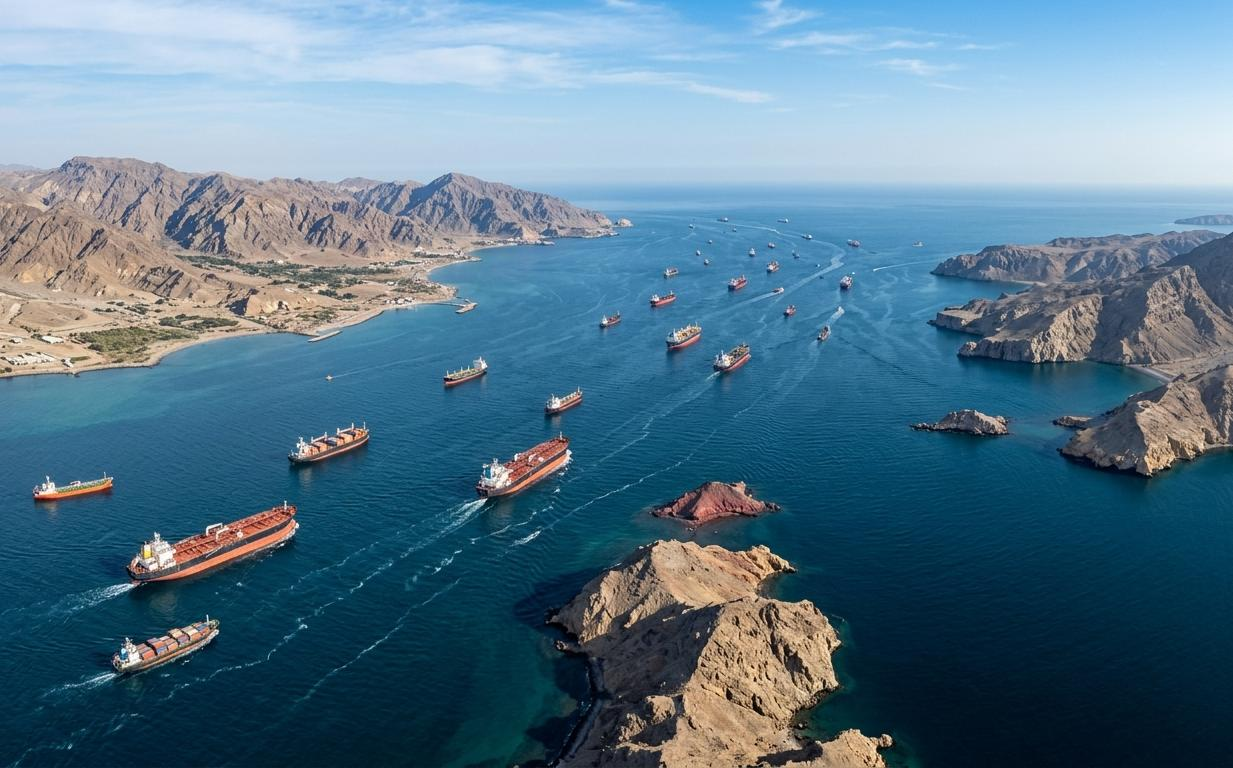
The Strait of Hormuz connects the Persian Gulf with the Gulf of Oman and the wider Indian Ocean.
It is one of the world's most important maritime energy routes.
Oil and gas shipments from Gulf producers pass through the area on their way to international markets.
Security concerns can affect insurance costs, shipping schedules and commercial decisions.
Even when vessels continue operating, the risk of disruption can influence market expectations.
For Asian economies, these developments are particularly important because many depend on imported energy.
The economic consequences extend to manufacturing, transportation and household costs.
That provides a direct connection between the Iran war and the agenda of an economic summit such as APEC.
A diplomatic initiative addressing maritime security could therefore have implications beyond the immediate conflict.
The Shenzhen talks also focused on nuclear arms control involving the United States, Russia and China.
That issue should not be confused with negotiations concerning Iran.
The three major powers possess established nuclear arsenals.
Iran's nuclear program has been the subject of separate international agreements, inspections and disputes.
A proposal to reduce American, Russian and Chinese nuclear weapons would address different obligations from an agreement concerning Iran.
The distinction is particularly important because Trump had publicly emphasized global nuclear reductions before the summit.
The expiration of the New START treaty in February 2026 increased attention to that issue.
A trilateral nuclear arms-control discussion would not automatically establish a settlement of the Iran war.
The two subjects were on the same diplomatic agenda but remained separate negotiating challenges.
New START was the last major bilateral treaty limiting deployed strategic nuclear weapons held by Washington and Moscow.
Its expiration removed an important framework for arms-control restrictions.
Trump has called for a broader arrangement that includes China.
Beijing has questioned proposals requiring it to accept restrictions comparable to those applied to countries with much larger arsenals.
That disagreement presents a significant obstacle.
The three leaders could agree that reducing nuclear risks is desirable while remaining far apart on specific limits.
A future treaty would require technical negotiations and verification arrangements.
The Shenzhen meeting offered an opportunity to begin discussions, but American officials had already cautioned against expecting a comprehensive agreement.
The nuclear agenda therefore illustrates the difference between high-level diplomacy and a completed treaty.
Russia and China maintain relationships with Iran that differ from Washington's.
Moscow has developed security and diplomatic cooperation with Tehran.
Beijing has extensive economic interests involving Iranian energy and regional trade.
The United States has pursued military and economic pressure during the conflict.
Those positions create different incentives.
Washington may seek conditions that Moscow or Beijing consider difficult for Iran to accept.
Russia and China may favor arrangements that preserve their own regional interests.
Even where the governments share an interest in ending hostilities, they may disagree about sanctions, security guarantees and implementation.
That is why a common statement would be a meaningful diplomatic development.
It would also be only one stage in the process of obtaining a wider agreement.
APEC was established to promote economic cooperation across the Asia-Pacific region.
Its activities include trade facilitation, investment, technology and economic integration.
It is not a military alliance or a body authorized to impose peace settlements on countries outside its membership.
However, summits often create opportunities for separate diplomatic meetings.
Leaders may use the occasion to discuss issues that extend beyond the forum's formal responsibilities.
That is what made the Trump-Xi-Putin meeting possible.
The three presidents could discuss Iran, nuclear weapons and international security while attending an economic summit.
But a decision taken in a separate meeting should not automatically be described as an official APEC agreement.
The legal status of any arrangement would depend on its actual text and signatories.
The immediate diplomatic challenge is identifying measures that Washington, Moscow and Beijing can support.
A shared position might make further negotiations easier by reducing disagreement among influential outside powers.
It could also provide channels for communicating proposals to Tehran.
But a common position would not guarantee Iranian acceptance.
The conflict involves military, political and economic interests that cannot be settled through diplomatic symbolism alone.
A meaningful process would require identifiable commitments, participation by relevant governments and mechanisms for implementation.
Those elements are more important than the number of leaders appearing in a photograph.
The Shenzhen meeting demonstrated a willingness to communicate.
Whether that communication produces a substantive agreement remains a separate question.
Such a document could clarify the intended negotiating process, any proposed deadlines and the responsibilities of participating governments.
An official Iranian response would then provide evidence of Tehran's position.
Without those steps, there is no basis for treating a 30-day countdown as an established diplomatic obligation.
Further negotiations could involve additional governments and international organizations, depending on the issues under discussion.
The conflict's effect on energy supplies and international trade gives many countries an interest in the outcome.
But a durable settlement would require agreement on the underlying security questions, not simply a deadline.
The meeting between Trump, Xi and Putin was significant because it brought together leaders whose governments have different relationships with Iran.
Trump sought cooperation on ending the war.
China and Russia entered the discussions with their own economic and strategic interests.
The leaders also faced a separate challenge involving nuclear arms control.
The public record confirms that Iran was part of the diplomatic agenda. It does not establish that the three presidents signed a peace agreement or gave Tehran 30 days to respond.
Comments (0)
Loading comments...
May You Like

PENTAGON'S DECLASSIFIED UFO FILES — THE MYSTERY OF AN UNDERGROUND STORAGE PROJECT!

BANGCHAK REFINERY IN THAILAND SHUT DOWN, U.S. OIL PRICES JUMP 10%!

PACIFICA PIER IN CALIFORNIA COLLAPSE REVEALS MASSIVE CRACK BENEATH THE OCEANs!









Popular Posts




