
Trump-Xi Summit Produces New Trade and AI Measures as China Announces Fresh Steps
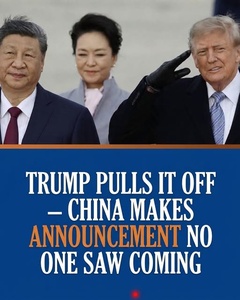
The highly anticipated Trump-Xi summit in Washington has concluded with several new initiatives involving trade, investment, artificial intelligence and diplomatic communication, while major disagreements between Washington and Beijing remain unresolved.
President Donald Trump hosted Chinese President Xi Jinping for a three-day state visit from September 23 through September 25, marking Xi’s first White House visit in more than a decade.
The visit featured an elaborate state arrival ceremony, military displays, diplomatic meetings and a White House state dinner, reflecting the importance both governments attached to maintaining direct communication.
At the center of the discussions was trade, with the two governments agreeing to extend their existing trade truce for another two months rather than immediately returning to higher tariff levels.
The extension gives negotiators additional time to address unresolved questions involving tariffs, Chinese purchases of American products, rare-earth supplies and technology restrictions affecting both economies.
The White House later said the countries reached consensus on more favorable tariff treatment covering approximately $30 billion of non-sensitive goods moving in each direction.
Those products include agricultural goods, seafood, wood products, cosmetics and medical devices among American exports, while Chinese imports covered categories such as appliances, toys and other consumer products.
The governments also agreed to establish or operationalize new mechanisms for trade and investment discussions, creating formal channels intended to address market-access barriers and commercial disagreements.
Another notable announcement concerned artificial intelligence, with Washington and Beijing agreeing to establish a bilateral communication channel for AI-related incidents and a dedicated dialogue concerning emerging technologies.
The White House said both sides agreed to use the term “super intelligence” for certain emerging technologies and establish a U.S.-China dialogue focused on associated risks and benefits.
The AI discussions come as Washington and Beijing compete intensely over advanced computing, semiconductors and technological leadership, making communication mechanisms increasingly important despite continuing strategic distrust.
Taiwan remained another sensitive issue during the summit, with Chinese officials pressing Washington over the island while the United States continued balancing security commitments with broader diplomatic considerations.
Iran also featured in the broader discussions, reflecting the increasingly interconnected nature of American and Chinese strategic interests beyond their immediate bilateral economic relationship.
China simultaneously announced additional measures involving drug-precursor chemicals, expanding export-permit requirements for two substances shipped to the United States, Mexico and Canada.
The new controls brought the number of chemicals covered by Chinese export restrictions to eighteen, following earlier measures introduced during negotiations with Washington over illicit synthetic drugs.
The summit also produced several symbolic developments, including China’s plan to provide two giant pandas to Atlanta and an invitation for American students to study in China.
According to Chinese announcements reported during the visit, as many as 100,000 American students could be invited to study in China over the next five years.
The leaders also discussed energy, with the White House saying Trump urged Xi to increase refined petroleum production as Washington seeks greater stability in global energy supplies.
Despite the announcements, the summit did not resolve several fundamental disputes, particularly over Taiwan, advanced technology, rare-earth supplies and the long-term structure of U.S.-China trade.
The outcome therefore represents a combination of limited economic concessions, new communication mechanisms and continued negotiations rather than a comprehensive settlement of the strategic rivalry between the world’s two largest economies.
Trump subsequently said he expected to meet Xi again in China in November and at the G20 summit in Florida in December, indicating that high-level engagement between Washington and Beijing will continue.
Comments (0)
Loading comments...
May You Like

gfnhgmnghnmfgnbvvvvvvvvv

South Korea–Ukraine Rift Deepens Over North Korean POW Transfer as PURL Draws New Scrutiny
OBAMA STEPS BACK INTO THE POLITICAL SPOTLIGHT













