Trump’s administration is threatening Europe
U.S. Warns Europe Over Starlink Restrictions as Technology Dispute Escalates
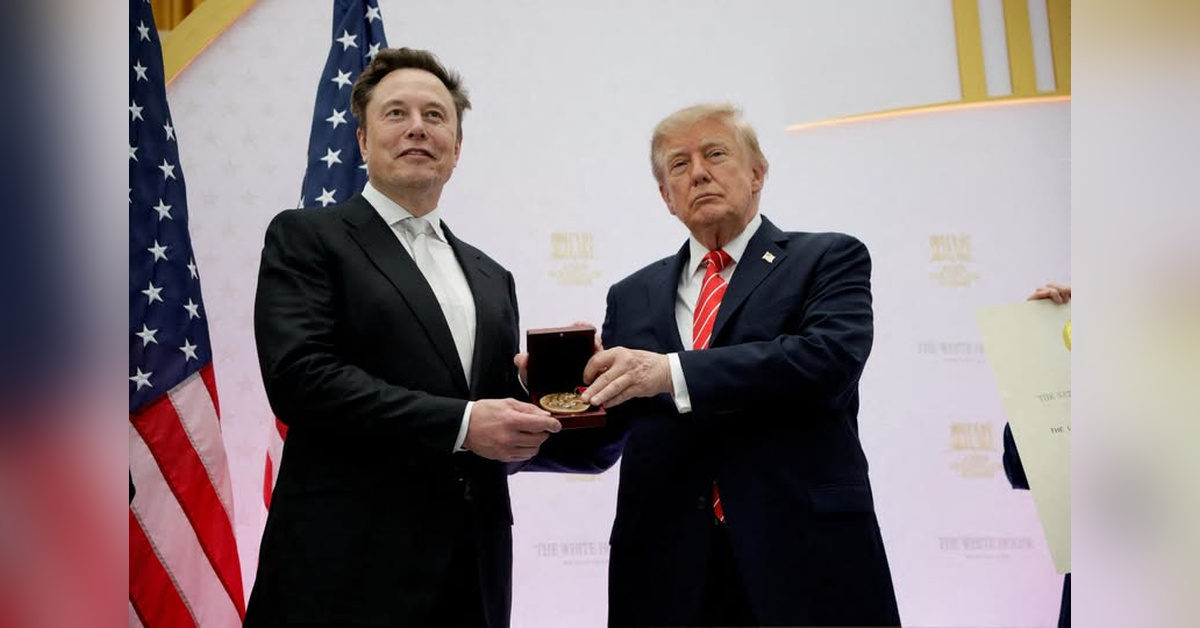


The warning has intensified concerns about Europe’s reliance on foreign technology providers, particularly in sectors where satellite communications, cloud infrastructure, and digital networks are increasingly viewed as strategic assets.
Puzder made the remarks in an interview with the Financial Times, arguing that European companies should consider the potential consequences if the European Union adopts policies that disadvantage American competitors.
The dispute centers on radio spectrum used for direct-to-device satellite connections, a technology that could allow compatible smartphones to communicate with satellites without relying entirely on conventional mobile networks.
The European Commission has proposed reserving part of the relevant spectrum for European companies, a move that could limit access for overseas competitors, including SpaceX, the company behind Starlink.
Supporters of the proposal see it as an opportunity to strengthen Europe’s technological independence and encourage domestic companies to compete in a market increasingly shaped by powerful American and Chinese providers.
Washington, however, argues that regulatory decisions should not unfairly disadvantage U.S. businesses. Puzder warned that European firms with substantial American operations could face serious consequences if the dispute escalates.
The ambassador did not publicly announce a specific retaliatory measure in the reported comments. His warning instead highlighted the possibility of consequences, leaving the nature and scope of any response uncertain.
SpaceX has strongly criticized the European proposal, arguing that restrictions could undermine its commercial position and potentially affect satellite connectivity in regions where reliable communications are especially important.
Ukraine has become central to the debate because Starlink has supported communications for civilians and military units during Russia’s full-scale invasion, making the network a critical part of the country’s infrastructure.
Recent service restrictions affecting Ukrainian military satellite communications have added urgency to European concerns. The developments have prompted renewed discussion about how much control a private foreign company can exercise over strategically important communications.
European policymakers are increasingly examining whether dependence on overseas technology providers creates economic and security vulnerabilities, especially when international relations deteriorate or commercial decisions become entangled with political disputes.
Four major European telecommunications companies—Deutsche Telekom, Orange, Telefónica, and Vodafone—have also explored cooperation on satellite-to-phone services, potentially creating a stronger European alternative to existing satellite connectivity providers.
However, developing a credible alternative will take time. Europe currently lacks a satellite network comparable in scale to Starlink, meaning that reducing dependence will require partnerships, investment, infrastructure, and regulatory coordination.
The dispute also raises questions about whether governments can promote domestic technology industries without provoking retaliation from important trading partners. Balancing strategic autonomy with open competition remains a difficult challenge for European policymakers.
For American companies, Europe represents a significant market for telecommunications and other digital services. Any restrictions could affect investment decisions, future partnerships, and the commercial strategies of businesses operating on both sides of the Atlantic.
For European firms, the prospect of retaliation from Washington creates uncertainty. Companies with significant U.S. customers or operations could face additional risks if the disagreement develops into a broader economic confrontation.
The controversy is unfolding amid wider tensions between Washington and European capitals over trade, defense responsibilities, technology regulation, and the degree to which Europe should depend on American infrastructure.
Neither the reported warning nor the European Commission’s proposal means that a final policy decision or retaliatory action has already occurred. The proposal remains the focus of political and commercial disagreement.
The coming months may determine whether Brussels modifies its approach, proceeds with the spectrum plan, or seeks a compromise that addresses European strategic concerns while maintaining market access for international competitors.
Ultimately, the Starlink dispute highlights a growing challenge for transatlantic relations: Europe wants greater control over critical technology, while the United States is warning that measures restricting American companies could carry significant economic consequences.
Comments (0)
Loading comments...
May You Like
Barack Obama in Disbelief? Newly Released White House Photos

The Obamas’ Entertainment Move: What Their New Animated Series Really Reveals
HE’S IN: BARACK OBAMA STEPS BACK INTO THE SPOTLIGHT

Latest Posts





Popular Posts

Trump Impeachment Debate Intensifies
Oct 20, 2026