
Trump’s Attack on Jewish Voters Raises Questions About Faith, Loyalty, and Michigan’s Senate Race
Trump’s Attack on Jewish Voters Raises Questions About Faith, Loyalty, and Michigan’s Senate Race
At a Port Huron rally, the president told Jewish voters who might support Democrat Abdul El-Sayed that they should be ashamed. His claim of 99 percent support in Israel is not backed by a cited poll.
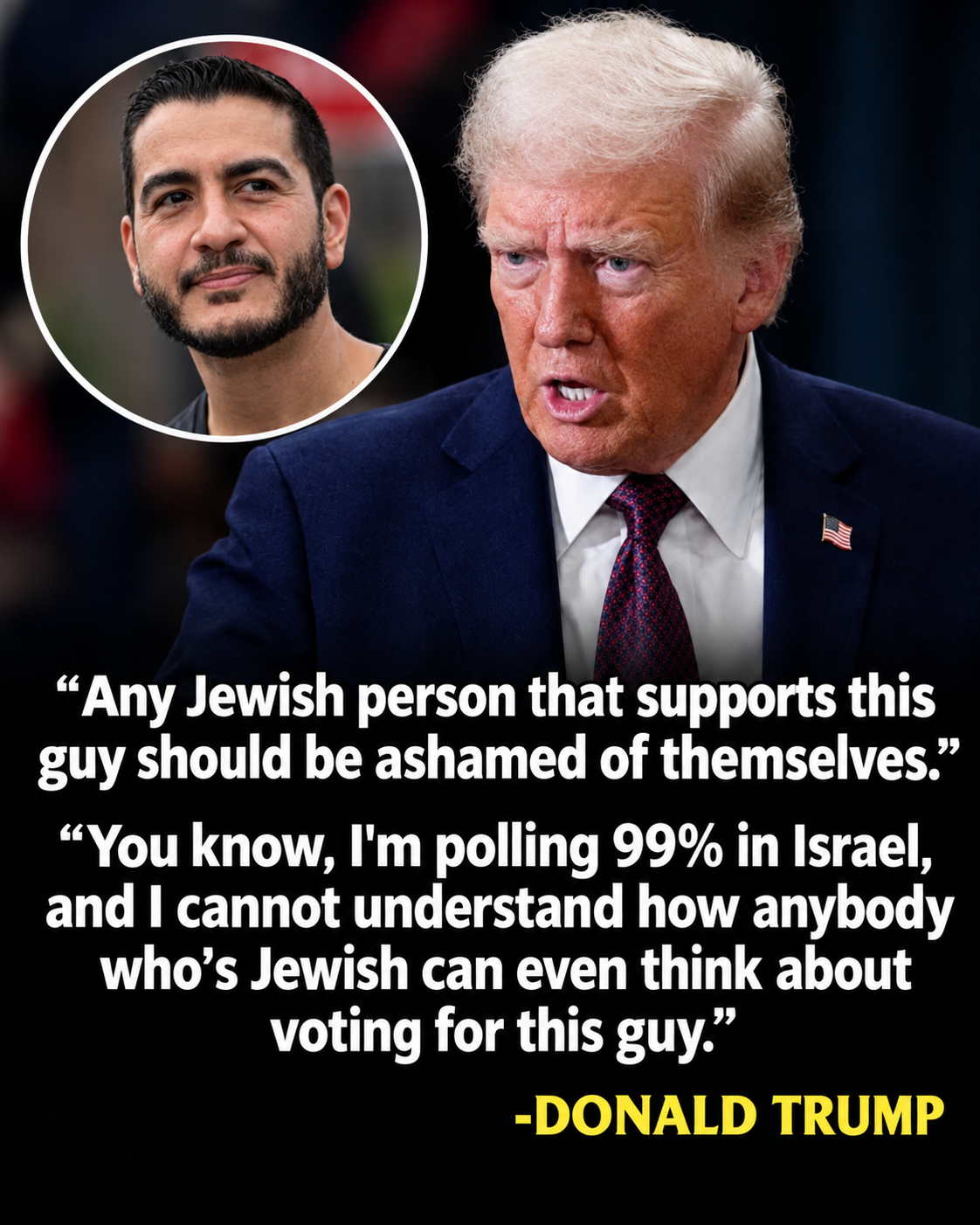


President Donald Trump’s remarks about Jewish voters who might support Abdul El-Sayed have turned a Michigan campaign rally into a national argument about religion, political loyalty, and the limits of campaign rhetoric. At a Port Huron event on October 25, Trump said Jewish people who support the Democratic Senate nominee “should be ashamed of themselves” and added that they should never speak to those voters again.
The remarks were delivered while Trump was campaigning for Republican Senate nominee Mike Rogers ahead of Michigan’s November 3 midterm election. The race is closely watched because control of the U.S. Senate could hinge on a small number of competitive contests, making Michigan a critical battleground for both parties.
The graphic accompanying this article reproduces two statements attributed to Trump: that Jewish people supporting El-Sayed should feel ashamed, and that Trump is “polling 99% in Israel.” The rally transcript and contemporaneous reporting confirm that he made both remarks. The second claim, however, should not be treated as a verified polling result: Trump did not cite a survey, and reporting found no public poll supporting a 99 percent approval figure.
Trump’s comments came amid a broader attack on El-Sayed, a physician and former public health official who is running as a Democrat. Trump characterized him as a security threat and used language linking him to jihadism and the Muslim Brotherhood. Those accusations are disputed, and reporting on the rally noted no evidence that El-Sayed himself was affiliated with the Muslim Brotherhood.
El-Sayed has been sharply critical of Israeli government policy, has accused Israel of committing genocide in Gaza, and opposes continued U.S. weapons support for Israel. Those positions have become central to the political debate surrounding his candidacy, particularly as voters weigh foreign policy alongside domestic concerns such as health care, wages, and the cost of living.
The argument over Jewish voters raises a deeper question: who gets to define what a person’s religious identity requires politically? Jewish Americans are not a single voting bloc, and their views on Israel, U.S. foreign policy, and domestic policy vary widely. A voter can care deeply about Jewish safety and Israel while still disagreeing with a candidate or government’s policies.
By telling Jewish voters they should be ashamed if they support El-Sayed, Trump framed a political choice as a test of religious authenticity. That approach may energize voters who already agree with him, but it also risks alienating people who believe their faith and civic judgment should not be dictated by a political leader.
The remarks also echo Trump’s earlier criticism of Jewish Americans who vote for Democrats. In previous election cycles, he argued that Jewish voters who support Democratic candidates are acting against their religion or against Israel. Jewish organizations and other critics have pushed back against the idea that there is only one legitimate political position for Jewish Americans.
The distinction between support for Israel and support for a particular Israeli government is important. People can support Israel’s security and the right of Jewish people to live free from persecution while also opposing specific military actions, settlement policies, or diplomatic choices. Treating those positions as mutually exclusive can flatten a complicated debate into a loyalty test.
Trump’s claim that he is polling at 99 percent in Israel deserves particular scrutiny. Public opinion is measured through defined samples, dates, and questions, and the result can change depending on what respondents are asked. A sweeping percentage without a cited poll offers no reliable basis for judging the views of an entire country.
Recent reporting has described fluctuations in Israeli public confidence in Trump, especially around his handling of the war with Iran and negotiations related to it. One poll cited by The Times of Israel found that a majority of respondents did not trust Trump to protect Israeli interests in an agreement with Iran. That does not establish the precise level of his overall popularity, but it underscores why the 99 percent claim should not be accepted at face value.
Michigan’s Jewish community is diverse in religious practice, political outlook, and views on Israel. Some voters prioritize a strong U.S.-Israel relationship; others place greater emphasis on civil liberties, social welfare, immigration, or the conduct of the war in Gaza. Many balance several of these concerns rather than treating any one issue as decisive.
The campaign is also unfolding in a state where Arab American and Muslim communities are politically significant. El-Sayed’s candidacy has brought debates over Gaza, Islamophobia, and representation into the center of the Senate contest. For some voters, the tone of the campaign may be as consequential as the candidates’ policy positions.
Trump’s rhetoric has drawn criticism because it combines a direct appeal to Jewish voters with claims that cast a Muslim American candidate as inherently dangerous. Critics argue that such language encourages suspicion based on religion and heritage rather than focusing on specific, substantiated evidence. Campaigns can debate a candidate’s record forcefully without implying that a person’s faith or name is proof of disloyalty.
At the same time, voters deserve clear information about any candidate’s policy positions, public statements, and record. Allegations about extremism or national security should be evaluated through verifiable evidence, not repetition from a campaign stage. The same standard should apply regardless of party or religious background.
The rally also featured a wider appeal for Republicans, including support for Rogers and other Michigan candidates. Trump’s role in the race reflects the broader strategy of the 2026 midterms: national figures are trying to turn local contests into referendums on their opponents, their own records, and the direction of the country.
Whether the comments help Rogers remains uncertain. Sharp rhetoric can dominate the news cycle and strengthen partisan loyalty, but it can also distract from voters’ immediate concerns. In a close election, the impact may depend on whether undecided voters view the remarks as a principled warning, an unfair personal attack, or an attempt to redirect attention from economic and public-service issues.
For El-Sayed, the challenge is to answer both the policy questions raised by opponents and the broader portrayal of his identity. His campaign has emphasized that the election should be about the future of Michigan and the needs of its residents. The contest will test how effectively he can keep that message in focus while national political figures intensify attacks.
The episode is a reminder that American elections are shaped not only by policy proposals but also by arguments about belonging. When politicians tell members of a religious community how they must vote, they risk treating a pluralistic electorate as if it has one authorized voice. Democratic participation depends on the freedom to disagree within communities as well as between parties.
Ultimately, the key facts are straightforward: Trump made the quoted remarks at a Michigan rally while attacking Abdul El-Sayed, and he claimed to be polling at 99 percent in Israel without citing evidence for that number. The wider claims made during the speech require separate verification. As voters approach Election Day, they can assess the candidates’ records and proposals without accepting a demand that religious identity dictate a single political choice.
Comments (0)
Loading comments...
May You Like

EAST COAST MEGASTORM—2 MILLION HOUSES DAMAGED, 5 MILLION AT RISK OF BLACKOUTS, WATER FAILURES!


1,000+ MILITARY FAMILY RECORDS BREACHED, 200+ MILITARY SITES AT RISK!









Popular Posts



