Trump’s Death Penalty Push Returns — Justice or Overreach
WASHINGTON — President Donald Trump has made the death penalty a central part of his administration’s tougher approach to violent crime, including directing the Justice Department to pursue capital punishment in certain federal cases involving undocumented immigrants and people who kill law enforcement officers.
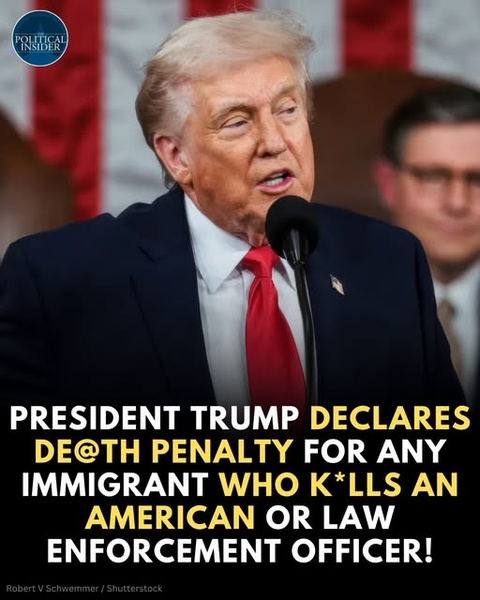
A viral graphic circulating online presents the policy in much simpler terms, claiming that Trump has “declared” the death penalty for any immigrant who kills an American or law enforcement officer.
That wording is misleading. Trump has not created an automatic death penalty for every such killing. His administration has directed federal prosecutors to seek the death penalty in specified capital cases, but eligibility depends on federal law, the facts of each case, prosecutorial decisions and the courts.
Trump Ordered DOJ to Seek the Death Penalty in Certain Cases
The policy dates to Trump's return to office in January 2025.
On his first day back in the White House, Trump signed an executive order titled “Restoring the Death Penalty and Protecting Public Safety.” The order directed the attorney general to pursue federal jurisdiction and seek the death penalty when legally appropriate for certain capital offenses.
Among the cases specifically highlighted were murders of law-enforcement officers and capital crimes committed by undocumented immigrants.
Trump also called on Congress to make his death-penalty policy permanent.
During his March 2025 address to Congress, Trump said he had already signed an executive order requiring a mandatory death penalty for people who murder police officers and urged lawmakers to turn the policy into permanent law.
However, an executive order cannot simply erase the legal requirements surrounding capital punishment. Federal prosecutors still have to proceed under existing statutes and constitutional protections.
The Justice Department Has Escalated Its Death-Penalty Policy
The administration has since taken additional steps to expand the federal government's use of capital punishment.
In April 2026, the Justice Department announced that it had reinstated the execution protocol used during Trump's first administration and expanded the range of execution methods under consideration, including firing squads.
The department said it had also authorized prosecutors to seek death sentences against several defendants, including members of MS-13 accused of murdering a federal witness. Two of those defendants were described by DOJ as undocumented immigrants.
The administration argues that aggressive use of the death penalty is necessary to deter what it describes as the country's most violent criminals.
Critics, however, argue that capital punishment raises serious questions about due process, proportionality and the possibility of executing an innocent person.
What the Viral Graphic Gets Right — and Wrong
The graphic is based on a real Trump administration policy, but its wording goes further than the law.
The claim that Trump has declared the death penalty for “any immigrant who kills an American or law enforcement officer” suggests that the punishment automatically applies whenever such a killing occurs.
That is not how federal capital punishment works.
Federal law identifies specific offenses for which the death penalty may be available. For example, federal law provides severe penalties, including potentially death, for certain killings of federal officers or employees while they are performing official duties.
Another federal statute allows death or life imprisonment for certain killings of state or local officials working with federal law enforcement under specified circumstances.
The nationality or immigration status of a defendant does not, by itself, mean that a death sentence is automatically imposed.
The Administration Has Made Immigration Enforcement a Central Priority
The death-penalty policy comes as Trump's second administration has dramatically expanded immigration enforcement.
The White House says its immigration strategy is aimed at removing dangerous criminals and strengthening public safety. Homeland Security officials have repeatedly highlighted arrests of immigrants convicted of crimes including murder, attempted murder, kidnapping, sexual offenses and other violent offenses.
But the broader enforcement campaign has generated intense controversy.
Federal immigration officers have been involved in a growing number of shootings during enforcement operations. A Washington Post analysis found at least 17 motorists had been shot during immigration operations since Trump returned to office, according to its July analysis.
Some of those incidents have become major political and legal flashpoints.
An ICE Shooting Case Highlights the Broader Debate
One recent case illustrates why Trump's immigration policies have attracted increasing scrutiny.
In January 2026, ICE officer Christian Castro was involved in the shooting of Venezuelan national Julio Cesar Sosa-Celis in Minnesota. Castro claimed that he had been attacked, but prosecutors later alleged that video evidence contradicted important parts of his account.
Castro has since been federally indicted on charges of making false statements and also faces state charges related to the shooting. He has denied wrongdoing and is expected to plead not guilty.
The case has intensified debate over the use of force by federal immigration officers and the level of accountability applied to them.
It also demonstrates why claims about criminal punishment must be separated from individual cases: an allegation, an arrest, a conviction and a death sentence are four different legal stages.
The Death Penalty Is Still Subject to Federal Law
Trump's executive order does not give the president unlimited authority to impose capital punishment.
Federal death sentences require prosecution under a statute that authorizes the punishment, a conviction, and a separate sentencing process in which the legally required aggravating circumstances must be established.
Federal law states that a death sentence may be imposed only for offenses for which capital punishment is authorized and when statutory requirements are satisfied.
That means Trump's directive gives federal prosecutors a strong policy preference, but it does not eliminate the courts or the statutory framework governing capital cases.
A Political Message as Much as a Criminal-Justice Policy
The administration's approach also carries a powerful political message.
Trump has consistently presented himself as a president willing to impose harsher consequences on people who attack police officers, commit violent crimes or enter the country illegally.
The White House describes the strategy as part of a broader effort to restore public safety and strengthen law enforcement.
Opponents see something very different. They argue that combining immigration status with capital punishment risks creating unequal treatment under the law and could encourage prosecutors to pursue the harshest possible punishment in politically sensitive cases.
That disagreement is likely to intensify as the administration continues its immigration crackdown.
The Bottom Line
Trump has directed his administration to pursue the death penalty in certain federal capital cases involving undocumented immigrants and killings of law-enforcement officers.
But the viral claim that he has simply declared an automatic death penalty for “any immigrant who kills an American or law enforcement officer” is an oversimplification.
The actual policy is more complicated: federal prosecutors must still rely on applicable capital statutes, establish the required elements of the offense, and obtain a lawful conviction and death sentence through the courts.
What is unmistakable is the direction of the Trump administration: a substantially more aggressive federal death-penalty policy, combined with an unprecedented expansion of immigration enforcement.
And as those policies move from presidential orders into individual prosecutions, the biggest battles may increasingly take place not at the White House podium, but inside America's federal courts.
Comments (0)
Loading comments...
May You Like
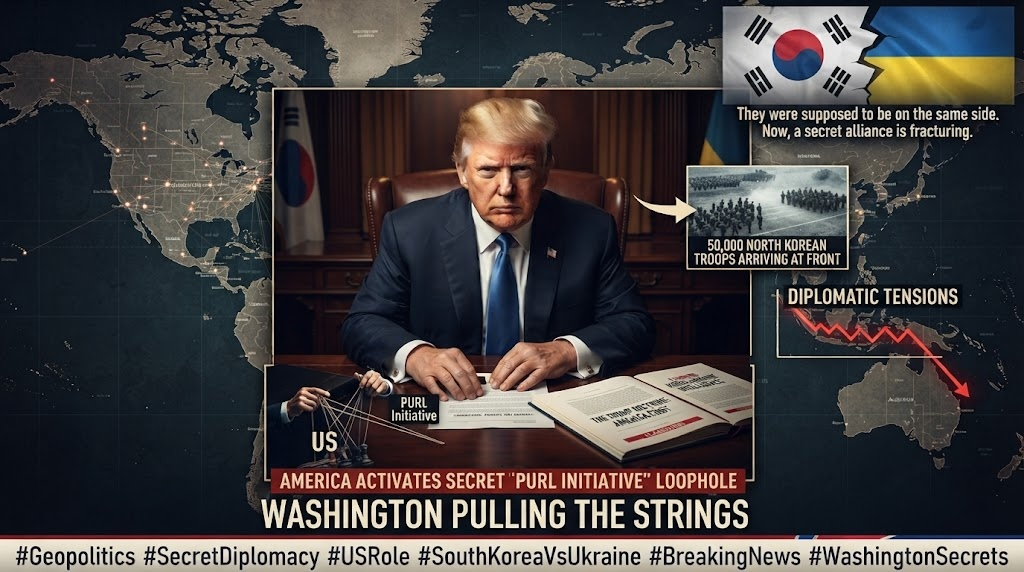
South Korea–Ukraine Rift Deepens Over North Korean POW Transfer as PURL Draws New Scrutiny
Shocking news from Ohio: an unexpected development ahead of Trump's rally

South Korea–Ukraine Rift Deepens Over North Korean POW Transfer as PURL Draws New Scrutiny