
Trump’s $5,000 “Stimulus” Check: Who Actually Qualifies, and Is There Really a List?
Verdict: MISLEADING — THE $5,000 PAYMENT IS A REAL TRUMP PROPOSAL, BUT NO CHECKS HAVE BEEN APPROVED, THERE IS NO “LIST,” AND THE DETAILS ARE FAR FROM FINAL
A viral graphic claims President Donald Trump has announced a $5,000 stimulus payment for Americans, asking viewers: “Are you on the list?”
There is a real story behind the graphic — but the wording makes the proposal sound much more concrete than it currently is.
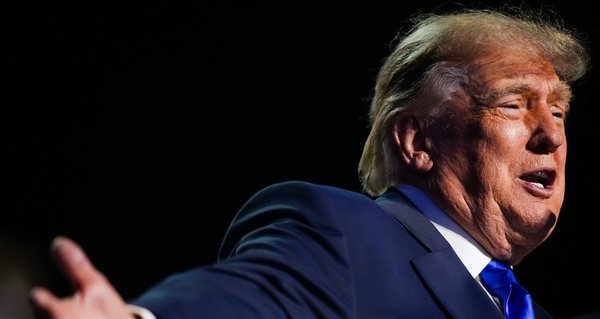
On Sept. 9, 2026, Trump announced what he called the “Trump Dividend,” promising a $5,000 payment to every adult U.S. citizen if Republicans retain control of both the House and Senate in the November midterm elections. The White House subsequently promoted the proposal as an economic dividend.
But Congress has not approved the payments, no payment schedule exists, and there is no government eligibility list that Americans can check today.
What Trump actually promised
Trump made the announcement at the Republican Party's midterm convention in Dallas.
His condition was explicit: if Republicans win the House and Senate, he said he would issue a $5,000 dividend to every adult citizen.
The White House has adopted the same terminology, calling it the “Trump Dividend” rather than a traditional economic-stimulus check.
Trump also said the money would have to be spent in the United States. However, he has not explained how such a restriction would actually be administered or enforced once money was deposited into people's accounts.
So the first major correction to the viral graphic is important:
This is a proposed future payment — not a stimulus check that has already been authorized.
Is it really $5,000 for everyone?
Not necessarily.
Trump's original wording was broad: every adult U.S. citizen.
But Vice President JD Vance subsequently suggested that wealthy Americans might be excluded, while describing tariff revenue as a possible source of funding. That means even the question of who ultimately qualifies remains unresolved.
Republican lawmakers themselves have acknowledged that many details have not been worked out.
Senate Majority Leader John Thune has indicated that lawmakers would have to address the proposal if and when it reaches Congress, while House Speaker Mike Johnson said congressional approval would be necessary.
So, who qualifies right now?
Nobody has been officially approved for a $5,000 check.
The proposal currently has these basic conditions:
- You would have to be an adult U.S. citizen under Trump's original proposal.
- Republicans would first have to retain control of both the House and Senate.
- Congress would have to authorize the spending.
- The final legislation would have to establish the actual eligibility rules.
- The funding mechanism would have to be worked out.
- The amount could ultimately be modified.
Therefore, the viral graphic's “Are you on the list?” question is misleading.
There is no public $5,000 recipient list to check.
Congress is a major obstacle
This is perhaps the most important detail missing from the graphic.
Trump initially suggested that congressional approval might not be necessary. In an interview, he said, “We think not,” while acknowledging that Congress could act if needed.
House Speaker Mike Johnson subsequently took a different position.
Johnson said Congress would have to approve the payments and that lawmakers would need to work out how the program could be funded.
That distinction matters because the proposed payment would involve well over $1 trillion in federal spending.
The Census Bureau's estimate of roughly 245 million adult U.S. citizens puts a simple $5,000 calculation at approximately $1.225 trillion. Other estimates reach about $1.3 trillion depending on the final eligibility rules.
That's not a sum the president can simply mail out without addressing federal spending authority.
Where would the money come from?
Trump has pointed toward the enormous amount of revenue generated by tariffs and other economic activity.
The White House's presentation emphasizes economic growth and government revenues.
But independent analyses raise a major problem: tariff revenue alone does not currently appear sufficient to fund a $1.2 trillion-plus nationwide payment without additional financing.
FactCheck.org calculated that it would take more than six years of tariff revenue, at the levels it examined, to cover a $1.2 trillion price tag. It also noted that Trump's tariff revenue figures face complications because some tariff collections are subject to refunds following court rulings.
In other words, the proposal is not as simple as:
Tariffs come in → government sends $5,000 checks.
The actual fiscal mechanics would have to be established by Congress.
This is not the same as the COVID stimulus checks
Calling the proposal a “stimulus payment” also creates an important misconception.
The COVID-era stimulus checks were enacted as part of legislation designed to provide economic relief during an extraordinary economic crisis.
Trump is presenting this payment differently — as a “dividend” to Americans based on the government's economic performance and revenues.
Economists nevertheless warn that injecting more than $1 trillion in cash into the economy could have inflationary consequences, particularly because the proposal is being discussed while inflation and interest-rate concerns remain significant.
Trump has promised other payments before
The $5,000 proposal is also not the first time Trump has floated the idea of distributing money generated by his policies.
In 2025, Trump promoted a $2,000 tariff “dividend.” That payment never materialized. He also backed a separate DOGE-related dividend concept that envisioned distributing savings from government spending cuts.
That history doesn't prove the new $5,000 proposal will fail.
But it does mean Americans should distinguish between a presidential promise and a federal benefit that has actually become law.
What happens if Republicans win?
Even if Republicans retain both chambers in November, the $5,000 checks would not automatically appear in Americans' bank accounts the next day.
Congress would still need to legislate the program.
Lawmakers would have to determine things such as:
- Who counts as an eligible adult?
- Would high-income Americans be excluded?
- Would dependents qualify?
- Would non-filers receive payments?
- How would citizenship be verified?
- How would the payments be distributed?
- What agency would administer them?
- What would the total cost be?
- Would the money come from tariffs, borrowing, or another source?
- When would payments actually begin?
Those questions remain unanswered.
As of Sept. 14, Senate Republicans were already giving the proposal a cautious reception, with lawmakers saying there was no concrete proposal yet and that Congress would have a major role in determining how it could work.
The politics behind the promise
The timing is impossible to ignore.
Trump made the $5,000 pledge at the Republican Party's first midterm convention, less than two months before the November elections.
The condition attached to the payment is also explicitly political: Republicans must retain control of Congress.
Trump subsequently defended the timing, saying the payment would happen after the election rather than before it because Democrats could otherwise take control of Congress.
That has prompted critics to characterize the proposal as an election-year political incentive. But whether it amounts to a legal “bribe” is a separate and more complicated question; the payment is not explicitly conditioned on an individual voter casting a particular vote.
Americans are skeptical
Early public reaction has not been uniformly enthusiastic.
A Reuters/Ipsos poll reported Sept. 14 found 63% of respondents opposed Trump's $5,000 proposal, including substantial opposition among Republicans. The same poll found Democrats leading Republicans by seven percentage points on the generic congressional ballot.
That makes the proposal potentially significant not only as an economic policy but also as a midterm-election strategy.
What the viral graphic gets right — and wrong
TRUE
- Trump really did propose a $5,000 payment.
- He called it a “dividend.”
- The proposal is aimed at adult U.S. citizens under his original announcement.
- Trump conditioned the promise on Republicans retaining control of both chambers of Congress.
- The White House is publicly promoting the proposal.
MISLEADING
- It is not an approved stimulus check.
- There is no official recipient list.
- Americans cannot currently apply for the $5,000.
- The payment date has not been established.
- The final eligibility rules have not been established.
- Congress has not authorized the spending.
- It is unclear whether the final payment would actually be $5,000 for every adult citizen.
- Funding remains a major unresolved issue.
Bottom line
The viral graphic is based on a real and very recent Trump announcement, unlike many fabricated “stimulus check” posts that circulate online.
But it goes too far by presenting the proposal as though the government has already created a $5,000 payment program and compiled a list of recipients.
That has not happened.
Trump has promised a $5,000 “Trump Dividend” if Republicans retain the House and Senate. The White House supports the idea, but Congress must still act, the financing has not been finalized, eligibility could change, and no checks have been authorized or scheduled.
So if you see a post asking you to “check the list,” enter your Social Security number, pay a processing fee, or provide bank information to claim the $5,000, treat it as a potential scam. The government has not established a public $5,000 application or recipient list.
Verdict: MISLEADING — REAL $5,000 TRUMP PROPOSAL, BUT NO APPROVED CHECKS OR “LIST” YET.
Comments (0)
Loading comments...
May You Like

gfnhgmnghnmfgnbvvvvvvvvv

Russian Drone Strikes Kyiv Bridge as German Chancellor Arrives in Ukraine

OBAMA STUNS ON INSTAGRAM: MESSAGE MARKING 34-YEAR MILESTONE SPARKS A BUZZ












