Trump’s $5,000 Dividend Promise Raises Big Questions as Republicans Fight to Keep Congress

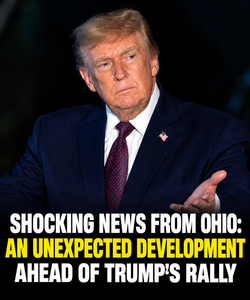
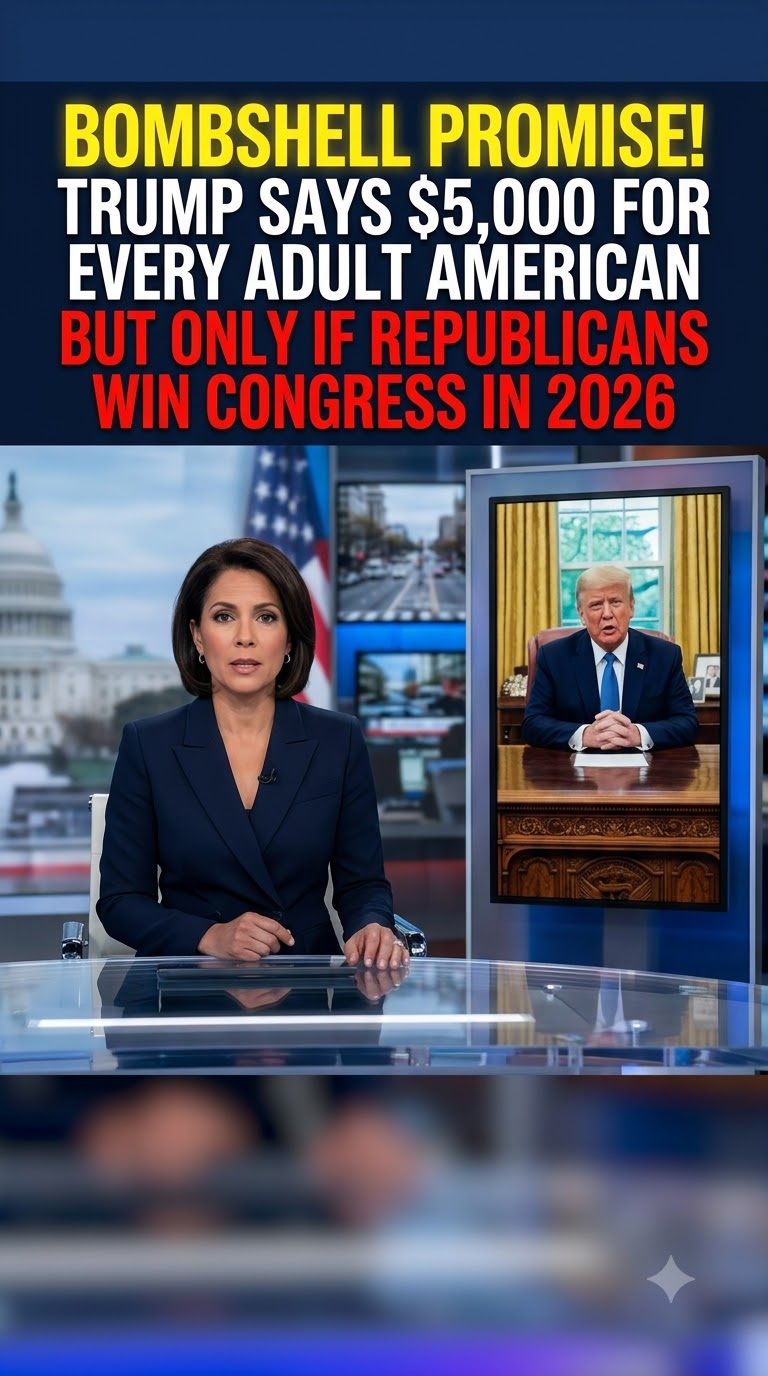
WASHINGTON, Sept. 14, 2026 — President Donald Trump is doubling down on an extraordinary campaign pledge to provide $5,000 payments to American adults if Republicans maintain control of Congress in November’s midterm elections.
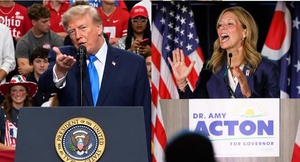
Trump introduced the proposal during the Republican midterm convention in Dallas, telling supporters that retaining both the House and Senate would allow him to issue what he called a “Trump Dividend.”
The president presented the payment as a direct benefit of continued Republican control, telling voters to approach the midterm contest as though his own name were once again appearing on the ballot.
Trump said the dividend would go to every adult U.S. citizen and added that recipients would be required to spend the money domestically, although he provided few implementation details.
Questions quickly emerged over whether a president could authorize such enormous payments without lawmakers, particularly because the Constitution gives Congress significant authority over federal spending and the appropriation of government funds.
House Speaker Mike Johnson addressed that issue Sunday, saying he assumed congressional action would be required before the government could distribute the payments, while promising Republicans would examine Trump’s proposal.
Johnson nevertheless characterized the dividend as a creative proposal and said Congress would attempt to find consensus, despite Republicans holding narrow margins and facing an increasingly competitive election environment.
Trump responded by insisting the payments would happen, telling reporters Sunday that the $5,000 dividend was “100%” going forward and arguing that America’s economic strength could support the program.
The potential cost represents one of the biggest obstacles. Providing $5,000 to roughly 240 million American adults could require approximately $1.2 trillion in federal spending, depending on eligibility rules.
That enormous price tag comes as the federal government is already running an annual budget deficit approaching $1.8 trillion, intensifying concerns about whether another major spending program would be financially sustainable.
Fiscal concerns are not the only issue. Economists and other critics have questioned whether injecting hundreds of billions of dollars into household finances could stimulate additional demand and place renewed upward pressure on prices.
The debate comes as Americans continue dealing with inflation, expensive gasoline and pressure on household budgets, making personal finances a particularly important political issue heading into November’s congressional elections.
Trump argues the United States can afford his proposal because of strong government revenues and economic performance, saying Sunday that financing the payments would be relatively easy for the country.
Yet public confidence in Trump’s presidency has weakened. An AP-NORC survey conducted in July found approximately one-third of American adults approved of his performance, compared with 42 percent when he took office.
Majorities in that survey also disapproved of Trump’s handling of the economy and immigration, two issues that were central to his successful campaign to return to the White House in 2024.
Those numbers increase the political significance of the $5,000 proposal because Republicans are attempting to protect narrow congressional majorities while voters decide whether Trump’s economic agenda deserves another two years of legislative support.
The president made that connection explicit in Dallas, conditioning the promised dividend on Republican victories in both chambers and repeatedly encouraging supporters to view the congressional election as another vote on his presidency.
The proposal has consequently generated criticism from Democrats, while some fiscal experts have questioned whether Congress would approve spending exceeding $1 trillion when federal debt and deficits are already major concerns.
There are also questions about how the government could enforce Trump’s requirement that recipients spend their dividend inside the United States, an unusual condition for a nationwide direct-payment program.
Trump has previously discussed sending Americans payments linked to tariff revenue, including an earlier $2,000 proposal, but those checks have not materialized, adding another layer of scrutiny to his latest promise.
For Republicans, however, the political attraction is straightforward: a $5,000 payment provides voters with an easily understood economic promise while allowing Trump to directly connect household finances with continued Republican congressional control.
The strategy also puts Trump himself at the center of the midterms. During his Dallas appearance, he acknowledged the historical difficulties facing a president’s party and urged supporters to vote as though he were personally running.
Whether the dividend becomes policy will ultimately depend on far more than Trump’s promise. Congressional approval, eligibility rules, financing and possible economic consequences would all need to be addressed before payments could begin.
For now, the $5,000 proposal has accomplished something politically valuable: it has generated national attention while raising the stakes of an election that will determine who controls Congress during Trump’s remaining presidency.
With November approaching, voters face a consequential choice over control of Washington, while Trump’s eye-catching promise leaves one unanswered question hanging over the campaign: Will Americans ever actually receive the $5,000?
Comments (0)
Loading comments...
May You Like

South Korea–Ukraine Rift Deepens Over North Korean POW Transfer as PURL Draws New Scrutiny
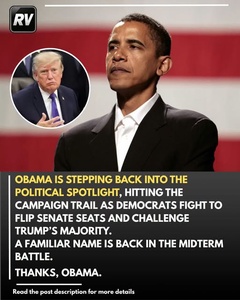
Obama Steps Back Into the Political Spotlight as Democrats Target Trump’s

South Korea–Ukraine Rift Deepens Over North Korean POW Transfer as PURL Draws New Scrutiny