Trump’s $810 Million Funding Cuts Trigger a New Fight With Congress
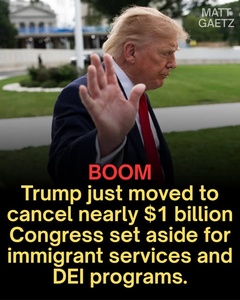
A viral image says, “Congress Fumes as Trump Plots Late $810 Million Cuts in Education, Health.” The underlying story is real, although the details are more complicated than the headline suggests.
On September 25, 2026, the Trump administration submitted a proposal to cancel $810 million in previously appropriated federal funding across 11 accounts. The move came just days before the end of the federal fiscal year.
The administration calls the action a “pocket rescission.” The White House says the measure is intended to eliminate spending it considers wasteful or harmful.


The largest portion involves approximately $567 million in Health and Human Services funding connected with services for refugees, asylum seekers and other noncitizens. The administration argues that changing conditions have left excess funding in those accounts.
Education programs are also affected. The White House proposal includes roughly $69.6 million from International Education and Foreign Language programs.
Another approximately $25 million is proposed for two Education Department programs serving migrant students: the High School Equivalency Program and the College Assistance Migrant Program.
Other proposed reductions involve programs administered by Commerce, Homeland Security, Housing and Urban Development, Justice and international-assistance accounts.


The timing is central to the dispute. Under the Impoundment Control Act of 1974, a president can ask Congress to rescind appropriated funds and temporarily withhold them while Congress considers the request.
But Congress ordinarily has time to consider such a proposal. The September 25 submission came only days before the fiscal year ended on September 30.
That is why critics and congressional appropriators have focused on the term “pocket rescission.” They argue that withholding the money until the fiscal year expires effectively prevents Congress from exercising its statutory role.
The Government Accountability Office reached a significant conclusion on September 29. GAO said the administration cannot use the procedure to withhold the appropriated money beyond the end of fiscal year 2026 without congressional action.
GAO emphasized that its conclusion concerned the legal operation of the Impoundment Control Act, rather than whether the underlying programs represented good or bad policy.


The dispute has drawn criticism from lawmakers in both parties. Senate Appropriations Committee Chair Susan Collins, a Republican from Maine, said she would work with colleagues to address what she characterized as illegal actions.
Other senators have also questioned whether the executive branch can effectively prevent Congress-approved money from being spent without Congress first approving the rescission.
At the same time, not every Republican senator has opposed the administration's approach. Sen. John Kennedy defended the use of the mechanism and argued that Congress itself should eliminate spending it considers unnecessary.
That division illustrates why the controversy is not simply a dispute between the White House and congressional Democrats. Some Republican appropriators have also raised concerns about Congress's constitutional control over federal spending.
The White House, meanwhile, presents the $810 million package differently. Its September 25 announcement says Trump is using presidential authority under the Impoundment Control Act to eliminate what the administration considers wasteful government spending.


The administration's proposal is also broader than education and health. The 11 rescissions include money for minority-business development, housing counseling, racial-equity initiatives, immigration-related services and certain international programs.
The administration used similar tactics in 2025 when it attempted to cancel billions of dollars in foreign-aid funding. The legality and scope of presidential impoundment authority have remained subjects of continuing litigation and congressional debate.
For the current dispute, however, the immediate issue is the September 25 package and the approaching September 30 expiration date for the affected fiscal-year funding.
The GAO's September 29 opinion adds an important qualification to descriptions saying Trump has simply “canceled” the $810 million. The administration proposed the rescissions and withheld the funds, but GAO says that withholding cannot lawfully continue past the expiration date without congressional action.
The controversy therefore concerns two separate questions: what programs the administration wants to eliminate, and whether the president can accomplish that without Congress completing the rescission process.
As of September 30, the verified story is that the Trump administration has sought to cancel $810 million in congressionally appropriated funding, including substantial amounts affecting HHS and Education programs, while congressional appropriators and GAO have challenged the legal mechanism being used.
So the thumbnail captures a genuine and current congressional dispute, but “Congress fumes” is a characterization rather than a formal congressional action. The central factual development is the $810 million pocket-rescission proposal and the ensuing dispute over Congress's constitutional power over federal spending.
Comments (0)
Loading comments...
May You Like
OBAMA STUNS ON INSTAGRAM: MESSAGE MARKING 34-YEAR MILESTONE SPARKS A BUZZ
South Korea–Ukraine Rift Deepens Over North Korean POW Transfer as PURL Draws New Scrutiny
TRUMP HIT WITH 26 ARTICLES OF IMPEACHMENT