
Inflation Surges as Global Conflicts Pressure Trump’s Economy and Shake Wall Street
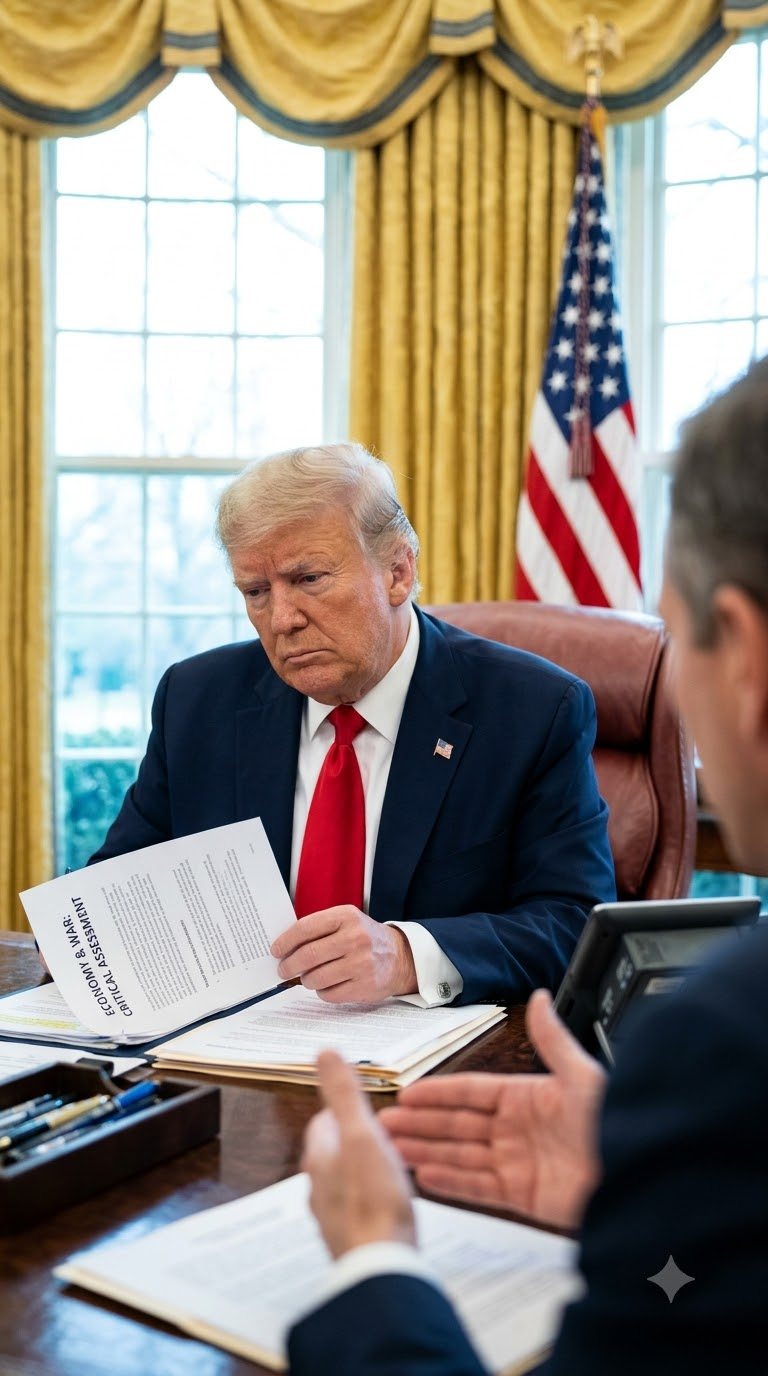
Fresh inflation data, rising fuel costs and international conflicts are putting renewed pressure on American households and financial markets as the November midterm elections approach.
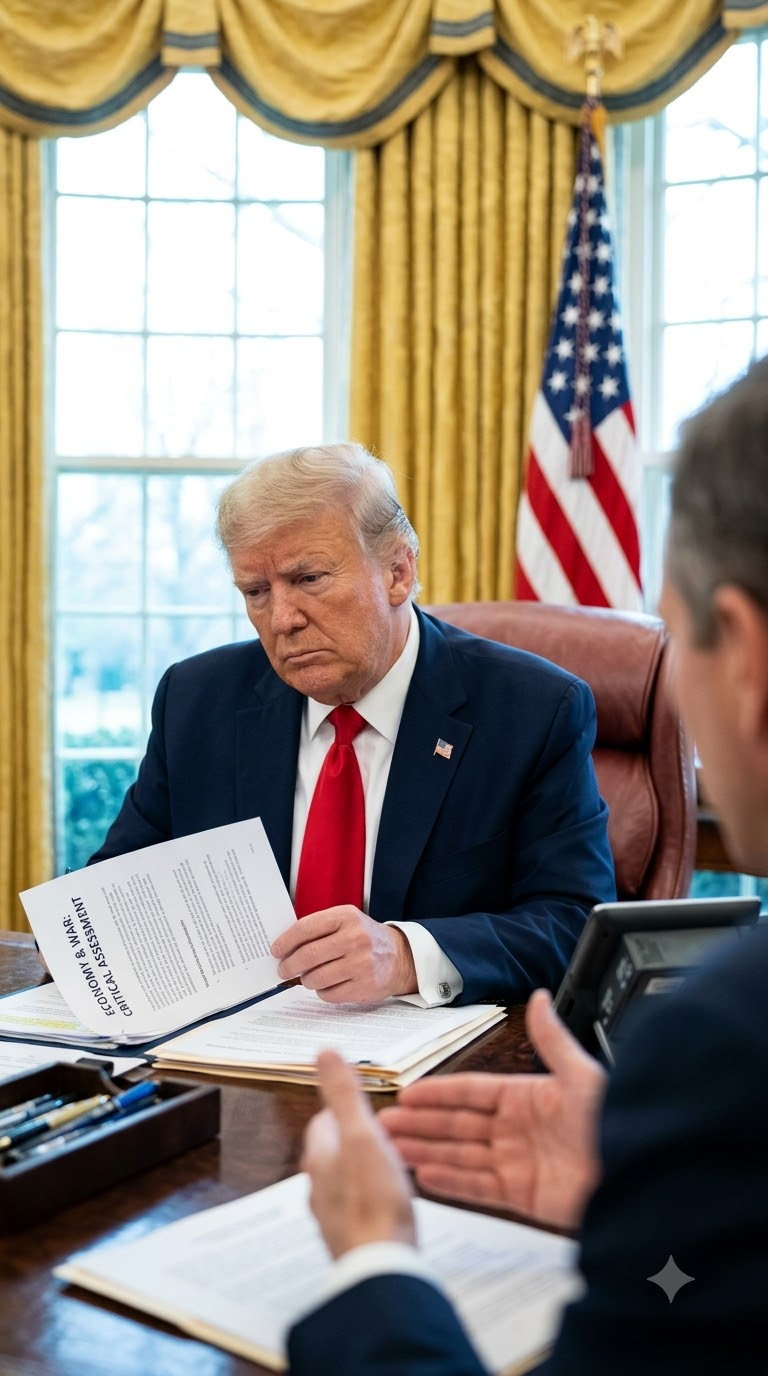
Ảnh bạn cung cấp — được đặt trực tiếp ở đầu bài báo. Bối cảnh và tài liệu trong ảnh chưa được xác minh độc lập.
WASHINGTON, October 16, 2026 — President Donald Trump is confronting a renewed economic challenge as rising consumer prices, geopolitical instability and financial-market volatility intensify concerns about the direction of the U.S. economy. With the midterm elections approaching, the latest data have brought inflation and energy affordability back to the center of the national debate.
The latest government figures show that consumer prices rose 3.7% over the 12 months through September, up from 3.4% in August. The Consumer Price Index increased 0.6% in September on a seasonally adjusted monthly basis, while gasoline prices climbed 9.1%, accounting for more than half of the overall monthly increase. The report from the U.S. Bureau of Labor Statistics points to energy costs as a major driver of the renewed inflation pressure.
The figures arrive at a sensitive moment for policymakers and investors. Although the data do not establish that the U.S. economy is in a meltdown, they indicate that the earlier fight against inflation remains incomplete and that higher energy prices are making progress more difficult.

Illustrative image: Traders and financial-market displays on Wall Street.
The stock market reacted sharply to the inflation report. On October 14, the S&P 500 fell 1.1%, while the Nasdaq Composite dropped 1.9%, marking Wall Street’s worst daily performance since July, according to the Associated Press. Investors reassessed the outlook for interest rates as higher inflation raised concerns that the Federal Reserve might need to maintain restrictive monetary policy for longer.
The sell-off also reflected concerns about technology shares and the cost of financing major artificial-intelligence investments. When interest rates remain high, borrowing becomes more expensive and the future earnings of growth-oriented companies may be valued less generously. The following trading session saw a partial recovery, illustrating that market volatility should not be confused with a continuous collapse.
The pressure is not confined to stock portfolios. Higher gasoline prices can quickly affect household budgets, while rising diesel and transportation costs can increase the expenses faced by manufacturers, retailers and delivery companies. Businesses may absorb some of these costs, but others may eventually pass a portion on to consumers.

Illustrative image: Gasoline prices at a U.S. service station.
Further economic data reinforce the concern that inflationary pressure is spreading beyond the pump. U.S. producer prices increased 1.3% in September, their largest monthly rise in four and a half years, with gasoline prices up 20.3% and diesel fuel prices up 21%, Reuters reported. Producer prices rose 6.3% over the year. These figures matter because fuel and transport are essential inputs across much of the economy, although higher wholesale costs do not automatically translate into identical increases in retail prices.
Import prices also rose 1.1% in September, exceeding economists’ expectations, and were 8.1% higher than a year earlier. That suggests the pressure may extend to imported goods and materials, not just domestic energy. The extent to which consumers ultimately feel those increases will depend on exchange rates, supply contracts, business margins and demand.
The international backdrop is adding another layer of uncertainty. The ongoing conflict involving the United States, Israel and Iran has contributed to concerns over oil supplies and shipping through strategically important routes in the Middle East. Reuters reported on October 16 that Brent crude had moved above $106 per barrel amid renewed regional tensions, including maritime incidents near the Strait of Hormuz. Disruptions or threats to major shipping routes can raise the risk premium on energy, increasing costs even before a prolonged supply shortage is confirmed.

Illustrative image: Oil tankers transiting a strategic maritime shipping route. This is not evidence of a specific current attack.
Russia’s war against Ukraine remains a separate source of geopolitical and energy-market risk. Russian attacks on Ukrainian infrastructure and Ukrainian strikes against Russian oil facilities have kept attention on energy security. The conflicts have different causes and military dynamics, but both contribute to uncertainty over supply, shipping and the outlook for global fuel prices. Recent oil-market reporting has also highlighted the difficulty of stabilizing prices while hostilities and threats to maritime transport continue.
For American consumers, the consequences are felt most directly through recurring expenses. A household that spends more on fuel has less money available for other purchases, while higher transport costs can affect the price of food and other goods. Rising prices can therefore create a sense of economic strain even when overall consumer spending remains positive.
Retail figures require careful interpretation in this environment. Reuters reported that U.S. retail sales increased 0.8% in September, but higher gasoline spending accounted for a significant part of the gain. When consumers spend more because essential goods cost more, the dollar value of sales can rise without a comparable increase in the quantity of goods purchased. The underlying pace of spending is therefore important when assessing the strength of household demand.
The Federal Reserve faces a difficult balancing act. Keeping interest rates high can help restrain demand and prevent inflation from becoming entrenched, but it also makes mortgages, credit-card balances and business loans more expensive. Cutting rates too soon could risk prolonging price pressures; tightening policy further could weigh on employment, investment and consumer activity. Recent market reporting suggests investors are watching closely for signs of how the Fed will respond to the combination of higher inflation and geopolitical uncertainty.
The political implications are significant because economic conditions are often assessed by voters through their everyday experiences rather than through aggregate indicators alone. A market rebound may reassure investors, but it does little to ease the immediate pressure on a household facing higher gasoline bills. Conversely, a single day of stock-market losses does not prove that the wider economy is collapsing.
The social-media claim that federal regulators and campaign managers are in “total panic mode” is not established by the economic data cited here. What is documented is a renewed increase in inflation, substantial pressure from energy prices and volatility in financial markets. Those developments create genuine challenges for the administration, but claims about internal panic or a coordinated political crisis require separate evidence.
As the November 3 midterm elections approach, the key questions are whether energy prices will remain elevated, whether inflation will broaden further and how policymakers will respond. Developments in the Middle East, Russia’s war against Ukraine, upcoming inflation reports and the Federal Reserve’s decisions will all influence the economic outlook.
For now, the evidence supports a clear but measured conclusion: inflation has accelerated, fuel prices are a major contributor, and investors are reassessing the risks to growth and monetary policy. Whether those pressures persist will depend on energy markets, supply conditions, consumer demand and the course of the international conflicts shaping the global economy.
Comments (0)
Loading comments...
May You Like

FLORIDA AIRBNB NIGHTMARE — 50 TEENS, 7 SHOOTING VICTIMS LINKED TO “SHOTS AT THE DOOR”!

WWE BRONSON REED DEAD AT 38, STIMULANTS DETECTED, $11M INSURANCE PAYOUT FROZEN!

EAST COAST STORM CRISIS—5 MILLION AT RISK OF BLACKOUTS, WATER, AND HEATING FAILURES!








Popular Posts




