Trump’s Iran Strike Threat Raises Fears of Wider War as U.S. Forces Prepare for Possible Escalation
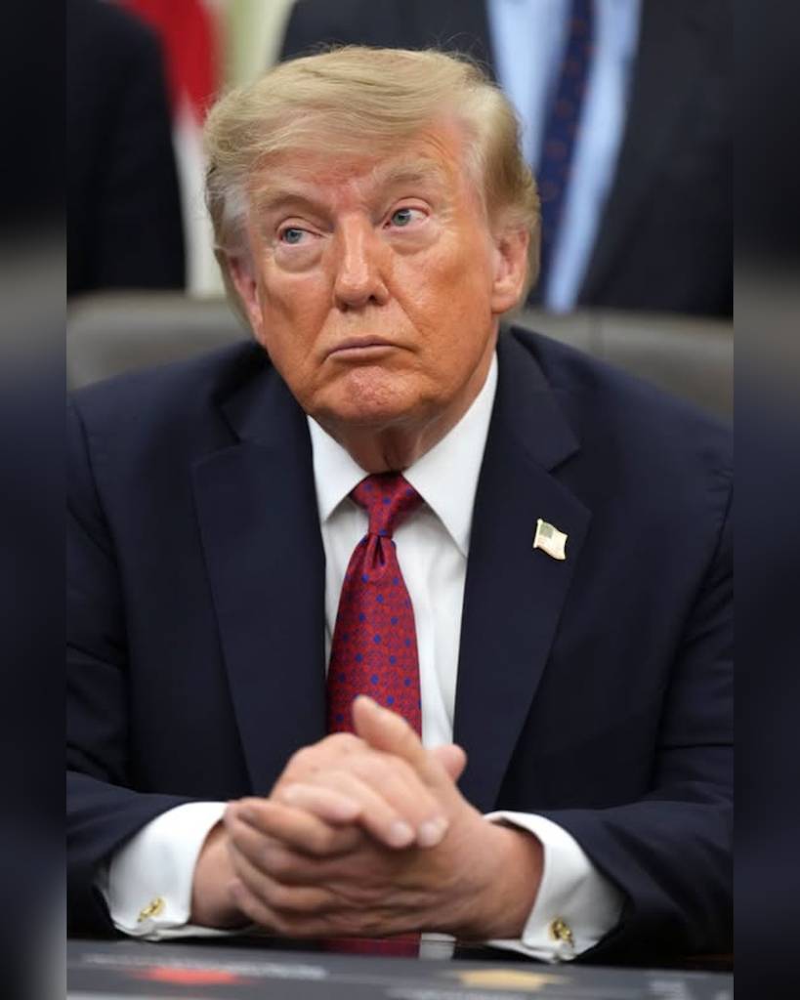
Washington and Tehran are facing renewed uncertainty as the Trump administration weighs its next move in the seven-month conflict with Iran. U.S. forces in the Middle East are reportedly prepared to launch a potentially major military operation within 96 hours of receiving an order from President Donald Trump, according to CNN reporting published October 25. But as of October 28, the available reports do not confirm that Trump has authorized the new wave of strikes described in the viral caption.
The distinction is consequential. A military prepared to act is not the same as a president having ordered an attack, and a list of potential targets is not proof that those targets have been struck. The image circulating online uses the phrase “Totally wiped out” and describes an ultimatum to Tehran, but it provides no verifiable details about an operation, its location or its timing.
The broader danger is real. The United States and Iran have been involved in a conflict since U.S.-Israeli strikes in February 2026, followed by retaliatory attacks, a fragile ceasefire and continuing disputes over the Strait of Hormuz. Washington has maintained pressure on Iranian oil shipments while strengthening its military posture in the region. A return to major combat could expose U.S. personnel and regional allies to further attacks and create new disruptions to global energy supplies.
What is confirmed about the latest U.S. military preparations?

CNN reported on October 25 that U.S. forces had sufficient capability in the region to conduct new operations against Iran within 96 hours of a presidential order. Two U.S. officials told CNN that the potential campaign could be broader than the limited strikes used to maintain pressure on Iranian military assets after the earlier pause in major combat.
According to the report, military planners had developed a range of possible targets, including Iranian energy infrastructure, military facilities and nuclear-related sites. Officials cautioned, however, that the president had not made a final decision. The Pentagon also emphasized that its responsibility includes developing military options for the president to consider.
That planning comes against the backdrop of Trump's earlier public commitment not to resume attacks before the November 3 U.S. midterm elections. In an October 8 statement, Trump said the United States would not attack Iran before the election and claimed that discussions with Tehran were making progress. The Washington Post and Associated Press reported on that announcement.
As of October 28, the reports available for this article do not establish that Trump has publicly reversed that commitment or authorized the new major offensive described in the viral post. The reported 96-hour readiness timeline should therefore be understood as a contingency, not a countdown to a confirmed attack.
Why Tehran remains at the center of the crisis

The confrontation has several overlapping dimensions: Iran’s nuclear program, regional security, the movement of oil through the Strait of Hormuz and the risk of further attacks on American personnel.
Trump has repeatedly said that preventing Iran from acquiring a nuclear weapon is a central U.S. objective. In an interview reported by Reuters on October 16, he discussed the possibility of targeting Pickaxe Mountain, a fortified site associated with Iran’s nuclear program. He also said he did not intend to use nuclear weapons against Iran. Those comments reflected the administration’s continuing consideration of military options, rather than confirmation of a new strike order.
U.S. intelligence concerns have added urgency. Al Jazeera reported on October 24 that an intelligence memo warned of Iranian plots against U.S. personnel and citizens in the Middle East reaching advanced stages. The report also noted that Iran had not publicly responded to the specific allegations in that memo. Such intelligence warnings can influence military planning, but they do not independently establish that an attack is imminent.
Iran, for its part, has repeatedly warned that it would retaliate against attacks on its territory. U.S. officials cited by CNN said renewed American or Israeli strikes could prompt Tehran and Houthi forces to target U.S. personnel and facilities across the region. The precise scale and timing of any potential response remain uncertain.
The danger is that military preparations and retaliatory threats can reinforce one another. Washington may view deployments as a deterrent or a means of preparing for contingencies, while Tehran may interpret them as evidence that a new attack is approaching. Either interpretation can complicate diplomacy, especially when both sides are publicly signaling resolve.
The Strait of Hormuz: a military flashpoint with global economic consequences

The Strait of Hormuz is central to the crisis because it is a critical route for international oil and gas shipments. Disruption to commercial traffic can affect energy prices, shipping costs and economic confidence far beyond the Middle East.
The United States has maintained a blockade targeting Iranian oil shipments while seeking to protect navigation through the waterway. Military officials have also described efforts to clear Iranian mines and support commercial shipping. The Washington Post reported in early October that oil volumes moving through the strait had increased, even as the broader military confrontation continued.
Any renewed campaign against Iranian infrastructure could complicate those efforts. Tehran might respond through attacks on shipping, regional military bases or energy facilities, although the specific form of any retaliation cannot be predicted with confidence.
The consequences could extend to households and businesses worldwide. Higher crude prices can feed into gasoline, transport and manufacturing costs, while uncertainty can affect investment and financial markets. But it would be misleading to claim that a new market shock has already occurred solely because reports describe preparations for possible strikes.
A confirmed attack, the identity of the targets, the scale of damage and the nature of Iran’s response would all matter in determining the economic impact.
The cost of the conflict is already mounting

The financial burden of the conflict provides another measure of the stakes. Reuters reported on October 28 that a Pentagon estimate placed U.S. spending on the war with Iran at more than $47 billion. The estimate included over $29 billion to replace expended munitions and more than $6 billion to replace damaged or lost military equipment, although it may not fully account for repairs to bases damaged by Iranian attacks. The Pentagon had not publicly released the latest figures when Reuters published its report.
The estimate underscores the potential cost of extending the campaign. A larger offensive could require additional ammunition, aircraft operations, naval deployments and air-defense support. It could also increase the risk to American service members and expose military installations and allied infrastructure to further retaliation.
Those costs are unfolding alongside domestic political pressures. The November 3 midterm elections are approaching, and the administration has faced questions about the duration, objectives and economic consequences of the conflict. Trump’s October 8 pledge not to resume attacks before the election came amid reports that military planners were preparing options for renewed operations.
That creates a difficult policy calculation for the White House: maintaining pressure on Iran without triggering a broader confrontation, while also addressing the financial and security consequences of a conflict that has lasted longer than initially anticipated.
What would a new U.S. offensive mean?

If Trump were to authorize a new major operation, its consequences would depend on its scope and stated objective. Limited strikes against military assets would carry different risks from a broader campaign targeting nuclear facilities, energy infrastructure and other strategic sites.
A sustained operation could provoke retaliation against American forces or regional partners, complicate shipping through the Strait of Hormuz and increase pressure on already strained diplomatic channels. A more limited action might be intended to deter further attacks or weaken particular capabilities, but it could still produce unintended escalation.
There are also practical constraints. CNN’s reporting indicated that U.S. officials recognized the difficulty of destroying all intended targets, particularly because Iranian forces have had time to adapt to American tactics. Military planners may have substantial strike capabilities, but operational readiness does not guarantee that a campaign will achieve every objective or prevent a response.
Diplomacy remains another variable. Trump said earlier in October that discussions with Iran were productive, while reports indicated that Tehran had received a U.S. counterproposal concerning the wider dispute. The existence of negotiations does not guarantee an agreement, but it means that military preparations are unfolding alongside efforts to reach a political outcome.
The alleged “classified ultimatum” remains unverified
The viral caption claims that Trump delivered a chilling, highly classified warning to Tehran immediately after authorizing strikes. The sources reviewed for this article do not verify that sequence of events or establish the existence of the specific private message described.
Trump has issued public warnings to Iran during the conflict, and the administration has considered further military action. Those documented facts should not be conflated with an alleged classified communication whose wording, timing and delivery have not been independently established.
Likewise, the phrase “totally wiped out” cannot be treated as confirmation that particular Iranian facilities or forces were destroyed. Establishing the outcome of a military operation requires corroborated reporting, official statements or other reliable evidence identifying what was attacked and what damage occurred.
This distinction is essential during a rapidly developing conflict, when genuine military developments can circulate alongside recycled images, speculative claims and misleading captions.
What to watch next
The most consequential developments over the coming days will be whether the White House announces a change in its position on military action before November 3, whether U.S. forces receive a new operational order, and whether Washington and Tehran make progress toward an agreement.
Other key indicators include changes in U.S. military deployments, official warnings to American personnel in the region, statements from Iranian officials, shipping activity in the Strait of Hormuz and movements in global oil prices. None of these indicators alone would prove that a major attack has been authorized, but together they could help clarify whether the confrontation is moving toward escalation or renewed diplomacy.
For now, the available evidence points to a serious military standoff in which the United States is preparing options while the president weighs his next move. It does not substantiate the viral post’s central claim that a fresh wave of U.S. airstrikes has already been authorized and that the Iranian regime has been threatened with immediate destruction.
The distinction is not merely technical. In a conflict with the potential to affect military personnel, regional stability and global energy supplies, the difference between a threat, a contingency plan and an executed attack is fundamental to understanding what is actually happening.
Comments (0)
Loading comments...
May You Like
Latest Posts

Popular Posts