Trump’s Latest Canada Warning: What He Actually Said — and What It Means for the Trade War
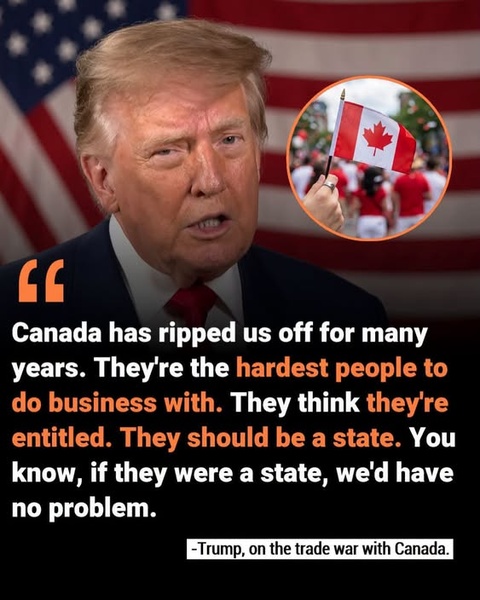

Verdict: TRUE CORE — BUT THE VIRAL PRESENTATION IS MISLEADING
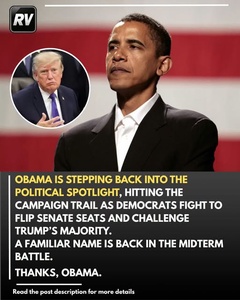
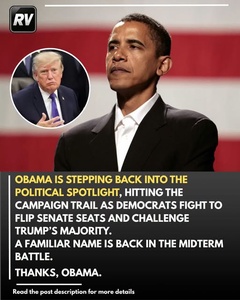
A new viral graphic circulating in Vietnamese asks whether a statement from President Donald Trump about Canada could “change the trade war.”
There is a significant new development. On September 16, 2026, Trump warned that if Canada becomes an associate member of the European Union and the move is undertaken with what he considers “bad intentions,” he could impose very heavy tariffs on Europe and potentially take other retaliatory action.
But the graphic's presentation leaves out an important detail: Trump was not announcing a new trade deal with Canada or signaling that the U.S.-Canada tariff dispute was ending. His comments actually pointed toward another possible escalation — this time involving the European Union as well.


What did Trump actually say?
Trump made the comments while speaking to reporters in North Carolina on September 16.
He was responding to the possibility of Canada becoming an associate member of the European Union, an idea being discussed as Canada seeks to strengthen its economic and strategic relationships with Europe.
Trump characterized the possibility as potentially a “hostile act” if it were pursued with what he viewed as negative intentions toward the United States.
He also warned that the United States could respond with very heavy tariffs on European countries and potentially cut off trade in certain areas.
Trump separately called Canada a “terrible trade partner.”
So the central claim that Trump made a new, consequential statement concerning Canada is legitimate.
But the implication that he announced some kind of immediate $5,000-style benefit, breakthrough or peace deal would be unsupported.
Why is Canada talking to Europe?
Canada's relationship with the United States has deteriorated sharply during the latest tariff confrontation.
Prime Minister Mark Carney has been pursuing closer relationships with European countries as Ottawa seeks to diversify Canada's economic and strategic partnerships.
On September 16, Carney met European Commission President Ursula von der Leyen and European Parliament President Roberta Metsola in Strasbourg.
According to the Canadian government, the discussions covered cooperation in:
- critical minerals;
- energy;
- defense;
- artificial intelligence and advanced technology;
- research and development;
- financial services and payments; and
- digital trade.
Carney has described the goal as building a much stronger Canada-EU relationship beyond the existing Canada-European Union Comprehensive Economic and Trade Agreement (CETA).
That is the context behind Trump's latest warning.
The “associate membership” idea is important
European Commission President Ursula von der Leyen has proposed moving the Canada-EU relationship beyond the existing trade agreement toward a much broader strategic alliance.
The proposal is not the same thing as Canada becoming a full EU member.
Instead, the concept under discussion would give Canada a deeper relationship with the bloc in areas such as trade, defense, technology, energy and strategic resources.
Canada's government described the proposal as a “unique, positive approach” that Canada and Europe would develop together.
Trump, however, sees the possibility through a very different lens.
His warning effectively raises the prospect that deeper Canada-EU integration could trigger another U.S. response.
The U.S.-Canada trade war was already escalating
Trump's comments did not occur in isolation.
The latest phase of the dispute intensified in August after Canadian-U.S. trade negotiations broke down.
Canada subsequently imposed retaliatory tariffs on roughly $20 billion of U.S. imports, covering hundreds of American products.
Washington responded on September 8 with a series of measures targeting Canadian products.
The White House said Trump had signed five proclamations modifying tariffs and banning certain Canadian products in response to Canada's retaliation.
Among the affected Canadian products are various alcoholic beverages and dairy products, with some Canadian goods also facing 50% tariffs. Certain import bans are scheduled to take effect September 29.
On September 15, additional changes to the U.S. tariff regime took effect, including both new 50% tariffs on some Canadian products and the removal of some other products from the tariff list.
In other words, the situation is still changing rapidly.
Trump also targeted Canadian goods in U.S. government procurement
There was another important development on September 16 that the viral graphic does not mention.
Trump signed a presidential memorandum directing federal agencies to identify Canadian-origin goods that should be removed from, or made unavailable for, the U.S. federal civil procurement system.
The White House said the move was a response to what it described as Canadian barriers against American companies seeking access to Canadian government procurement markets.
This is significant because it goes beyond ordinary tariffs. It affects government purchasing decisions and adds another layer to the economic dispute.
Is Trump threatening tariffs on Europe because of Canada?
Yes, according to his September 16 remarks — but there is an important qualification.
Trump did not announce a blanket new tariff on all European imports that takes effect immediately.
Rather, he threatened potentially heavy tariffs on Europe if Canada’s closer relationship with the EU were pursued with what he considered hostile intentions.
That distinction matters.
The viral wording may make the development sound like a completed policy decision. It is better understood as a presidential warning that could lead to additional trade action.
Meanwhile, the European proposal itself is still being developed.
Canada is deliberately looking for alternatives
Carney's government has openly acknowledged that Canada needs to reduce its vulnerability to U.S. trade policy.
During a September 15 speech, Carney said Canada was deepening relationships with trusted partners and pursuing greater “strategic autonomy.”
He also emphasized that Canada would remain closely connected to the United States, describing the two countries as neighbors and saying Canada would continue to regard the U.S. as an important partner.
That creates a difficult balancing act.
Canada wants to diversify trade and strategic relationships without destroying its enormously important economic relationship with its southern neighbor.
Could this actually change the trade war?
It could change the scope of the dispute, but there is no evidence yet that it has produced a breakthrough.
Three developments are particularly important:
First, Canada is pursuing closer economic and strategic ties with Europe.
Second, Trump has indicated that he could treat deeper Canada-EU integration as a reason for additional U.S. trade retaliation.
Third, the existing U.S.-Canada tariff dispute is already continuing independently of the European issue.
That means the new controversy potentially expands the dispute from a bilateral U.S.-Canada fight into a broader confrontation involving Canada, the United States and the European Union.
But that outcome is not predetermined.
What the viral graphic gets right — and leaves out
What is accurate
- Trump made new comments about Canada on September 16.
- He criticized Canada's relationship with the United States.
- He objected to the possibility of Canada becoming an EU associate member under certain circumstances.
- He threatened potentially heavy tariffs against Europe.
- Canada is actively pursuing closer ties with the EU.
- The U.S.-Canada trade dispute is currently escalating rather than resolved.
What is misleading
- Trump did not announce the end of the trade war.
- He did not announce a new trade agreement with Canada.
- The EU associate-membership concept is not the same as Canada joining the EU.
- His threatened European tariffs are not the same thing as an immediate new blanket tariff taking effect.
- The graphic's dramatic news-anchor presentation provides no sourcing and appears designed to make the development look more definitive than it is.
The bigger picture
The latest dispute illustrates how quickly the economic relationship between the United States and Canada has become intertwined with Canada's broader foreign-policy strategy.
For decades, Canada relied overwhelmingly on its relationship with the United States while maintaining extensive ties with Europe and other markets.
The current tariff conflict is pushing Ottawa to accelerate diversification.
Carney's European trip is therefore not simply about tariffs. Canada is simultaneously pursuing cooperation on defense, critical minerals, energy, artificial intelligence, technology and investment.
Trump's latest response demonstrates the potential downside of that strategy: Washington may regard some forms of Canadian diversification as economically or strategically hostile.
Whether that produces another round of tariffs, encourages negotiations, or ultimately leads Canada and the U.S. back toward a settlement remains unresolved.
Bottom line
The viral graphic is based on a real and very recent development, but its framing needs context.
Trump did issue a new warning about Canada and the EU on September 16, 2026, saying that deeper Canada-EU integration could be treated as a hostile move under certain circumstances and could lead to heavy U.S. tariffs on Europe.
But there was no new peace deal, no end to the Canada-U.S. trade war, and no immediate announcement that Canada had joined the EU.
The most important takeaway is that the existing trade dispute is still active, while Canada is simultaneously trying to build stronger economic and strategic relationships with Europe.
Verdict: TRUE CORE — BUT THE VIRAL PRESENTATION OVERSTATES WHAT TRUMP ACTUALLY ANNOUNCED.
Comments (0)
Loading comments...
May You Like
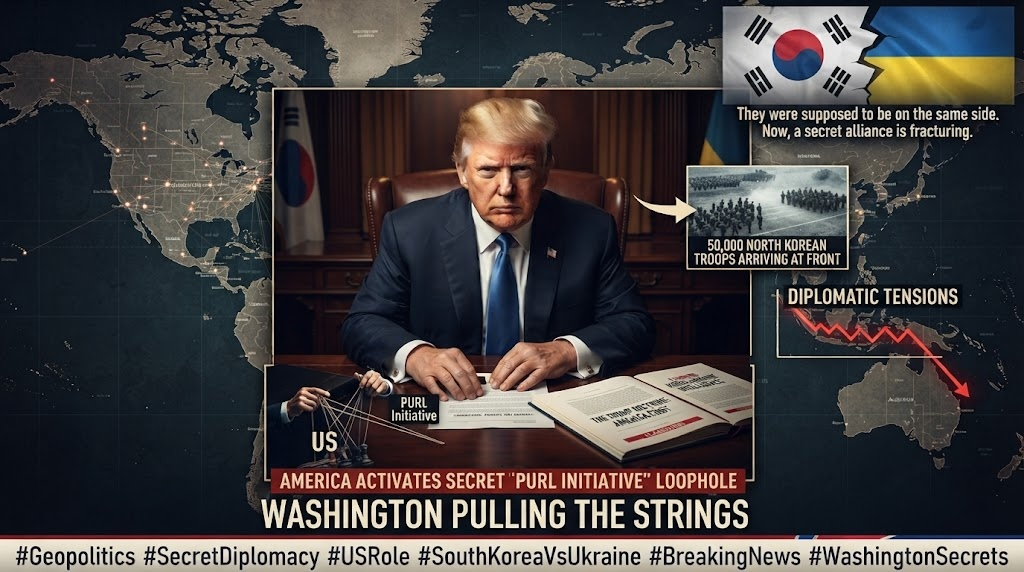
South Korea–Ukraine Rift Deepens Over North Korean POW Transfer as PURL Draws New Scrutiny