Trump’s Methane Rollback: $45 Billion in Savings—or a Costly Climate Trade-Off?
Trump’s Methane Rollback: $45 Billion in Savings—or a Costly Climate Trade-Off?
The administration says loosening oil-and-gas rules will cut costs and expand production. Critics warn the proposal could increase methane pollution, while the savings and output figures remain estimates.
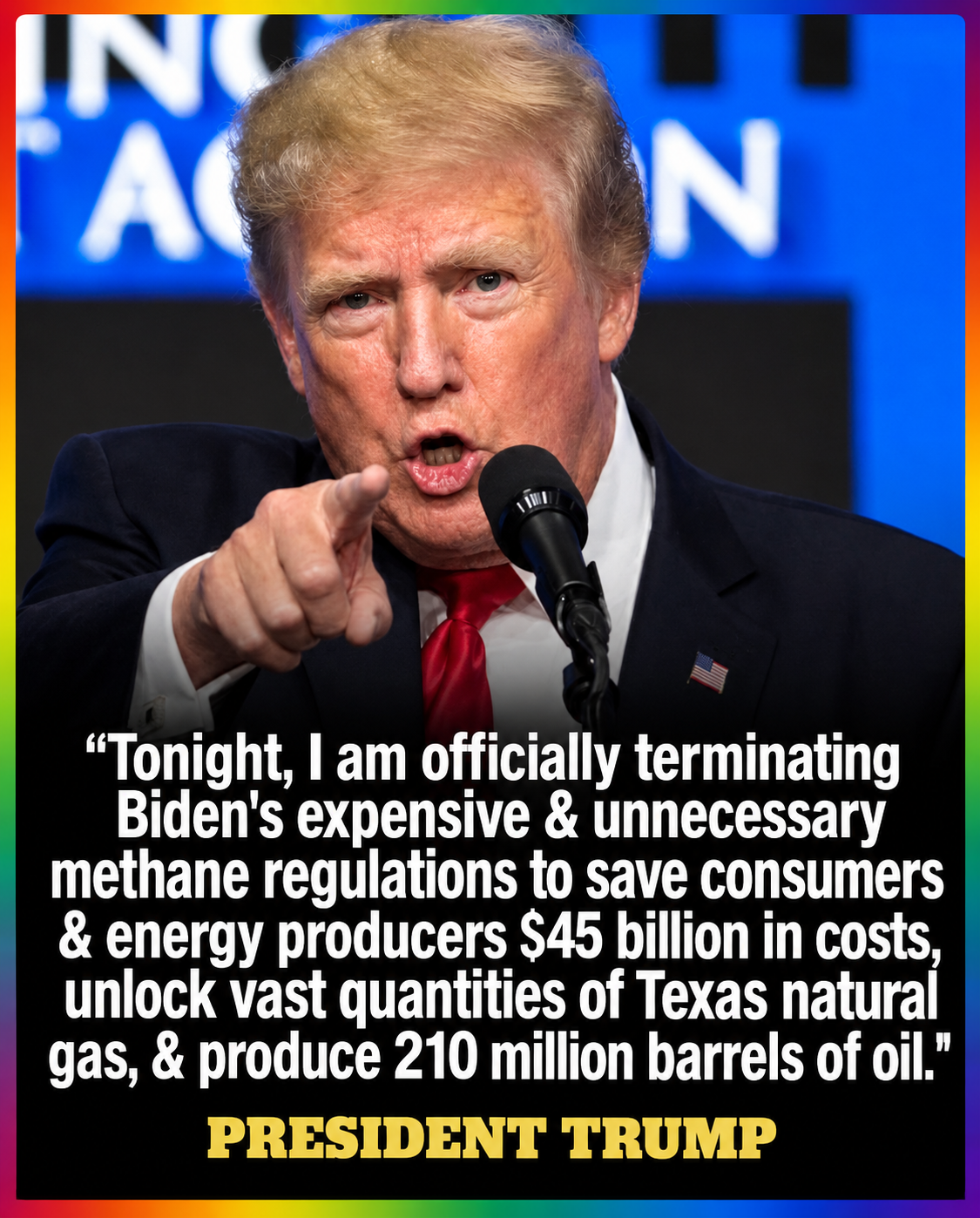
President Donald Trump has announced a plan to roll back federal methane-emissions rules for the oil and gas industry, promising lower regulatory costs, more domestic energy and a major boost to production. Speaking at a campaign rally in Lubbock, Texas, on October 27, Trump said the change would save consumers and energy producers $45 billion, unlock Texas natural gas and support an additional 210 million barrels of oil. Those figures are administration estimates, not guaranteed outcomes.
Despite the forceful language in Trump’s remarks, the policy is a proposed revision to existing rules rather than a completed repeal. The Environmental Protection Agency announced the proposal on October 27 and would need to complete the relevant regulatory process before the changes could take effect. That distinction matters because the announcement signals the administration’s direction, but does not mean every requirement has already disappeared.
The rules at issue were finalized under President Joe Biden in 2024. They were designed to reduce methane leaks from oil and gas wells, pipelines and processing facilities, including older and smaller sites. Methane is the main component of natural gas and can escape through faulty equipment, intentional venting or flaring, and other parts of production and transport.
The Trump administration argues that the existing requirements impose excessive costs on energy producers, especially owners of low-output wells. EPA Administrator Lee Zeldin says loosening the rules will reduce burdens on businesses and support more domestic production. The agency’s announcement puts the expected savings at $45 billion and estimates the changes could enable 210 million additional barrels of oil and 1.41 trillion cubic feet of natural gas.
Those projections should be read as forecasts rather than money already saved or energy already produced. Actual outcomes would depend on how the final rule is written, how companies respond, energy prices, infrastructure constraints and demand. The administration’s announcement also does not establish that consumers’ household bills will fall by a particular amount or on a particular schedule.

One proposed change would end the EPA’s Super Emitter Program, which allows approved third-party observers to report very large methane leaks. Under the current framework, such reports can prompt companies to investigate and address major releases. Supporters of the rollback say the program adds unnecessary costs and compliance burdens; critics say it is an important tool for finding leaks that might otherwise go undetected.
The proposal would also ease some requirements for marginal wells—older or smaller wells that produce relatively little oil or gas. Industry representatives have argued that the cost of monitoring and repairing these sites can make them uneconomic to operate. Environmental advocates counter that small wells can collectively account for a disproportionate share of methane emissions, so reducing oversight could leave substantial pollution unchecked.
Another element concerns routine flaring of associated gas. At some oil wells, natural gas comes up alongside crude oil, and operators may burn it when capturing and transporting it is not economically attractive. The administration says a more flexible approach could make production easier. Critics argue that relaxing controls can encourage waste of a usable resource and increase emissions.
Texas is central to the announcement because it is the country’s leading oil- and gas-producing state. The Permian Basin, which stretches across West Texas and southeastern New Mexico, is a major source of crude oil and associated gas. More permissive federal rules could affect operating costs across the region, but the scale of any production increase will depend on market conditions as well as regulation.
The politics are also significant. Trump announced the proposal while campaigning in Texas for Republican Senate candidate Ken Paxton ahead of the November 3 midterm elections. Energy prices have become a major political issue, and the administration is presenting expanded domestic production as one way to respond to voters’ concerns about fuel and household costs.

The environmental stakes are substantial because methane traps much more heat than carbon dioxide over the short term, even though it remains in the atmosphere for a shorter period. Cutting methane emissions is widely viewed by climate scientists as one of the faster ways to slow near-term warming. Oil and gas operations are a major industrial source of methane pollution in the United States.
The Biden administration estimated that its 2024 rule would prevent about 58 million tons of methane emissions by 2038. It also projected broader climate and public-health benefits. The Trump administration challenges the cost assumptions behind that analysis and argues the regulations threaten energy production. The two administrations therefore differ not only on the policy itself but also on how its costs and benefits should be calculated.
A key point of disagreement is what counts as a cost. Industry compliance expenses can be measured in equipment, inspections, repairs and administrative work. The potential benefits of preventing leaks may include captured gas that can be sold, reduced climate damage and fewer health risks associated with related pollution. Different assumptions about future prices, emissions and the value of avoided damage can produce very different estimates.
Supporters of the rollback say smaller operators could benefit most because they have fewer resources to absorb compliance costs. Some producers have argued that stricter rules could force marginal wells to close. But whether lower costs translate into lower prices for consumers is less certain: oil and gas prices also respond to global supply, geopolitical events, refinery capacity, transportation and demand.
Environmental groups warn that weakening methane requirements could allow more gas to escape into the atmosphere or be burned off instead of captured. They argue that preventing leaks can reduce waste while protecting communities near oil and gas infrastructure. Their criticism is that the proposal may deliver regulatory relief to producers while shifting some environmental and public-health costs onto the wider public.

The proposal’s final effects will depend on the details of the rulemaking. Public comments, legal challenges, implementation schedules and the final language can all change how a proposed regulation is applied. Companies may also continue to use leak detection and capture systems voluntarily, particularly where lost gas has commercial value or where customers and investors demand lower emissions.
The headline figure of $45 billion is therefore best understood as the administration’s estimate of avoided regulatory costs, not a promise that $45 billion will appear in household budgets. Similarly, the projection of 210 million additional barrels describes potential production attributed to the policy change; it is not a verified increase already delivered. Transparent explanations of the calculation and the assumptions behind it are essential to evaluating those claims.
The choice facing regulators is not simply between energy production and environmental protection. Policymakers must weigh the affordability and reliability of energy, the economic position of producers, the value of captured gas, the health of nearby communities and the long-term consequences of methane emissions. The balance depends on evidence about real-world costs and results, not just slogans from either side.
For consumers, the immediate effect of the announcement is unlikely to be a direct, automatic reduction in energy bills. The proposal still needs to move through the regulatory process, and any market effects would emerge over time. A larger supply of oil or gas can put downward pressure on prices under some conditions, but it cannot guarantee cheaper gasoline or heating for every household.
Trump’s methane proposal is a major shift in federal energy and climate policy, with potentially meaningful consequences for producers, consumers and the environment. The administration forecasts substantial savings and higher output; critics warn of more pollution and wasted gas. The key questions now are what the final rule will require, whether the projected savings materialize, and how the costs and benefits compare once the policy is implemented.
Comments (0)
Loading comments...
May You Like



Latest Posts



Popular Posts