Trump's "Morality" Comment and the Oath of Office: What the Viral Image Reveals About a Dangerous Pattern
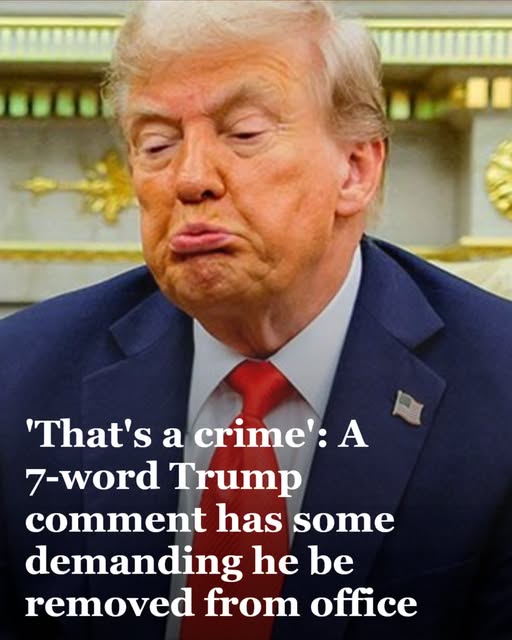
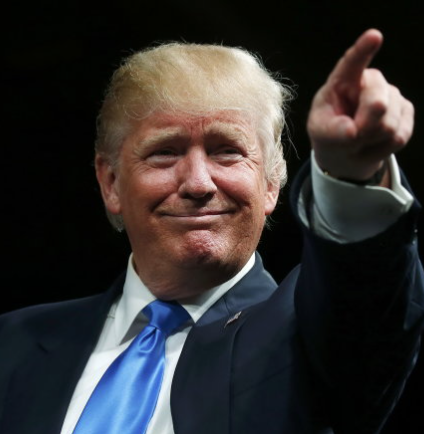
A viral image of President Donald Trump with the caption "Every President takes an oath to uphold the Constitution" has sparked intense debate online. The image, which contrasts the presidential oath with Trump's recent claim that only "my own morality" limits his power, raises a fundamental question: What happens when a president openly suggests his personal conscience supersedes constitutional constraints?
WASHINGTON – A striking image circulating on social media features President Donald Trump with the text: "Every President takes an oath to uphold the Constitution." The caption is a pointed reference to a recent interview in which Trump declared that the only thing restraining his power is "my own morality."
The juxtaposition is deliberate — and deeply troubling to constitutional scholars and critics alike.
What Trump Actually Said
In an interview with The New York Times, Trump was asked whether there were limits on his authority to strike, invade, or coerce other nations. His response was unambiguous: "Yeah, there is one thing. My own morality. My own mind. It's the only thing that can stop me."
When pressed on whether the United States still had to follow international law, Trump shrugged it off: "It depends what your definition of international law is."
He also boasted about using unpredictability and threats of violence as tools of "coercive diplomacy," even recounting a tense call with Colombia's president after Trump floated attacking the country. "The threat is real," Colombia's leader warned. And Trump seemed proud of it.
The comments have been widely condemned as authoritarian and contrary to the principles of democratic governance.
The Presidential Oath: A Sacred Trust
Every president takes the same oath, prescribed by Article II, Section 1 of the U.S. Constitution:
"I do solemnly swear (or affirm) that I will faithfully execute the Office of President of the United States, and will to the best of my Ability, preserve, protect and defend the Constitution of the United States."
The oath is not a formality. It is a binding commitment — a public pledge that the president's power is constrained by the Constitution, not by personal whim or moral intuition.
Trump's statement directly contradicts that oath. By claiming that only his "own morality" limits his power, he is effectively saying that the Constitution is not the ultimate authority — he is.
A Pattern of Disregard
This is not an isolated incident.
Press Freedom Under Attack: On September 18, 2026, Trump announced he was banning CNN, Politico, and MS NOW from the White House, accusing them of "FAKE NEWS" and warning that other outlets could face similar restrictions. The ban was enforced the following day when journalists from all three organizations were denied entry and had their press credentials confiscated.
"CNN stands fully behind our White House team and their fair and accurate reporting," the network said in a statement. "We have a right under the U.S. Constitution to do that reporting without hindrance or interference from the government."
When asked what the ban would entail, Trump said: "I don't want them in my office. I don't want them here. I would say the ban would go as far as you can."
International Law Dismissed: Trump's claim that he doesn't need international law echoes his broader foreign policy approach, which has included withdrawing the U.S. from dozens of international agreements and threatening military action against sovereign nations.
Whirlwind of Chaos: On a single day in late 2026, Trump canceled a signing ceremony for a bipartisan housing bill, berated GOP lawmakers, and criticized European allies. The Wall Street Journal described it as a "whirlwind day of frustration and finger-pointing."
The Constitutional Crisis Nobody Wants to Name
Legal scholars have warned that Trump's rhetoric represents a fundamental challenge to the American constitutional order.
The Constitution establishes a system of separated powers — legislative, executive, and judicial — designed to prevent any single branch from becoming too powerful. The president is not above the law; he is bound by it.
When a president says that only his "own morality" limits his power, he is rejecting that framework. He is saying that the rules don't apply unless he decides they do.
This is not a partisan observation. It is a statement of constitutional fact.
The 25th Amendment Question
Some critics have suggested that the 25th Amendment — which allows for the removal of a president who is unable to discharge the duties of his office — should be invoked.
"The 25th amendment really needs to be invoked," one commenter wrote. "He's gone crazy. He attacks his allies, whether it's our partners internationally or his own lawmakers. Congress passed the bipartisan bill, he has an obligation to sign or veto it."
The 25th Amendment has never been used to remove a president. It requires the vice president and a majority of the Cabinet to declare the president unfit, followed by a two-thirds vote in both chambers of Congress if the president contests the decision.
Whether such a scenario is realistic is a separate question. But the fact that it is being discussed at all is a measure of the gravity of the moment.
The Bottom Line
| What Trump Said | What the Constitution Says |
|---|---|
| "My own morality" is the only limit on his power | The president takes an oath to uphold the Constitution |
| "I don't need international law" | The U.S. is bound by treaties and international norms |
| "I don't want them in my office" (on banning press) | The First Amendment protects freedom of the press |
Every president takes an oath to uphold the Constitution. The question now is whether this president believes that oath means anything at all.
The answer, based on his own words, appears to be no.
Comments (0)
Loading comments...
May You Like
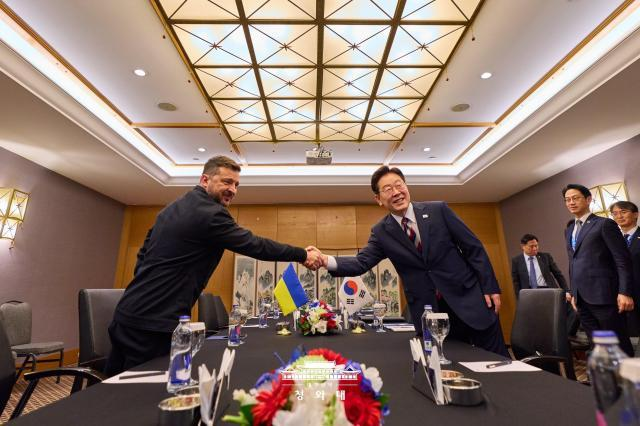
South Korea–Ukraine Rift Deepens Over North Korean POW Transfer as PURL Draws New Scrutiny
Shocking news from Ohio: an unexpected development ahead of Trump's rally
OBAMA STEPS BACK INTO THE POLITICAL SPOTLIGHT