
TRUMP'S NEW BORDER BILL: COULD FUTURE PRESIDENTS BE BLOCKED FROM REOPENING THE U.S. BORDER?
A political graphic circulating online claims that Donald Trump is pushing a new law that would make it illegal for future presidents to reopen the U.S. border. If enacted as described, such a measure could dramatically reshape presidential authority over immigration and border security.
But the headline leaves out a crucial question: Is this an actual legislative proposal, and what powers would it give Congress over future presidents? The distinction matters because a political proposal, a bill introduced in Congress and an enacted law are three very different things.
The proposal Trump announced
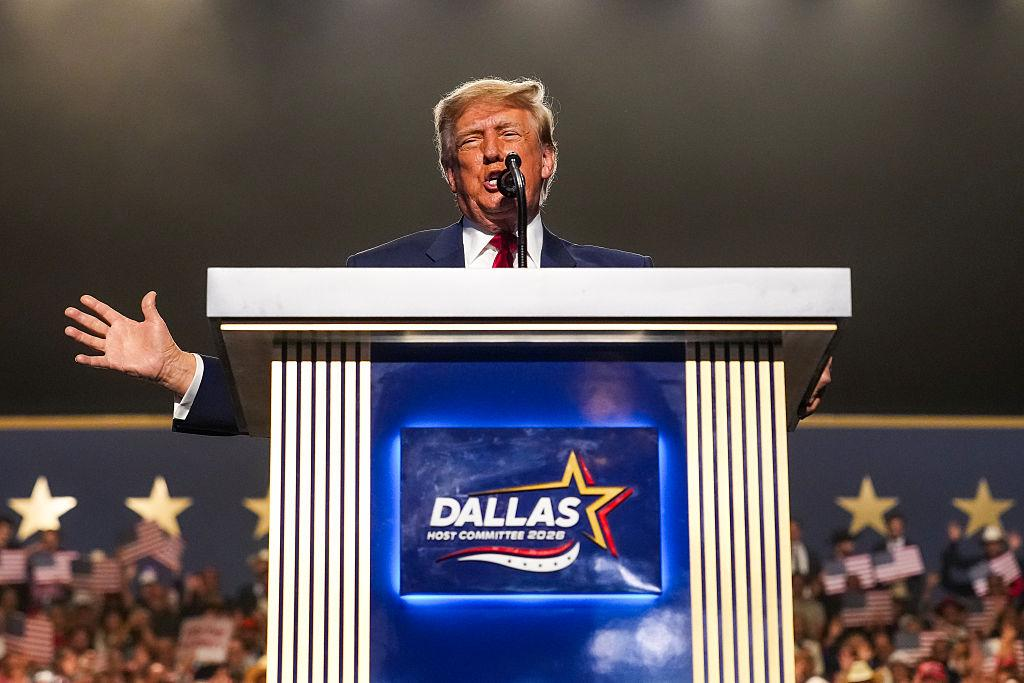
Trump introduced the idea publicly on September 9, 2026, during a Republican midterm convention in Dallas, Texas. He called it the “No Invasion of Our Country Act” and said it would make it legally impossible for a future president to reopen the border.
He repeated the proposal at a rally in Mobile, Alabama, in October. His stated objective was to prevent a future administration from reversing his restrictive immigration policies through executive action.
However, as of November 6, 2026, there is an important distinction: the proposal under that name has not appeared as a formally introduced bill in Congress. Trump has announced a legislative goal, but that is not the same as having a completed bill ready for a vote.
There is a separate border bill already in Congress
One reason the headline can be confusing is that a related measure does exist.
Representative Chip Roy of Texas introduced H.R. 9773, the Permanent Trump Secure Border Act, on July 20, 2026. The House Judiciary Committee advanced an amended version by a 16–14 vote in July.
The measure addresses several areas of immigration law, including asylum procedures, detention, parole and border enforcement. It is not, however, the same legislation as Trump's publicly announced “No Invasion of Our Country Act.”
The distinction is important: the committee action does not mean Congress has passed Trump's proposed law or that future presidents have already lost the authority to change border policy.

Can Congress restrict future presidents?
Congress has broad constitutional authority to establish immigration laws. It can pass legislation that limits executive discretion, changes asylum procedures, establishes enforcement requirements and provides funding for border security.
That means lawmakers could make some parts of Trump's immigration agenda more difficult for a future administration to reverse through executive orders alone.
But there is a major constitutional limitation: one Congress generally cannot prevent a future Congress from changing or repealing an ordinary federal law.
If a future president has a different immigration agenda and their party controls Congress, lawmakers could introduce legislation to amend or repeal the restrictions. The president could also use whatever executive discretion remains under the law.

In other words, Trump cannot permanently lock his entire border agenda into place simply by announcing a bill. A law passed today can be challenged in court, amended by Congress or replaced by future legislation.
There is another important issue: presidents do not have unlimited authority to suspend immigration protections. In April 2026, a federal appeals court ruled against Trump's attempt to suspend access to asylum at the southern border, finding that federal immigration law protects the right to apply for asylum. That ruling illustrates how legislation and executive orders remain subject to judicial review.
What would this mean for immigration policy?
If Congress enacted strict new requirements, a future administration could have less flexibility to change border procedures immediately after taking office.
For example, legislation could establish tighter eligibility rules for asylum, impose limits on certain forms of immigration parole or require specific enforcement procedures. Reversing those provisions could require another act of Congress rather than a simple presidential order.
Supporters would likely describe this as protecting border security from political swings every four years. They argue that immigration policy should not change dramatically whenever a new president enters the White House.
Critics, however, could argue that the proposal risks restricting humanitarian protections and making it harder for future administrations to respond to changing conditions at the border. They may also question whether Congress should attempt to make one administration's policy framework so difficult to change.
A political battle beyond Trump's presidency
The proposal also carries major political significance. Trump is attempting to turn his border strategy into a lasting Republican policy platform, rather than leaving it vulnerable to reversal by a Democratic successor.
That goal is especially relevant after the November 3 midterm elections, which determine whether Republicans retain control of Congress. Without sufficient support in both chambers, Trump's broader legislative ambitions could face significant obstacles.
Even if a version of the proposal passes the House, it would still need to clear the Senate and be signed into law. The final text would matter enormously: the slogan announced at a rally does not tell Americans exactly which presidential powers would be restricted or how asylum protections would be affected.
The debate ultimately goes beyond Trump. It raises a fundamental question about how much control a president should have over immigration policy—and how much of that authority should belong to Congress.
Trump wants to make his border policies harder for future presidents to reverse. But can any ordinary law truly prevent a future administration and Congress from changing America's immigration system again?
Comments (0)
Loading comments...
May You Like

$1 BILLION DISASTER AT BANGCHAK REFINERY, THAILAND—40 BURNED, 8 AMERICANS DEAD!

KUWAIT DRONE ATTACK SPARKS TENSION BETWEEN ISRAEL, THE U.S AND IRAN

STORM WARNING: MILLIONS FACE EVACUATION, MACY'S GIANT BALLOONS GROUNDED!

Latest Posts








Popular Posts




