
Trump’s Nobel Peace Prize Bid Sparks Fierce Debate After 2026 Award Goes to Another Candidate
Trump’s Nobel Peace Prize Bid Sparks Fierce Debate After 2026 Award Goes to Another Candidate
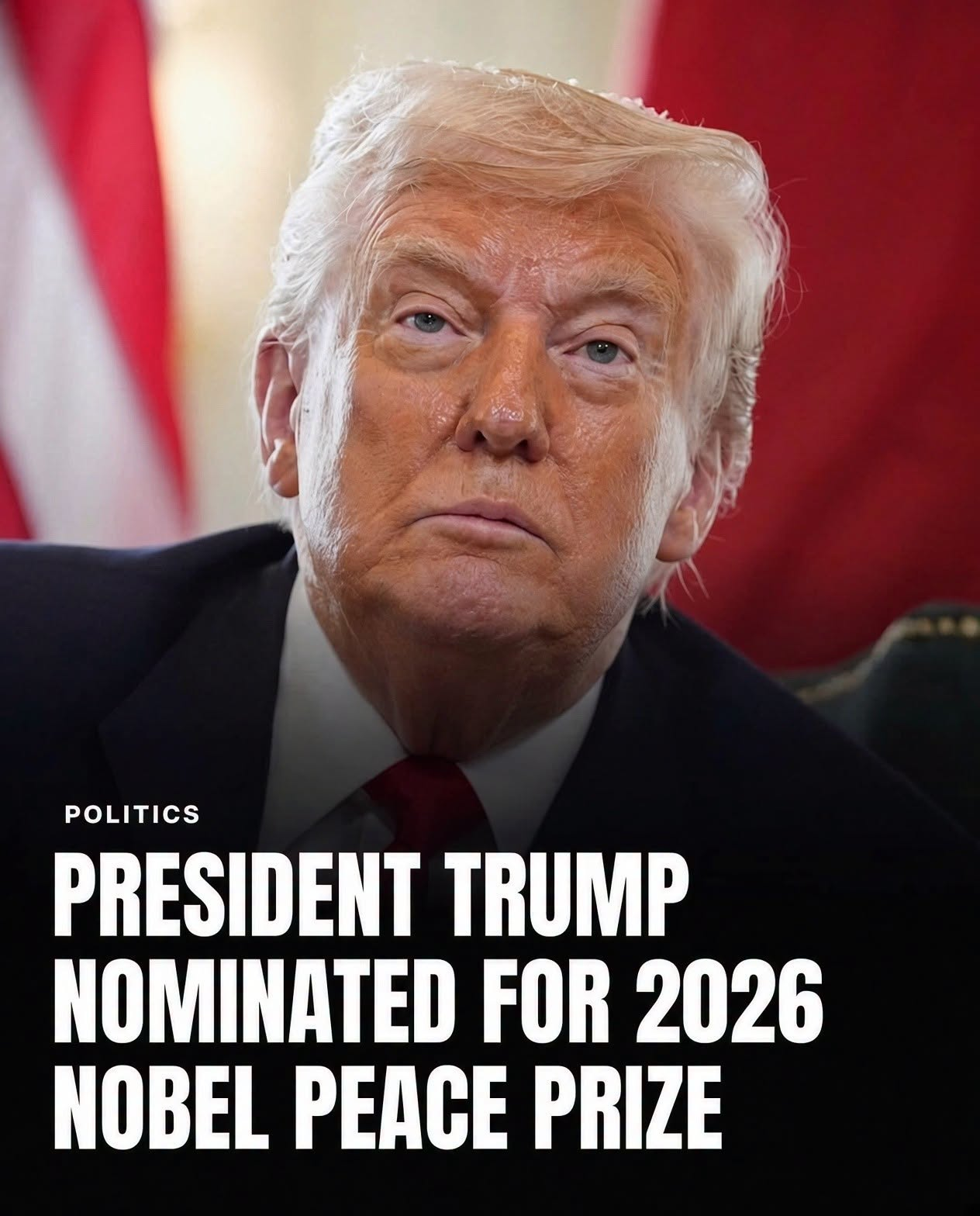
President Donald Trump’s pursuit of the Nobel Peace Prize has become one of the most closely watched political stories of 2026, bringing renewed attention to his diplomatic record, his supporters’ arguments and the Nobel committee’s independent selection process.
The debate intensified after several political figures publicly backed Trump for the award. Their endorsements prompted a larger question: how should voters and international observers judge a president’s claims of peacemaking when conflicts remain unresolved?
Republican Representative Claudia Tenney announced in January that she had nominated Trump for the 2026 Nobel Peace Prize, citing the Abraham Accords and what she described as his efforts to negotiate international agreements.
Other politicians and foreign leaders have also publicly supported Trump’s candidacy. Such declarations are politically significant, but they should not be confused with an official confirmation from the Nobel committee.
The Norwegian Nobel Committee keeps the identities of nominees confidential for 50 years. Eligible nominators can reveal their own submissions, but the committee does not publish a verified list of candidates during the selection year.
That distinction matters because the word ‘nominated’ can sound like a formal endorsement. In reality, receiving a nomination is only the first step in a competitive process involving hundreds of candidates.
Trump and his allies point to the Abraham Accords, which normalized relations between Israel and several Arab countries during his first term, as a central achievement in his foreign-policy record.
Supporters also credit the president with pushing rival governments toward negotiations and argue that his unconventional approach has sometimes created diplomatic openings that traditional channels failed to produce.
Yet claims about resolving multiple wars have faced scrutiny. The extent of Washington’s role in individual agreements is contested, and renewed violence in some regions has raised questions about the durability of announced breakthroughs.
The Russia-Ukraine war remains an especially difficult test of Trump’s promises. His earlier pledge to bring the fighting to a rapid end has not translated into the comprehensive settlement he envisioned.
His administration’s involvement in conflict with Iran has also complicated the case advanced by his supporters, who portray him as a leader uniquely capable of reducing global hostilities.
In early October, Trump again publicly argued that he deserved the peace prize, while expressing doubts about whether the committee would choose him. His remarks turned the award into a prominent political talking point.
The 2026 Nobel Peace Prize was announced on October 9, and the honor went to South African jurist Navi Pillay, a former United Nations High Commissioner for Human Rights recognized for her defense of international law.
The decision meant that Trump did not win the 2026 prize, despite the high-profile public campaign surrounding his possible candidacy. The committee’s choice also underscored the difference between political attention and the standards used to select a laureate.
Pillay’s recognition drew attention to institutions, accountability and human rights at a time when international law and the role of multilateral organizations have become deeply contested issues.

Trump’s supporters may view the outcome as a missed opportunity to reward diplomatic initiatives. Critics, by contrast, argue that the president’s broader foreign-policy record includes actions that undermine his claim to be a peace laureate.
The Nobel Peace Prize has never been a simple measure of popularity. Past selections have generated controversy, and the committee’s judgments often reflect long-term ideas about conflict prevention, human rights and international cooperation.
Former President Barack Obama’s 2009 Nobel Peace Prize remains a familiar comparison in American political arguments, though the circumstances, selection processes and diplomatic records differ considerably.
For readers encountering viral graphics announcing Trump’s nomination, the most useful distinction is between a publicly announced nomination, an independently confirmed nominee list and the final award decision.
The 2026 result is settled, but the argument about Trump’s diplomatic legacy will continue. Its ultimate significance will depend less on award speculation than on whether negotiations produce lasting security, reduced violence and meaningful political agreements.
Comments (0)
Loading comments...
May You Like

BLACK FRIDAY TENSIONS IN NYC — DID PROTESTERS CROSS THE LINE AT A DISNEY STORE?

IRAN CLAIMS IT FIRED AT U.S. WARPLANES — WAS AN AMERICAN F-16 FORCED TO RETREAT?

AMERICA'S TRADE DEFICIT SURGES — WHAT DOES IT MEAN FOR AMERICAN FAMILIES?












