
TRUMP'S NUCLEAR BOAST
Trump Says He Eliminated Iran’s Nuclear Threat in One Night — But the Evidence Raises Serious Questions
U.S. POLITICS · NOVEMBER 4, 2026
President Donald Trump’s assertion that the United States eliminated Iran’s nuclear threat in a single night has become a defining claim in his account of the conflict. But a closer examination of the timeline reveals a fundamental distinction between damaging nuclear facilities and proving that an entire nuclear program can no longer function.
The claim appeared in an October 1, 2026, Truth Social post, in which Trump said he had previously estimated that removing the nuclear threat would take four to six weeks. Instead, he asserted, the decisive part of the mission was accomplished in one night, and subsequent military activity was intended to preserve the result.
Trump repeated the point that day during a political rally in Durant, Oklahoma. He credited American B-2 bombers and described the operation as evidence of the extraordinary reach of the U.S. military. The message was unmistakable: he wanted voters to see the military campaign as a demonstration of swift and overwhelming force.
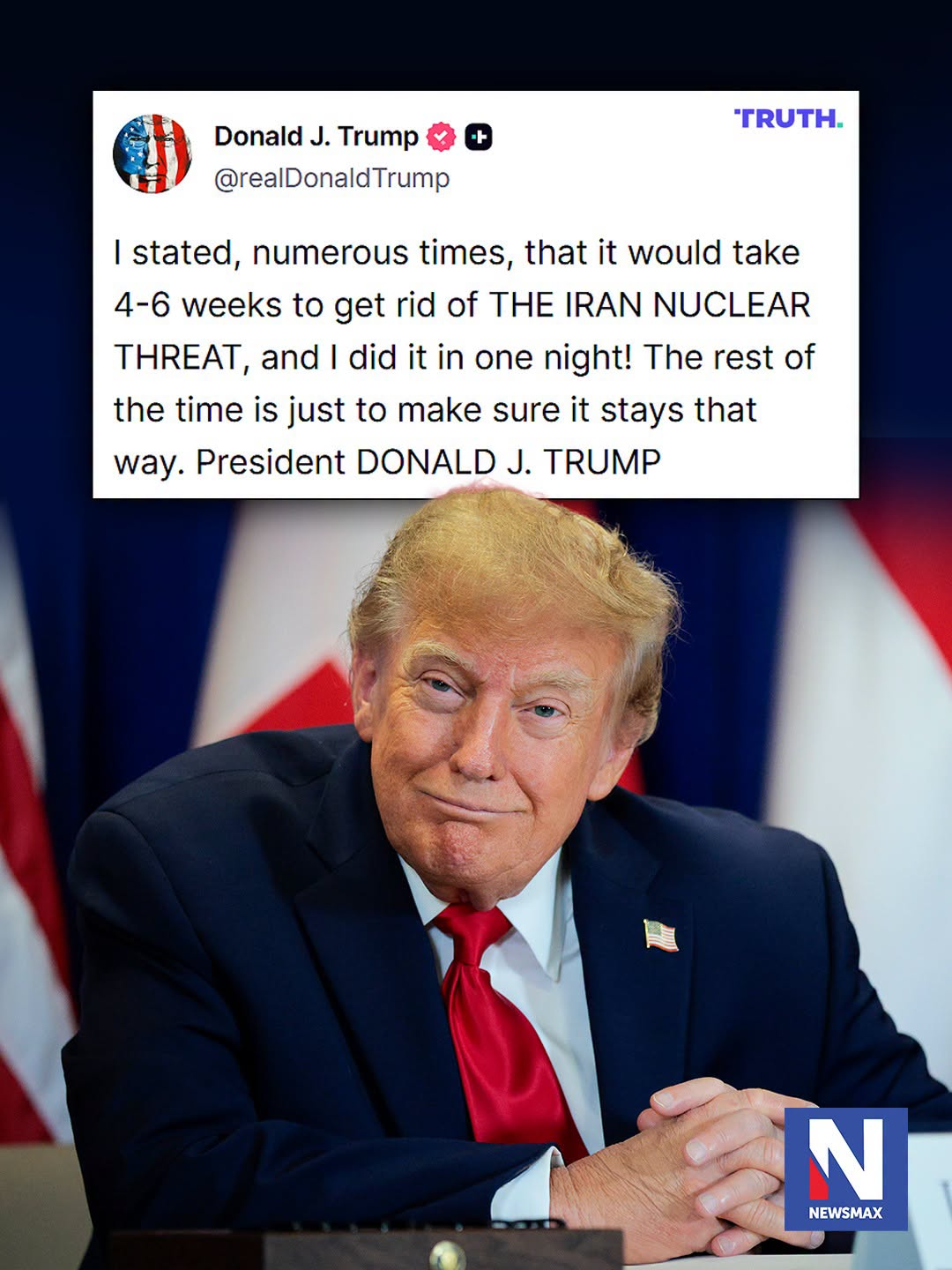
Image supplied by the reader showing Donald Trump and his October 1, 2026 statement
The timing mattered. With the November midterm elections approaching, the war and its economic consequences had become politically sensitive. Questions about energy prices, the duration of the conflict, and the administration’s goals had followed Trump through months of public appearances.
Yet the four-to-six-week timeline itself is disputed. When Trump initially discussed the length of the war in March, he repeatedly described a conflict expected to last weeks. His later argument that the timetable referred specifically to eliminating the nuclear danger was not clearly reflected in those earlier public remarks.
That discrepancy is more than a dispute over wording. A forecast about the duration of a war can be evaluated against the actual fighting. A claim that a nuclear threat has been eliminated requires different evidence: reliable intelligence, technical assessments and, ideally, verification of nuclear material and equipment.
U.S. strikes in 2025 targeted major Iranian nuclear installations, including deeply buried facilities. The subsequent campaign in 2026 brought additional attacks and intensified the confrontation. Those operations may have damaged buildings, equipment and infrastructure that supported enrichment activities.
But damage to a facility does not automatically establish that all enriched uranium has been destroyed, that specialized knowledge has disappeared, or that enrichment capabilities cannot be rebuilt elsewhere. Nuclear technology involves materials, technical personnel, industrial supply chains and more than one physical location.
One of the biggest unanswered questions concerns Iran’s stockpile of highly enriched uranium. Analysts have emphasized that without verified accounting for sensitive material, it is difficult to declare the underlying nuclear risk completely over.
The situation also illustrates the limits of public battlefield claims. Satellite images can reveal visible damage, and intelligence agencies may assess strikes using additional classified information. Neither form of evidence necessarily offers complete visibility into underground facilities or materials moved before an attack.
For Trump, the phrase ‘one night’ conveys political clarity. It compresses a prolonged, complex conflict into a single dramatic victory. For independent nuclear experts, however, the relevant question is not simply how powerful the strikes were but whether they produced a lasting, verifiable strategic result.
The White House has defended the president’s position, pointing to the administration’s military actions and its commitment to preventing Iran from acquiring a nuclear weapon. Administration supporters argue that the strikes imposed serious costs and may have substantially disrupted Tehran’s nuclear plans.
Critics respond that declaring the threat eliminated goes further than the evidence supports. Assessments published in 2026 have indicated that the attacks set back Iranian capabilities but did not conclusively end the program. The difference between a setback and elimination remains central to the debate.
The dispute has immediate consequences for diplomacy. Negotiators must decide what restrictions, inspections or agreements could reduce the risk of renewed nuclear activity. A military campaign alone may be unable to provide the ongoing transparency that a monitored arrangement could offer.
Iran’s own public positions and the condition of its nuclear infrastructure add further uncertainty. Officials can make claims about their capabilities for political reasons, while independent inspectors may face limited access to key locations. That leaves outside governments assessing a changing picture with incomplete information.
There is also a broader strategic question: whether additional strikes would strengthen American leverage or encourage Iran to conceal sensitive activities more deeply. Policymakers must weigh possible short-term military gains against the risk of further escalation and lasting regional instability.
The conflict has unfolded against the economic importance of the Gulf and the Strait of Hormuz. Even the threat of additional military action can influence shipping expectations and energy markets, raising the stakes for governments and ordinary households far from the battlefield.
For American voters, the president’s claim is therefore connected to more than foreign policy. It affects how they judge the administration’s promises, the cost of military operations and the relationship between public statements and the assessments of technical specialists.
It is possible for an operation to be militarily significant while falling short of the sweeping political description given to it. That distinction does not erase the impact of American strikes; it simply recognizes that dismantling a complex nuclear capability is not identical to damaging the sites associated with it.
As Washington and Tehran consider the next stage of their confrontation, the most important test of Trump’s statement will be evidence that can stand up over time. Until there is clear verification of Iran’s materials and capabilities, the assertion that the nuclear threat vanished in one night remains a contested political claim rather than an established technical conclusion.
Comments (0)
Loading comments...
May You Like

TRUMP CALLS GDP FIGURE “FAKE” AFTER GOVERNMENT’S SCHEDULED REVISION

BANGCHAK REFINERY DISASTER IN THAILAND—120,000 BARRELS A DAY SHUT DOWN, U.S. OIL PRICES SURGE 10%!

Latest Posts








Popular Posts




