Trump’s Oval Office vs. Obama’s: Inside the White House’s Golden Makeover
Trump’s Oval Office vs. Obama’s: Inside the White House’s Golden Makeover
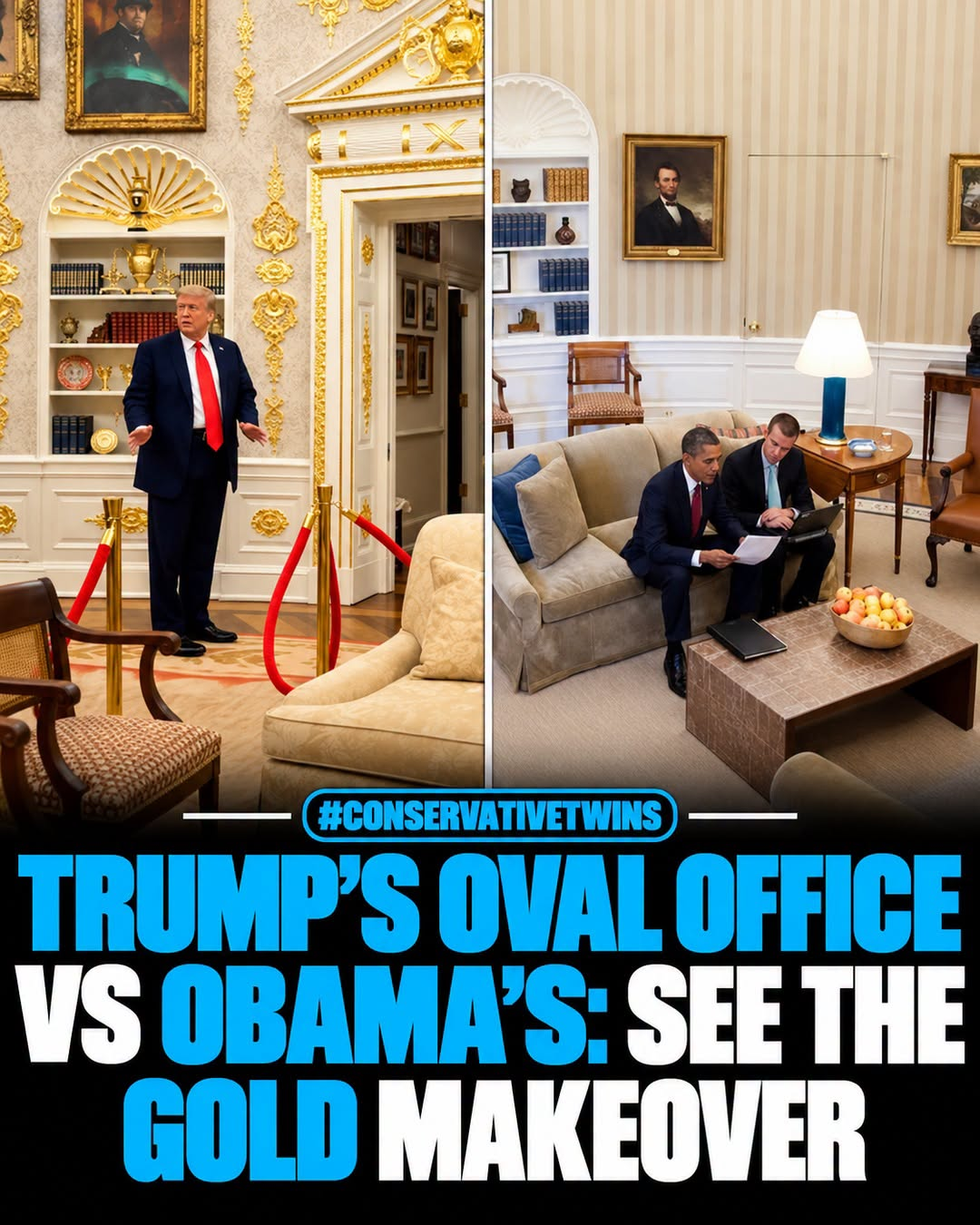
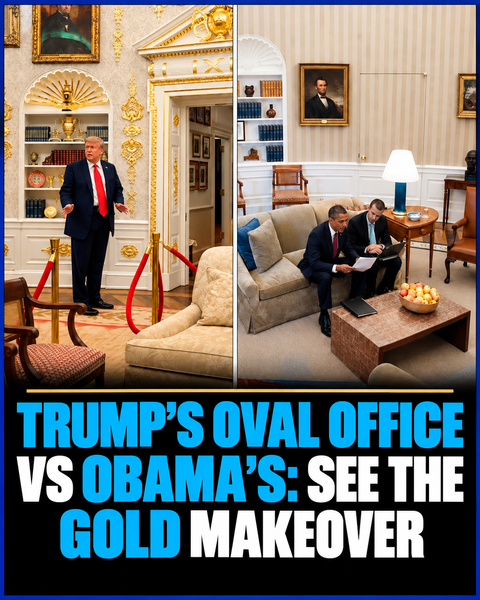
President Donald Trump’s second-term Oval Office has become a visible symbol of his approach to the White House: more gold, more ornament, more portraits and a highly personal decorative signature. A comparison graphic contrasts Trump’s ornate room with the more restrained setting used during Barack Obama’s presidency.
Presidents have long changed the Oval Office to reflect their preferences, choosing rugs, curtains, artwork, furniture and personal mementos. Trump’s renovation stands out because the changes are unusually elaborate and extend across walls, doorways and the fireplace mantel.
Reporting by the Associated Press in October 2026 described a full-scale replica of Trump’s current Oval Office at The People’s House: A White House Experience in Washington. The museum updated its exhibit to reproduce the gilded details, heavy portrait frames, vases and decorative objects now in the real office.
The replica is designed to match the room’s current appearance, not to serve as a political endorsement. The White House Historical Association created the visitor experience so people who cannot tour the West Wing can get a closer sense of the Oval Office’s scale and changing history.
During Obama’s presidency, the Oval Office was generally more restrained in its visible ornamentation. Photographs from that period show a room centered on the Resolute Desk, a limited group of portraits and a relatively simple palette. That does not mean the office was undecorated; it reflects a different balance between furnishings, personal choices and presentation.
Trump has added gold-colored trim and decorative appliqués to walls and doorways, as well as gold objects on the mantel and side tables. Portraits of historical figures appear in heavy gilded frames, and the walls are more densely filled than in many previous administrations.
The effect is partly aesthetic and partly political. For supporters, the grander look can communicate confidence, prosperity and national prestige. Critics see the volume of ornament as excessive, arguing that the Oval Office is a public institution rather than a personal luxury suite.
Trump has defended the changes as improvements to a historic building. In remarks reported by The Washington Post in October, he described work on damaged plaster, a cracked column, missing ornamentation and broken tiles, while arguing that maintaining the White House is important because it represents the country.
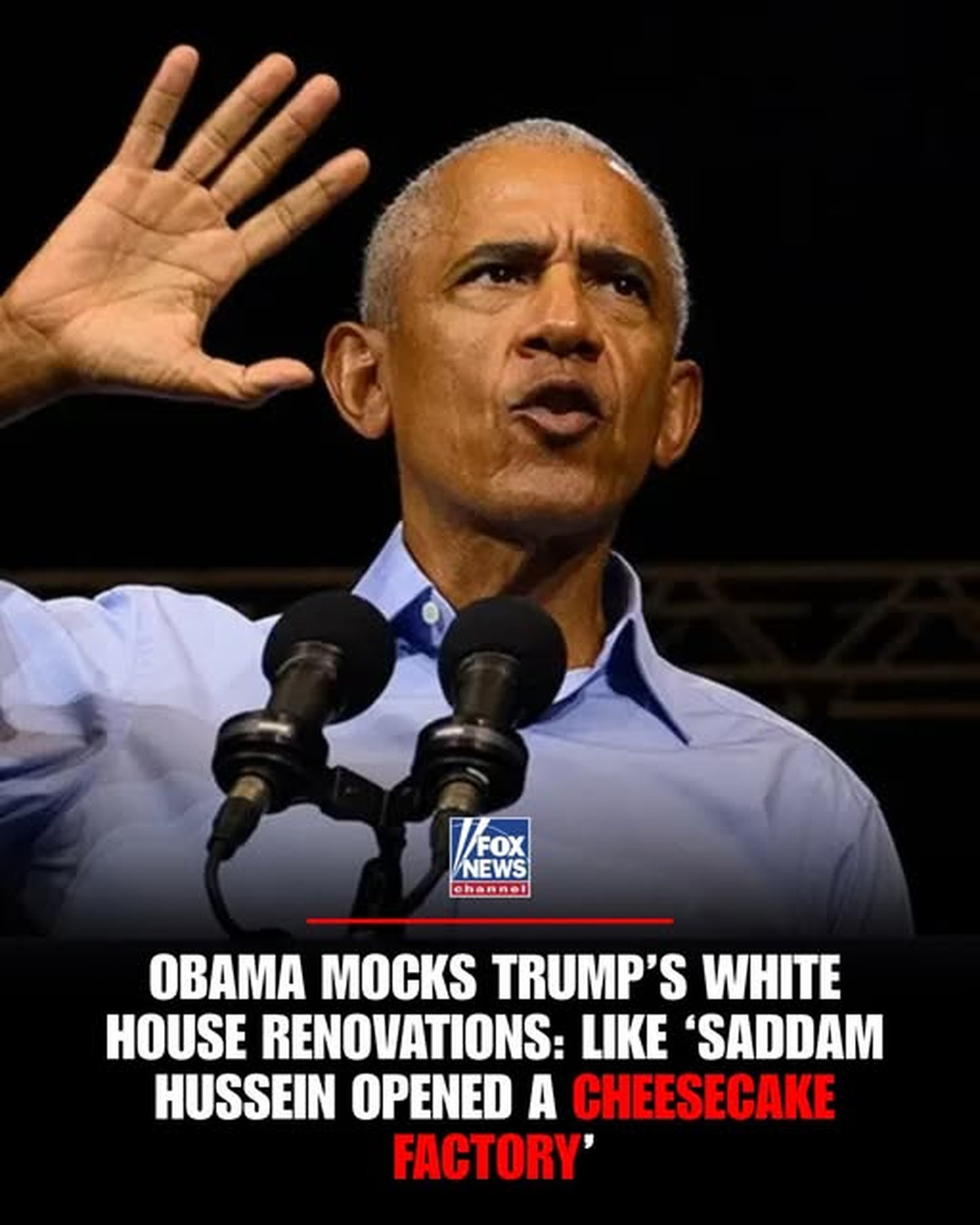
The debate flared after Obama joked about the gold decorations and compared the room’s appearance to a Cheesecake Factory opened by Saddam Hussein. Trump responded at a rally, spending several minutes defending the renovations and dismissing the criticism.
The exchange shows how interior design has become part of the political story. A room that is usually a backdrop for policy announcements and meetings with world leaders has turned into a proxy debate about taste, priorities and what the presidency should look like.
The Oval Office is not a private residence, even though presidents work there every day. It is an iconic national space used for executive business, televised addresses, diplomatic meetings and photographs that shape how Americans and people abroad imagine the presidency.
Presidents have historically customized the office without necessarily altering its basic footprint. Furniture, carpet, curtains and artwork can change between administrations, and the room’s appearance often becomes a visual shorthand for the president occupying it. Trump’s approach is distinctive because it uses dense gold ornamentation and many decorative objects.
The changes are part of a broader White House makeover. Trump has replaced the Rose Garden’s grass with a paved patio, added presidential portraits along a West Wing walkway, and pursued a large ballroom project following the demolition of the East Wing. These projects have drawn questions about preservation, cost, donors and presidential authority.
The ballroom has been described by the administration as a way to host large events in a more suitable space. Reuters reported in October that the project was estimated at hundreds of millions of dollars and that the administration had not released a full list of donors. These financing questions are separate from whether the Oval Office’s new style is attractive.
The replica at The People’s House illustrates the practical work required to recreate the room. According to the Associated Press, specialist teams used three-dimensional scanning and custom-made frames and objects. The replica uses a paint solution rather than actual gold leaf for some effects, partly to protect the exhibit from wear.
The museum’s version is a careful likeness, not an exact material copy. Its purpose is to help visitors understand the room’s layout and changing décor, while the real Oval Office remains an active workplace subject to security restrictions and presidential use.
Side-by-side graphics can imply a perfectly controlled comparison even when photographs differ in angle, lighting, lens, furnishings and the moment captured. The images are useful for showing broad visual contrast, but they are not a complete record of either administration’s office or every change made over time.
The question of public money is often blurred with the question of style. Some Oval Office decorative work has been described by the White House as privately funded, while major construction projects raise separate questions about donors, public oversight and historic preservation. Each project should be assessed on its own documentation.
Ultimately, the contrast between Trump’s gold-heavy room and Obama’s comparatively understated office reflects more than a change in color. It reveals how presidents use the White House to project identity and authority, and how a familiar room can become a political symbol. Whether visitors see grandeur or excess, the renovation has made the Oval Office a subject of national debate.
The most grounded conclusion is that Trump has substantially increased the amount of gold ornamentation and decorative detail in the Oval Office, while Obama’s office was visually simpler by comparison. The significance of those choices remains a matter of taste and political interpretation, but the broader makeover is documented in reporting on both the real office and its museum replica.

Comments (0)
Loading comments...
May You Like
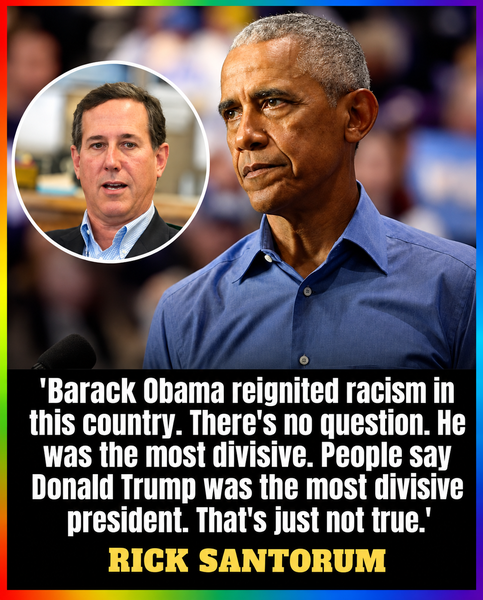
Rick Santorum Says Obama Reignited Racism, Rejects Claim Trump Was Most Divisive President

Latest Posts


Popular Posts