
TRUMP’S RUSSIA DIESEL DEAL FACES...
TRUMP’S RUSSIA DIESEL DEAL FACES A BIPARTISAN LEGAL CHALLENGE…
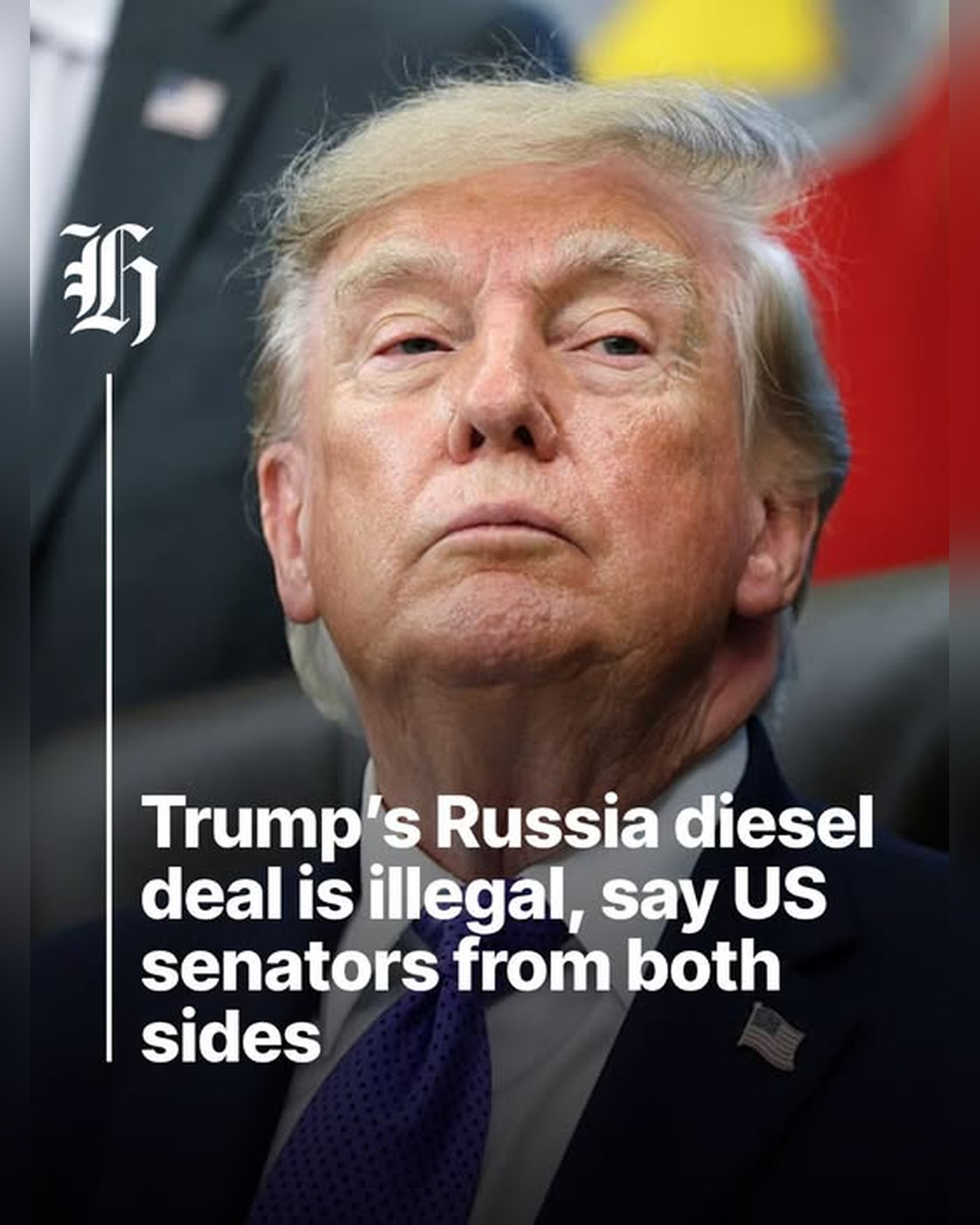
The headline refers to a real dispute: on October 13, 2026, 12 U.S. senators — six Republicans and six Democrats — urged President Donald Trump to reverse his agreement allowing Russian-origin diesel into global markets. They argued the move could violate existing sanctions laws and help finance Russia’s war against Ukraine.
One important distinction: the senators’ claim that the deal is illegal is a legal challenge, not a final court ruling. The administration has defended the move as an attempt to ease fuel prices.


The controversy puts energy prices, sanctions enforcement and U.S. support for Ukraine at the center of a growing dispute between the White House and lawmakers from both parties.
Full article
President Donald Trump’s agreement involving Russian diesel has triggered an unusual bipartisan backlash in Washington, with lawmakers warning that the policy could undermine efforts to pressure Moscow over its invasion of Ukraine.
The senators’ October 13 letter called on Trump to rescind the agreement and enforce sanctions authorized by Congress. The signatories included prominent Republicans and Democrats from key Senate committees.
The agreement followed discussions between Trump and Russian President Vladimir Putin. Trump said easing restrictions on Russian diesel exports could help increase fuel supplies and reduce energy costs.
The administration’s position is that additional fuel supplies could help relieve pressure on consumers and businesses facing elevated diesel prices. Critics question whether the proposed arrangement can deliver meaningful savings.
At the center of the dispute is a 2022 federal law that prohibited Russian energy imports following Russia’s full-scale invasion of Ukraine. Lawmakers say the new arrangement conflicts with that restriction.
Representative Lloyd Doggett, who helped sponsor the earlier import ban, argued that the administration’s authorization directly contradicts the law’s requirements. That interpretation is disputed and has not been resolved by a court ruling.
The Treasury Department issued General License 135, authorizing certain Russian diesel transactions through April 7, 2027. Lawmakers have questioned whether the administration can lawfully grant that permission under existing legislation.
The senators also pointed to the recently enacted Lindsey O. Graham Sanctioning Russia and Iran Act of 2026, urging Trump to use its provisions to increase economic pressure on Moscow.
For the critics, the central concern is that Russia could earn additional revenue from fuel sales while its military continues operations against Ukrainian cities and infrastructure.
They argue that allowing Russian diesel into international markets risks weakening the economic pressure intended to constrain the Kremlin’s ability to finance the war.
Six Republican senators joined six Democrats in the October 13 letter, demonstrating that opposition to the agreement extends beyond the Democratic Party. The group urged the president to reverse course.
The Republican signatories included Susan Collins, Lisa Murkowski, Thom Tillis, Mitch McConnell, John Cornyn and Alan Armstrong. Their participation underscores divisions within the party over the administration’s Russia policy.
Democratic signatories included Jeanne Shaheen, Richard Blumenthal, Dick Durbin, Sheldon Whitehouse, Jack Reed and Chris Coons. Several hold senior positions on committees overseeing foreign affairs, defense and national security.
Energy analysts have also questioned whether the volume of diesel involved would meaningfully lower American fuel prices. Even a larger supply may have limited effects when global markets face broader disruptions.
Trump has defended the agreement publicly, arguing that the fuel is intended for global distribution rather than exclusively for American consumption. He has also maintained that the policy could help ease energy-market pressures.
The disagreement comes as the United States continues to navigate competing priorities: reducing fuel costs at home, maintaining sanctions against Russia and supporting Ukraine’s defense against continued attacks.
For Kyiv, the debate carries consequences beyond energy markets. Ukrainian officials have repeatedly urged Western governments to preserve economic pressure on Russia and avoid measures that could strengthen Moscow’s wartime resources.
For the White House, the agreement presents a policy test involving energy affordability, presidential authority and the limits imposed by legislation passed by Congress.
The immediate question is whether the administration will withdraw the authorization, defend its legal interpretation or negotiate an alternative arrangement with lawmakers.
A definitive legal judgment would require further review of the relevant statutes, the Treasury authorization and any court proceedings. The senators’ objections alone do not constitute a judicial finding that the agreement is unlawful.
The dispute therefore remains unresolved, with bipartisan lawmakers demanding a reversal while the president defends the arrangement as an attempt to address fuel-market pressures.
As the debate continues, the outcome could affect how Washington balances energy policy with sanctions enforcement and its wider strategy toward Russia’s war against Ukraine.
Comments (0)
Loading comments...
May You Like

STAR DIED AT 38, $10M LIFE INSURANCE INCREASED JUST 30 DAYS BEFORE WWE BRONSON REED'S DEATH!

DAVENPORT AIRBNB HORROR — “SHOTS AT THE DOOR” GAME, 1 DEAD, 6 INJURED!

WEYMOUTH HORROR—80-MPH WIND GUSTS, FIRE TRUCK FLIPS, 3 FIREFIGHTERS CRITICAL!








Popular Posts




