
Trump’s Russia Policy Sparks Backlash as Polls Show Many Americans Still Stand With Ukraine
A growing debate over America’s role in the Russia-Ukraine war is putting President Donald Trump’s foreign policy under renewed scrutiny, as public opinion and congressional criticism reveal significant divisions over Washington’s approach to Moscow.
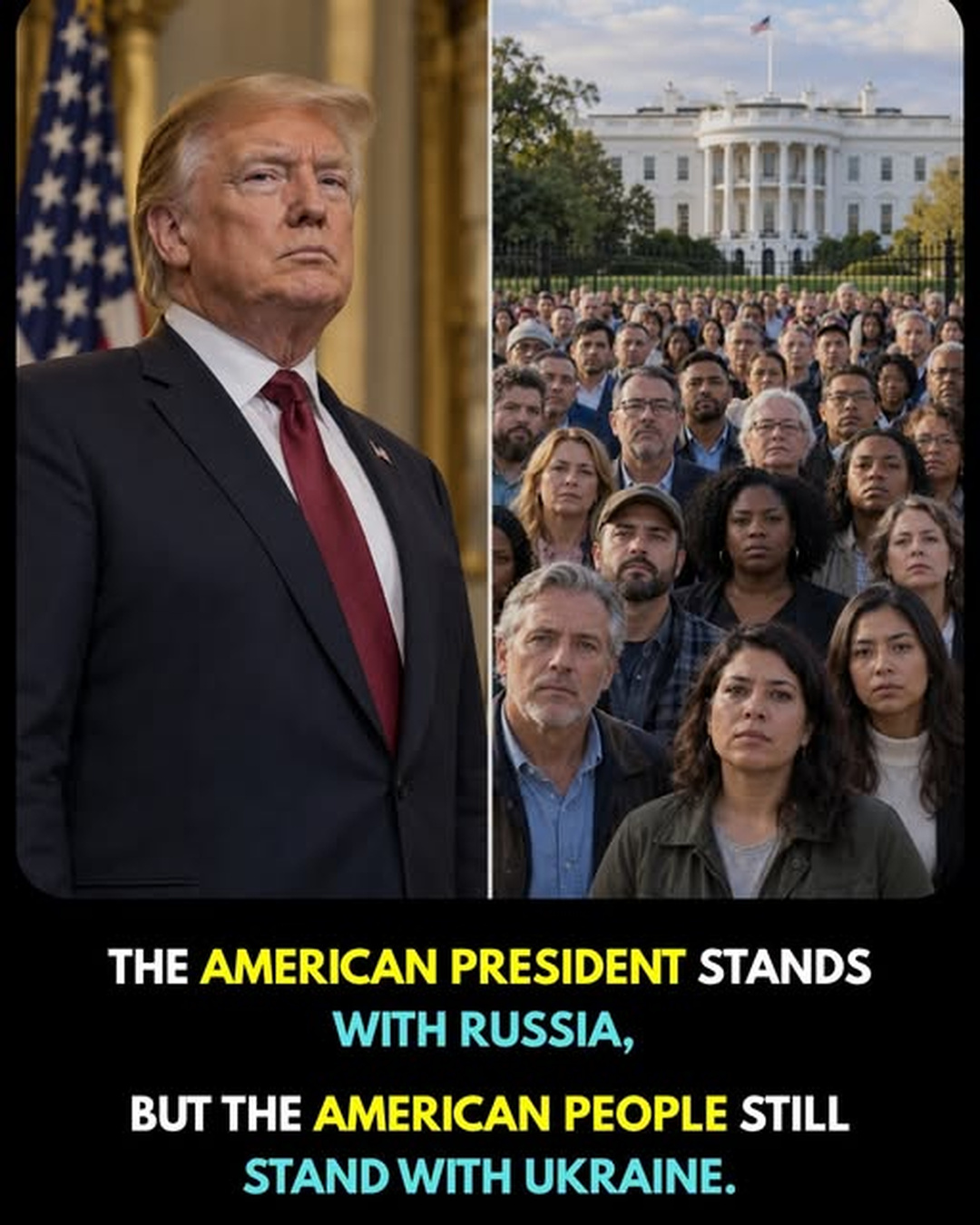
The message circulating online is direct: while the American president appears increasingly willing to accommodate Russia, many Americans continue to sympathize with Ukraine and favor helping the country resist Russia’s invasion.
Recent polling supports part of that argument. An Economist/YouGov survey conducted in February 2026 found that 61% of Americans sympathized more with Ukraine, compared with just 3% who sympathized more with Russia.
However, public support for Ukraine does not mean Americans unanimously agree on the amount of military assistance Washington should provide, the risks of escalation, or the best route toward ending the conflict.
A separate 2026 Chicago Council on Global Affairs survey found that 69% of Americans supported increasing sanctions against Russia, while 59% favored providing Ukraine with additional economic and military assistance.
Those findings suggest that support for pressuring Moscow remains substantial across the United States, even as voters disagree over how Washington should balance national interests, energy prices, diplomacy, and international security.
Trump’s approach has recently drawn criticism after his administration moved to ease certain economic restrictions on Russia while applying pressure on Ukrainian President Volodymyr Zelenskyy.
According to Reuters reporting published October 22, the administration’s decisions triggered bipartisan opposition in Congress, including objections from some Republicans who generally support the president’s broader agenda.
The controversy includes moves involving Russian diesel exports and the postponement or waiver of certain sanctions targeting Russian officials, financial institutions, and other entities.
The White House has defended Trump’s strategy as an effort to bring the war to an end, arguing that diplomatic flexibility can help keep negotiations with Russian President Vladimir Putin possible.
Critics, however, contend that easing pressure on Moscow risks weakening incentives for Russia to change its behavior while Ukraine continues defending its territory against ongoing attacks.
The disagreement is no longer limited to Democrats. Several Republican lawmakers have also urged the administration to enforce sanctions and questioned whether concessions to Moscow will produce meaningful progress toward peace.
Some Republican officials support Trump’s strategy, arguing that limited economic compromises could help secure negotiations and reduce costs for American consumers. The debate therefore cuts across party lines rather than dividing the country into two simple camps.
For Ukrainians, the stakes are immediate. Continued Russian attacks have damaged infrastructure, endangered civilians, and intensified concerns about whether Kyiv can count on consistent support from its most important international partners.
For Washington, the challenge is balancing diplomatic objectives with deterrence, alliance commitments, domestic economic pressures, and the political consequences of appearing either too accommodating toward Moscow or unwilling to pursue negotiations.
Public opinion also requires careful interpretation. A majority expressing sympathy for Ukraine does not necessarily endorse every policy proposed by Kyiv or support sending American troops directly into the war.
Indeed, the Chicago Council survey found that 66% of Americans opposed sending U.S. troops to help Ukraine defend itself, even while majorities supported sanctions and economic or military assistance.
That distinction is central to understanding the national debate: many Americans may want Ukraine to survive as an independent country while remaining cautious about direct American military involvement.
The viral image’s statement that “the American people still stand with Ukraine” therefore reflects a genuine current of public sentiment, but it should not be interpreted as a unanimous national position or a direct measure of support for every Ukrainian policy.
Likewise, the claim that the president “stands with Russia” is a political judgment, not a neutral description of Trump’s stated objective. His administration says it is pursuing negotiations, while critics argue that recent decisions have favored Moscow.
As the war continues and American midterm elections approach, the dispute is likely to remain a major test of Trump’s foreign policy, congressional unity, and public confidence in the administration’s handling of Russia.
Ultimately, the central question is not simply whether America supports Ukraine. It is whether the administration’s strategy can deliver a durable peace without rewarding aggression, undermining Ukraine’s security, or weakening confidence among America’s allies.
Comments (0)
Loading comments...
May You Like


1,000+ MILITARY FAMILY RECORDS BREACHED, 200+ MILITARY SITES AT RISK!

FLORIDA AIRBNB NIGHTMARE — 50 TEENS, 7 SHOOTING VICTIMS LINKED TO “SHOTS AT THE DOOR”!








Popular Posts





