
Trump’s Social Security Crackdown Sparks Fierce Debate Over Immigrants, Benefits and Government Power
Trump’s Social Security Crackdown Sparks Fierce Debate Over Immigrants, Benefits and Government Power
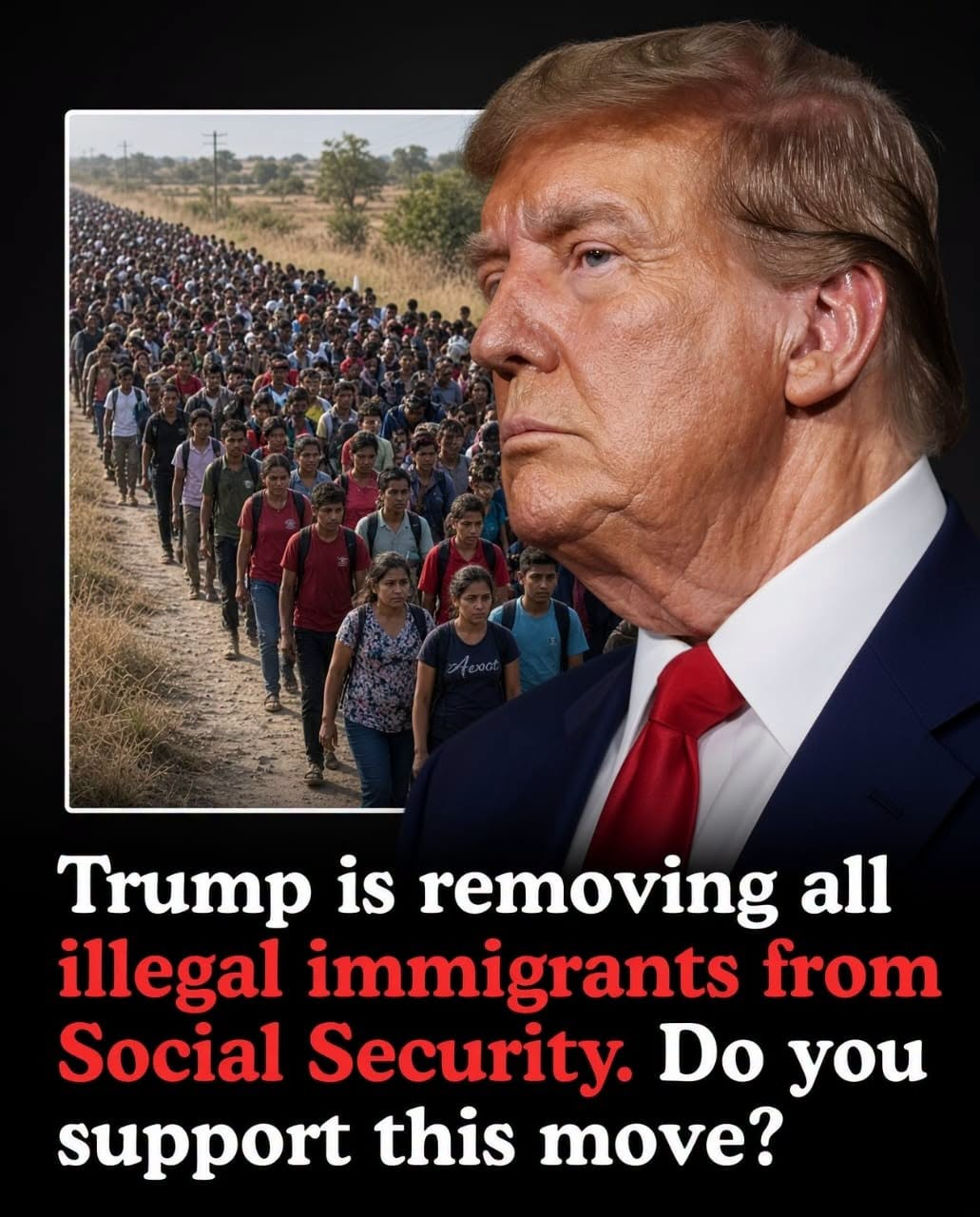
President Donald Trump's effort to tighten eligibility checks across federal benefit programs has reopened a contentious debate over immigration, public spending and the reach of government databases. A viral graphic declares that Trump is removing all undocumented immigrants from Social Security, but the reality behind that sweeping claim is more complicated.
The administration has taken concrete steps to prevent people who are not eligible under federal law from receiving Social Security Act benefits. Those measures, however, should not be confused with a blanket cancellation of benefits for every immigrant or with evidence that undocumented immigrants were widely collecting Social Security retirement payments.
On April 15, 2025, Trump issued a presidential memorandum directing federal agencies to strengthen eligibility verification, prevent improper payments and investigate potential fraud in programs established under the Social Security Act.
The White House described the initiative as a way to protect public resources and ensure that federal assistance goes only to people who satisfy legal requirements. The order also called for stronger enforcement against improper payments and closer scrutiny of questionable records.
The policy quickly became part of a much larger political argument about immigration. Supporters said stronger verification was overdue, while critics warned that aggressive enforcement could sweep up people who were lawfully present or otherwise entitled to government services.
A key distinction often missing from social media posts is that a Social Security number is not the same thing as Social Security benefits. Numbers are used for employment and tax reporting, among other purposes, and possessing one does not establish eligibility for monthly retirement or disability payments.
The Social Security Administration says that certain lawfully present noncitizens can qualify for benefits if they meet all relevant requirements. Supplemental Security Income has its own, generally more restrictive rules for eligible noncitizens.
People without lawful immigration status are generally ineligible for Social Security retirement benefits, even though some may have paid payroll taxes using valid or invalid identification numbers. The distinction matters when evaluating claims about who receives public funds.
The administration's most controversial initiative involved a different use of Social Security records. In April 2025, reporting revealed that thousands of living immigrants had been entered into a database traditionally associated with deceased individuals.
Officials defended the action as part of an effort to identify people whose immigration permissions had been revoked and to encourage departures from the United States. Critics argued that repurposing the system risked severe financial and legal consequences for the people affected.

A Social Security record can influence far more than benefit payments. Employers, banks and other institutions may rely on identity and death-status information when deciding whether someone can work, access an account or complete a transaction.
That meant the database changes could have consequences for individuals who were not receiving Social Security benefits at all. Reports described cases in which affected immigrants sought to correct records after discovering that their identities had been flagged.
The administration disputed some descriptions of the database changes, including whether people had technically been classified as deceased. Nevertheless, the underlying dispute centered on whether immigration enforcement should use a system designed primarily for identity and benefit administration.
The issue gained additional attention in 2026 when a former Social Security official alleged that a much larger proposal had been discussed. The agency said the reported plan to classify millions of people as deceased was not carried out.
Such allegations should not be treated as proof that millions of people actually lost their Social Security numbers. They instead underscore the importance of distinguishing proposals, implemented policies and measurable outcomes.

For Trump's political supporters, the broader crackdown fits a campaign promise to enforce immigration laws and limit federal payments to those legally eligible. They argue that public trust in benefit programs depends on preventing fraud and maintaining accurate records.
Opponents counter that lawful eligibility is already a requirement and that errors in government databases can create serious hardship. They say oversight should focus not only on preventing improper payments but also on protecting individuals from incorrect classifications.
A July 2026 report from the Social Security Administration's inspector general reinforced concerns about record accuracy. It found shortcomings in how agency employees documented corrections to erroneous death records, illustrating the stakes of administrative mistakes.
The debate is also about language. Describing the policy as removing 'all illegal immigrants from Social Security' may suggest a completed, universal action, when the documented measures involve eligibility enforcement, targeted database changes and contested administrative practices.
As the immigration debate continues, the most useful questions are specific: Who is legally eligible for which program, what actions were actually taken, how many people were affected, and what safeguards exist to correct errors? Those answers offer a clearer picture than any viral slogan can provide.
Comments (0)
Loading comments...
May You Like

TRUMP'S BIGGEST THANKSGIVING “PARDON”? WHY IS HE BACKING NVIDIA'S JENSEN HUANG?

AMERICA'S TRADE DEFICIT SURGES — WHAT DOES IT MEAN FOR AMERICAN FAMILIES?

ANTISEMITIC THREAT CONCERNS IN NEW YORK — HAVE WE LEARNED NOTHING FROM HISTORY?












