
Trump's Steel Tariff Rally: What the Viral Photo Reveals About His Blue-Collar Strategy
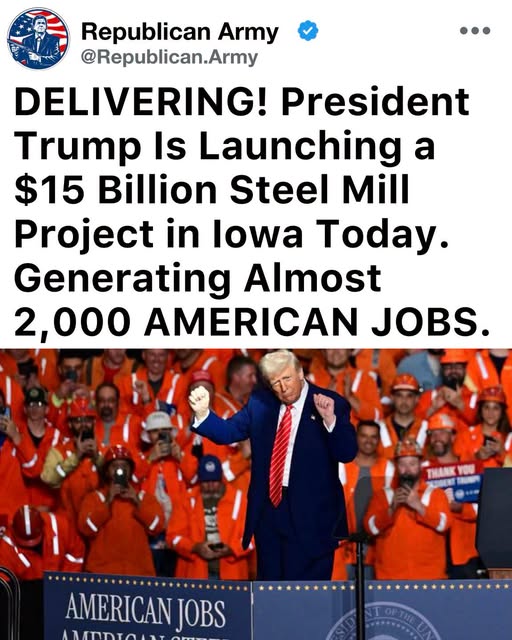
A striking photograph of President Donald Trump raising his fists in triumph before a sea of steelworkers in orange safety gear has become one of the defining images of his second term. The photo, taken at a Pennsylvania steel plant, captures the essence of Trump's political strategy: positioning himself as the champion of American manufacturing workers. But behind the symbolism lies a complex reality of tariffs, trade deals, and an evolving relationship with the voters he claims to represent.
WASHINGTON – The image is powerful: President Donald Trump, fists raised in a fighting stance, standing before hundreds of steelworkers clad in bright orange safety jackets and hard hats. Behind him, banners proclaim "AMERICAN JOBS" and "AMERICAN STEEL." The scene is from a May 30, 2025, rally at the U.S. Steel Irvin Works plant in West Mifflin, Pennsylvania — and it has become a viral symbol of Trump's blue-collar appeal .
That day, Trump announced he would double tariffs on all imported steel from 25% to 50%, effective June 4, 2025 . The announcement sent shockwaves through global markets and delighted the workers in attendance, who cheered as the president declared: "You are the best people. You built this country" .
A Political Theater of Steel and Tariffs
The rally was carefully choreographed. Trump spoke directly to the workers — many of whom had come straight from their shifts, their uniforms still stained with oil and dust . He thanked them for building America, promised to protect their jobs, and delivered the tariff announcement they had been waiting for.
The crowd responded with chants of "USA" and waved signs reading "MAKE STEEL GREAT AGAIN" .
Trump's message was clear: his tariffs would shield American steel from foreign competition, revive domestic manufacturing, and create jobs in the Rust Belt communities that had been devastated by decades of globalization .
The workers in the audience seemed to believe him. "This is great, we need this kind of investment," said Matt Albens, a U.S. Steel employee . Nicole Wright, a shift manager at the company's Clayton plant, told the crowd: "We know the value of working at U.S. Steel. This partnership is exactly the kind of investment we need here" .
The Tariff Reality: Winners and Losers
Trump's steel tariffs have produced mixed results. On one hand, domestic steel producers have benefited from reduced foreign competition. Cleveland-Cliffs stock surged 26% after the tariff announcement, as investors anticipated higher profits .
On the other hand, the tariffs have raised costs for industries that depend on steel — from automakers to construction companies — and have strained relations with key allies. The European Union said it "strongly regrets" Trump's decision to double tariffs on steel and aluminum imports, warning of retaliatory measures .
The broader economic picture is complicated. While the tariffs may protect certain domestic producers, economists warn that they can also lead to higher consumer prices and reduced competitiveness for American manufacturers in global markets.
A New Deal with Japan
The Pennsylvania rally also served as a backdrop for a major corporate announcement. Trump revealed that U.S. Steel and Japan's Nippon Steel had reached a new partnership agreement that would keep U.S. Steel headquartered in Pittsburgh, create at least 70,000 jobs, and bring $14 billion in investment to the American economy .
Nippon Steel Vice Chairman Takahiro Mori personally attended the rally, telling the crowd: "We will invest to transform U.S. Steel on the world stage. Let's work together to become the best steel company in America — and the world" .
The deal was framed as a victory for Trump's "America First" agenda — a foreign company investing in American industry while preserving American jobs. Whether it will deliver on those promises remains to be seen, but in that moment, the workers in attendance seemed ready to believe.
The Political Significance
Trump's appearance at the Irvin Works plant was about more than tariffs. It was about shoring up support in a state that has become a bellwether for American politics.
Pennsylvania is one of the most closely watched states in the nation, and its working-class voters — particularly those in the industrial communities of the Mon Valley — have swung between parties in recent elections . Trump won the state in 2016 and 2024, but Democrats made gains in the off-year elections of 2025, signaling that the political landscape remains volatile .
For Trump, the rally was a reminder to those voters of who fought for them. For the workers in the audience, it was a moment of recognition — a president who seemed to understand their struggles and promised to protect their livelihoods.
The Bottom Line
| What the Rally Showed | What It Means |
|---|---|
| Trump raising fists before steelworkers | A defining image of his blue-collar appeal |
| Tariff announcement doubling steel duties | A policy aimed at protecting domestic industry |
| Nippon Steel partnership with $14B investment | A deal framed as bringing jobs back to America |
| Cheering workers in orange safety gear | A reminder of the Rust Belt voters who helped elect him |
The photo of Trump with his fists raised has become a symbol of his presidency — a visual shorthand for his promise to fight for American workers. Whether that promise translates into lasting economic gains for the communities he rallied is a question that will be answered not in campaign speeches, but in the factories and mills of Pennsylvania.
For now, the image endures: a president and his blue-collar base, united in a moment of defiant optimism.
Comments (0)
Loading comments...
May You Like

South Korea–Ukraine Rift Deepens Over North Korean POW Transfer as PURL Draws New Scrutiny
Jack Smith Defends His Integrity as Trump Investigations Face Renewed Political Firestorm














