TRUMP'S TEN-MINUTE WARNING PUTS IRAN ON EDGE AS MILITARY OPTIONS REMAIN ON THE TABLE
TRUMP'S TEN-MINUTE WARNING PUTS IRAN ON EDGE AS MILITARY OPTIONS REMAIN ON THE TABLE
Donald Trump has delivered a stark warning over Iran's nuclear infrastructure, signaling that the United States could be prepared to act against remaining nuclear-related targets with little notice. The message comes amid an already dangerous confrontation, where diplomatic efforts to end the war are unfolding alongside threats of renewed military action.
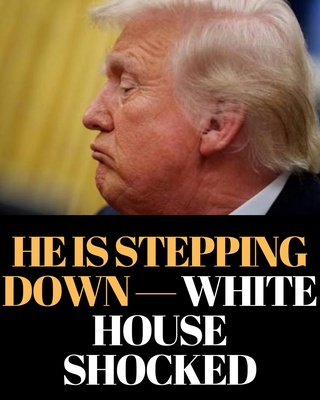
The most striking part of the claim is the reference to “just ten minutes.” It suggests that American forces may have operational plans ready to move quickly if the president gives the order. But readiness is not the same as a decision to attack, and the image alone does not establish that a new strike has been authorized.
For Washington, the challenge is to maintain pressure on Tehran without triggering a wider conflict. For Iran, the warning raises urgent questions about the security of its remaining nuclear facilities and whether negotiations can prevent another round of attacks.
PICKAXE MOUNTAIN EMERGES AS A POTENTIAL TARGET
 Trump specifically mentioned Pickaxe Mountain, a site associated with Iran's suspected underground nuclear infrastructure. Its location and reported underground nature have made it a subject of concern in discussions about whether military action could damage facilities that may be protected by rock and reinforced structures.
The president claimed that one or two remaining sites still needed to be addressed and said the United States had a plan to strike them rapidly. However, his remarks did not establish that an attack had been approved or provide an operational timeline.
There is also an important distinction between destroying a facility and eliminating a country's nuclear capabilities altogether. Assessing the condition of underground sites, the location of materials and the extent of any remaining program can be difficult, particularly during an active conflict.
That uncertainty makes the question of what remains at Pickaxe Mountain—and what Washington intends to do about it—central to the current standoff.
IRAN WARNS THAT ANY NEW ATTACK COULD TRIGGER RETALIATION

Tehran has not treated Washington's warning as a reason to back down. Iranian military officials have vowed to respond to any fresh attack, warning that retaliation could extend beyond a single battlefield or geographic area. Iran's leadership has also ordered its armed forces to maintain readiness as negotiations continue.
Such warnings matter because the conflict has the potential to spread through the wider region. Iran could target American military assets or facilities belonging to US partners, while attacks on shipping could further disrupt the Strait of Hormuz. Any of those developments could turn a limited strike into a much broader confrontation.
At the same time, threats of retaliation do not automatically mean that an attack is inevitable. Both sides may use military warnings to strengthen their negotiating positions and discourage the other from taking action.
The danger is that, in a climate of mistrust, a decision intended to demonstrate resolve could trigger a response neither government can easily control.
DIPLOMACY CONTINUES AS TRUMP SAYS HE IS IN NO RUSH

Despite the forceful language, Trump has said Washington is not in a hurry to reach a deal. He questioned whether Iran could be trusted to honor an agreement, while maintaining that Tehran wanted negotiations to succeed. Meanwhile, Qatar has continued efforts to mediate between the two sides.
That combination of diplomacy and military pressure is central to the current strategy. Washington appears to want an agreement that addresses its security concerns, particularly Iran's nuclear ambitions, without giving Tehran the impression that time is on its side.
Iran, for its part, has reasons to seek an end to the fighting but may resist conditions it views as unacceptable. The parties must still bridge differences over nuclear infrastructure, security guarantees and the future of regional military activity.
The fact that talks are continuing offers a possible route away from further fighting. But without an agreed framework and clear commitments, negotiations remain vulnerable to sudden deterioration.
WHY THE “TEN MINUTES” WARNING MATTERS

Trump's statement was designed to project speed and military readiness. By emphasizing that the United States could strike remaining targets in minutes, he sought to communicate that Washington believes it has the capability to act without a prolonged buildup.
But the phrase should not be mistaken for a confirmed countdown. Trump did not announce that an operation would begin ten minutes later, nor did he publicly confirm a final decision to resume attacks. Secretary of State Marco Rubio has said that Trump had not made a final decision on further strikes.
The distinction is important for financial markets, US allies and Iran's leadership. A threat can increase pressure at the negotiating table, but it can also heighten the risk of miscalculation if either side interprets the other's actions as preparation for an imminent attack.
THE NEXT DECISION COULD CHANGE THE COURSE OF THE WAR

The immediate question is whether Trump will continue using the threat of military action to push Iran toward an agreement or decide that negotiations have reached their limit.
Three developments will be particularly important: whether Qatar's mediation produces concrete progress, whether Iran changes its position on the remaining nuclear-related sites, and whether Washington issues any new public or military signals suggesting that an attack is becoming more likely.
A diplomatic breakthrough could reduce the immediate threat and create space for a broader settlement. A failed round of talks, by contrast, could intensify pressure for renewed strikes and provoke Iranian retaliation.
For now, Trump's remarks show that the military option remains on the table—not that a new attack is certain.
The most important question is whether the “ten-minute” warning is intended to bring Iran closer to a deal, or whether Washington is preparing for a confrontation that diplomacy has so far failed to prevent.
Comments (0)
Loading comments...
May You Like


Latest Posts





Popular Posts