
TRUMP’S VETO WARNING SHAKES WASHINGTON
TRUMP’S VETO WARNING SHAKES WASHINGTON: President Signals He Could Block Democrats’ Agenda After House Election Setback

WASHINGTON, D.C. — President Donald Trump is at the center of a growing political confrontation following the 2026 midterm elections, as a viral news graphic claims he is prepared to veto everything Democrats attempt to push through Congress.
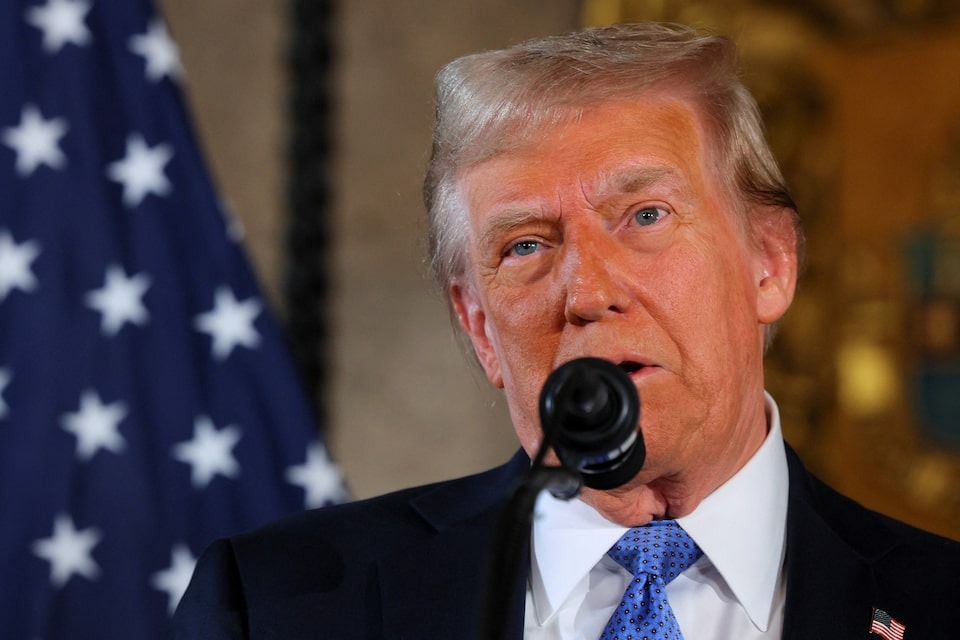
The image, carrying the branding of It's a Guy Thing, presents a close-up photograph of Trump alongside a dramatic headline:
“HOURS AFTER LOSING THE HOUSE, TRUMP SAYS HE IS READY TO ‘VETO EVERYTHING’ THAT DEMOCRATS PUSH THROUGH.”
The statement suggests an uncompromising approach to divided government, raising questions about whether the final two years of Trump's presidency could become a prolonged battle between the White House and congressional Democrats.
However, the image provides no original quotation, video, date, or link to a White House statement confirming that Trump used those exact words.
That distinction is important.
The president has constitutional authority to veto legislation passed by Congress, but a viral graphic cannot establish that he has formally announced a policy of rejecting every Democratic proposal.
Even without a verified blanket-veto declaration, the prospect of a president facing an opposition-controlled House creates serious questions about federal spending, immigration policy, economic legislation, and congressional oversight.
The central issue is not merely whether Trump is willing to reject Democratic legislation.
It is how Washington will function when the president and congressional leaders disagree about the direction of the country.
A Viral Headline Raises the Stakes
The graphic presents Trump with a slight smile, creating a visual contrast with its confrontational headline.
The words “VETO EVERYTHING” appear in red, making them the emotional center of the message.
The phrase is short, memorable, and politically explosive.
It suggests that the president intends to use one of his most important constitutional powers to block the opposition party's agenda.
But there is a difference between an exact quotation and a political interpretation.
A statement that a president will oppose certain bills is not equivalent to a promise to veto every proposal from the opposing party.
Without the original remarks, it is impossible to know whether the graphic accurately quotes Trump, paraphrases a broader position, or exaggerates a political disagreement.
That uncertainty should remain clear throughout any discussion of the claim.
Why the House Matters So Much
The House of Representatives plays a central role in American government.
Its 435 voting seats are contested every two years.
A party that secures a majority gains substantial influence over the chamber's legislative agenda, committee leadership, and oversight activities.
The House can introduce and pass legislation, approve appropriations, and conduct investigations into executive branch activities.
A Democratic majority would therefore make it more difficult for Trump to advance proposals that require new legislation.
It could also create opportunities for Democrats to investigate administration policies and demand information from federal agencies.
However, House control alone does not allow Democrats to enact laws.
Most legislation must pass both the House and Senate before reaching the president.
That requirement gives multiple institutions influence over the final outcome.
What Trump’s Veto Power Actually Means
Article I, Section 7 of the U.S. Constitution establishes the presidential veto process.
When Congress passes a bill, it is presented to the president.
The president can sign it into law or return it with objections.
That return is commonly known as a veto.
Congress can then reconsider the legislation.
If two-thirds of both the House and Senate vote to override the veto, the bill can become law without the president's signature.
The override requirement is intentionally difficult.
It ensures that legislation rejected by the president must attract unusually broad congressional support before becoming law.
A president who is willing to veto major bills can therefore exercise substantial influence even when the opposing party controls Congress.
But that authority is not unlimited.
It applies to legislation presented to the president, not every action Congress can take.
Could Trump Really Veto Everything?
A president can veto individual bills that reach the White House.
But the idea of vetoing everything Democrats support is more complicated than the graphic suggests.
First, a bill must pass both chambers of Congress.
Second, some legislation may attract bipartisan support.
Third, a president may decide that signing a compromise is preferable to allowing a political dispute to continue.
Fourth, Congress can sometimes override a veto with sufficient support.
A president also cannot use a legislative veto to erase an existing law simply because the opposing party supports it.
Nor can he veto a congressional investigation, committee hearing, or subpoena in the same way he vetoes legislation.
The phrase “veto everything” therefore works as a political slogan but does not fully describe the constitutional process.
Divided Government Has Happened Before
American presidents have frequently governed while the opposing party controlled one or both chambers of Congress.
Bill Clinton faced a Republican-controlled Congress after the 1994 midterms.
Barack Obama faced a Republican-controlled House after the 2010 elections.
Trump himself dealt with a Democratic-controlled House after the 2018 midterms.
Joe Biden also faced a Republican-controlled House during the second half of his presidency.
These periods often involved intense political disagreements.
They also produced negotiations, compromises, and occasional bipartisan legislation.
Divided government can slow the legislative process, but it does not automatically make governing impossible.
The outcome depends on the priorities and strategies of the president and congressional leaders.
The Coming Battle Over Federal Spending
One of the most important areas of potential conflict is the federal budget.
Congress has constitutional authority over federal appropriations.
The president proposes spending priorities, but lawmakers must enact the legislation necessary to fund many government operations.
When the parties disagree, budget negotiations can become difficult.
Disputes may involve defense spending, immigration enforcement, healthcare programs, education, and federal agency budgets.
A president may threaten to veto spending bills that do not meet his priorities.
Congressional leaders may refuse to advance proposals they consider unacceptable.
If funding legislation is not enacted before relevant deadlines, parts of the federal government may shut down.
Such an outcome is not inevitable, but prolonged veto threats can increase the risk of confrontation.
Could Another Government Shutdown Follow?
Government shutdowns occur when agencies lack the appropriations needed to continue certain operations.
They can disrupt federal services, delay administrative work, and create financial uncertainty for government employees and contractors.
Some essential functions continue during a shutdown, but the effects can still be substantial.
A confrontation over spending could therefore create pressure on both parties.
Democrats might demand changes to administration policies in exchange for funding.
Trump could insist that Congress preserve spending priorities associated with his agenda.
Neither side would necessarily want to accept responsibility for a prolonged disruption.
That creates incentives for compromise even during periods of intense political disagreement.
Immigration Could Become a Central Flashpoint
Immigration has been one of Trump's defining political priorities.
His administration has emphasized border enforcement, deportation operations, and restrictions on unauthorized immigration.
Republican supporters often argue that stronger enforcement is necessary to uphold the law and protect national security.
Democratic critics have raised concerns about due process, humanitarian consequences, and the scope of executive authority.
A Democratic-controlled House could use oversight hearings and appropriations negotiations to challenge certain enforcement policies.
Lawmakers might seek additional reporting requirements or restrictions on how federal funds are used.
Trump could reject legislation he believes undermines his immigration agenda.
The result could be a prolonged dispute over both policy and executive power.
Economic Policy May Face New Obstacles
Economic policy is another area where disagreements could intensify.
Trump has emphasized tariffs, tax policy, domestic manufacturing, and the protection of American industries.
Supporters argue that these measures can encourage investment and strengthen the domestic economy.
Critics warn that certain policies may increase costs for businesses and consumers.
A Democratic House could propose alternative economic legislation.
It might seek changes to tax policy, consumer protections, or government spending.
But major economic reforms would still require support across the legislative process.
Trump could veto proposals he considers inconsistent with his administration's priorities.
The resulting negotiations could influence business confidence and public expectations about economic policy.
The Limits of Congressional Power
Winning control of the House gives Democrats important authority, but not complete control over the federal government.
The president continues to direct the executive branch within constitutional and statutory limits.
Federal courts retain their independent role in interpreting the law.
The Senate has separate responsibilities involving legislation, appointments, and impeachment trials.
Congressional committees can conduct oversight, but their findings do not automatically establish criminal liability.
Similarly, a presidential veto can block legislation without eliminating Congress's investigative authority.
These institutional boundaries are essential to understanding how divided government works.
The political confrontation may be intense, but each branch remains subject to constitutional constraints.
Oversight Could Become a Major Democratic Priority
A change in House control can substantially alter congressional oversight.
Committee chairs decide which hearings to schedule and which investigations to prioritize.
Democrats could examine federal spending, immigration enforcement, executive actions, and the conduct of administration officials.
They may request documents and testimony.
The White House could challenge certain demands, potentially leading to litigation over executive privilege or congressional authority.
Such disputes have occurred under administrations of both parties.
Oversight is an important constitutional function.
But investigations should be distinguished from findings of wrongdoing.
The existence of an inquiry does not prove that a law has been violated.
Can Trump Veto an Impeachment Resolution?
No.
Impeachment is not ordinary legislation presented to the president for signature.
The House has the sole power of impeachment.
The Senate has the sole power to try impeachments.
A president cannot veto the House's decision to impeach him.
Nor can he veto a Senate conviction.
This distinction is especially important because impeachment discussions often intensify when the opposition party gains control of the House.
A president's legislative veto power does not protect him from the constitutional impeachment process.
However, removal requires a two-thirds vote of senators present.
A House majority alone cannot remove a president.
Why the Senate Still Matters
The Senate is an essential part of the legislative process.
Even if Democrats control the House, legislation generally must also pass the Senate.
If the two chambers disagree, a bill may never reach the president.
That means Trump's veto power is only one potential obstacle to Democratic legislation.
Senate rules and party divisions can also prevent proposals from advancing.
For many legislative matters, the Senate's filibuster rules create an additional requirement for broad support.
The practical effect is that passing major legislation often requires negotiation among several political groups.
The president may be the final decision-maker in the ordinary legislative process, but he is not the only participant with the ability to block a bill.
The Republican Response to a Democratic House
Republicans may interpret a Democratic House victory as a warning about the party's political direction.
Some may advocate a more confrontational strategy against the opposition.
Others may argue that the party needs to focus on economic concerns and rebuilding support among moderate voters.
Trump's relationship with congressional Republicans will remain important.
If Republican lawmakers believe certain Democratic proposals are politically popular, they may face pressure to support them.
That could complicate a blanket veto strategy.
A president who rejects bipartisan legislation may gain support from his political base while facing criticism from other voters.
The political consequences would depend on the specific bill and the reasons for rejecting it.
Democrats Face Their Own Strategic Choices
Democrats would also need to decide how to use their new congressional influence.
They could prioritize legislation addressing healthcare, housing, consumer costs, and federal spending.
They could emphasize oversight of the administration.
Or they could pursue a combination of policy proposals and investigations.
Each approach carries political risks.
A focus on investigations might satisfy voters demanding accountability but disappoint those seeking economic legislation.
A focus on compromise could produce tangible results but create disagreements within the party.
Democratic leaders would need to balance these competing priorities.
Their decisions could determine whether voters view the new majority as effective or obstructive.
The Political Risks of an All-Out Veto Strategy
A president who threatens to veto every bill associated with the opposition may gain negotiating leverage.
The threat can signal that Congress must take the White House's priorities seriously.
But it can also create political risks.
Voters may blame the president for blocking popular measures.
Congressional leaders may portray vetoes as evidence of unwillingness to compromise.
A prolonged confrontation could also produce uncertainty about federal funding and major policy decisions.
For Trump, the challenge would be deciding when confrontation serves his objectives and when compromise would produce a better result.
The effectiveness of a veto strategy depends on how selectively and credibly it is used.
Why the Exact Trump Quote Matters
The image attributes the words “veto everything” to Trump.
That wording is important because it implies a clear, comprehensive commitment.
But no original speech, interview, transcript, or social media post is included.
Without the source, readers cannot determine whether Trump used the phrase exactly as presented.
He may have expressed opposition to specific Democratic proposals.
He may have threatened vetoes under particular conditions.
Or the image may be using dramatic language to summarize his political position.
Those possibilities are not equivalent.
A reliable news report should distinguish direct quotations from paraphrases and editorial interpretations.
Until the statement is independently verified, the exact wording should be attributed to the graphic rather than presented as an established presidential quotation.
How the White House Could Negotiate With Democrats
Even in a confrontational political environment, negotiations remain possible.
Presidents and congressional leaders often reach agreements when both sides have something to gain.
Potential areas for cooperation could include infrastructure, disaster relief, national security funding, and selected economic measures.
The scope of cooperation would depend on the details.
A president might sign a bill containing compromises while rejecting other legislation.
Congressional leaders might adjust proposals to avoid a veto.
Such negotiations are a normal part of the constitutional system.
A viral headline predicting total obstruction cannot establish how every future legislative decision will unfold.
What Happens During the Transition to a New Congress?
An important timing detail is often overlooked in post-election political commentary.
Members elected in November 2026 do not immediately replace the sitting House.
The new congressional term begins in January 2027.
Until then, the outgoing Congress continues to exercise its constitutional responsibilities.
That means the immediate period after the midterm elections is not identical to the period after the new House is sworn in.
Political leaders may begin preparing their strategies, but the formal change in congressional control occurs when the new Congress convenes.
This distinction matters when evaluating claims that Trump is already responding to legislation from a newly elected Democratic majority.
The Road to the 2028 Presidential Election
The final two years of Trump's second term will unfold against the approaching 2028 presidential election.
The Twenty-Second Amendment generally prohibits an individual from being elected president more than twice.
That makes the next election especially important for the future direction of the Republican Party.
Potential Republican candidates will be watching how Trump handles divided government.
Democrats will also seek to demonstrate that they can offer an alternative governing agenda.
The success or failure of negotiations could influence public attitudes toward both parties.
A prolonged period of vetoes and congressional conflict might energize partisan voters.
It could also frustrate Americans who want practical solutions to economic and social problems.
The Bigger Constitutional Picture
The American system is designed to prevent any one branch of government from exercising unlimited power.
The president can veto legislation.
Congress can override a veto with sufficient support.
The courts can review government actions.
And voters can change the composition of Congress through elections.
These mechanisms can produce conflict, but they also create opportunities for accountability.
A president's veto is not inherently unconstitutional or improper.
It is a legitimate part of the legislative process.
The central question is how that power is used and whether it advances the public interest.
What the Viral Image Gets Right — and What Remains Unproven
The graphic captures a genuine constitutional possibility.
A president facing an opposition-controlled House can use veto threats to challenge legislation.
Trump has the legal authority to reject bills that reach his desk.
And a change in congressional control can create serious political disagreements.
But the image goes further by attributing an absolute promise to the president.
That specific statement remains unverified without an original source.
It would also be misleading to suggest that Trump can veto congressional investigations, impeachment proceedings, or every other action taken by Democrats.
His veto authority applies to legislation within the constitutional process.
The difference between a political slogan and the legal reality is substantial.
A Political Battle That Could Define Trump's Final Two Years
The 2026 midterm elections have created the possibility of a more confrontational relationship between Trump and Congress.
Democratic leaders may seek to challenge the administration's policies and expand oversight.
Trump may respond by defending his priorities and using his constitutional veto authority.
The result could be a series of difficult negotiations over spending, immigration, economic policy, and federal government operations.
But the claim that Trump has promised to “veto everything” remains unconfirmed from the graphic alone.
The real story is the struggle over how power will be exercised in Washington.
Congress can pass legislation.
The president can reject it.
And both sides must decide whether confrontation or compromise better serves their political and policy objectives.
For American voters, the consequences could be substantial.
The next phase of Trump's presidency may be defined not only by what the White House wants to accomplish, but also by what Congress is willing to approve — and what the president is prepared to block.
Comments (0)
Loading comments...
May You Like

KUWAIT DRONE ATTACK SPARKS TENSION BETWEEN ISRAEL, THE U.S AND IRAN

CAIRO INFERNO — CAR CARRYING SENIOR U.S. OFFICIAL SLAMS INTO FUEL TANKER, 31 DEAD, 21 INJURED!

IOWA EMERGENCY: TOXIC AIR, POLLUTED WATER, 3,000 FAMILIES FORCED OUT AFTER 5-TON WASTE BLAST!

Latest Posts








Popular Posts




