
Trump’s “You’re Crazy” Remark About Black and Jewish Voters Ignites New Michigan Senate Controversy
Trump’s “You’re Crazy” Remark About Black and Jewish Voters Ignites New Michigan Senate Controversy
President Donald Trump has triggered another fierce political debate after telling Black and Jewish voters they would be “crazy” to support Michigan Democratic Senate candidate Abdul El-Sayed, a remark delivered in the closing days of the 2026 midterm campaign.
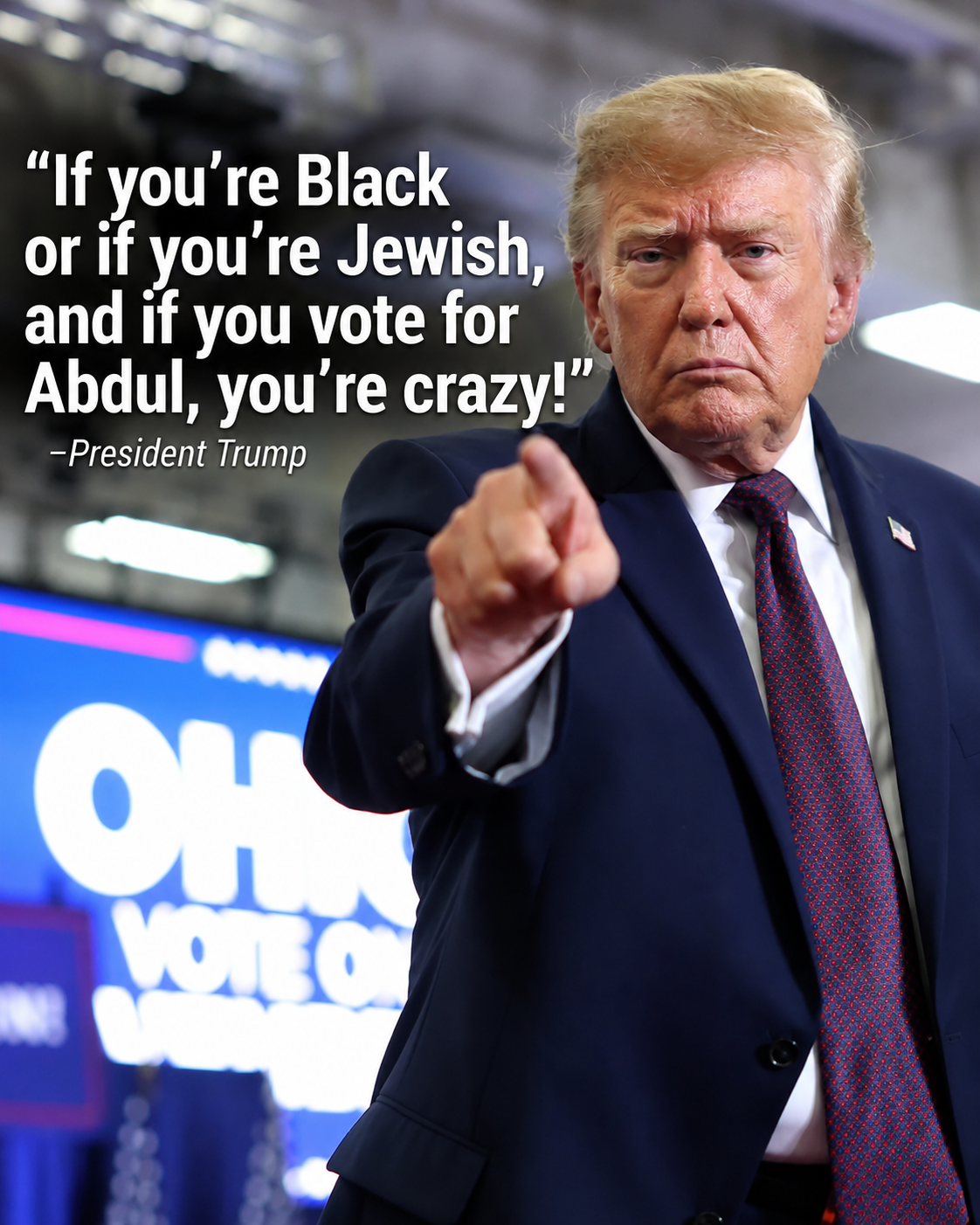
The statement came during Trump's October 29 appearance in Rock Hill, South Carolina, where he moved from discussing local races to attacking a closely watched contest hundreds of miles away in Michigan.
Trump said that Black or Jewish voters who cast ballots for “Abdul” would be crazy, then added the phrase “You're crazy anyway.” The fuller recording matters because the second remark, omitted from some graphic summaries, sharpened the controversy.
The candidate he was referring to is Abdul El-Sayed, a physician and former public health official running as the Democratic nominee for a U.S. Senate seat. His Republican opponent is former congressman Mike Rogers.
Michigan has become a critical battleground because its statewide races can be decided by narrow margins. A Senate victory there could carry consequences far beyond the state, potentially affecting which party controls Congress.
Rather than focusing only on competing policies, Trump's comments addressed voters through racial and religious identities. That choice turned an electoral argument into a broader dispute over political rhetoric and representation.
The president also alleged that El-Sayed had ties to the Muslim Brotherhood. El-Sayed has denied that allegation, and the claim should not be treated as established fact without credible supporting evidence.
For Trump's supporters, his approach may sound like a forceful warning about a candidate whose positions they oppose. For critics, it amounts to insulting voters and raising suspicion about a Muslim candidate's identity.
The distinction matters. A politician may challenge an opponent's positions on national security, Israel, health care or public spending, but accusations of organizational ties require more than repetition at a rally.
El-Sayed's candidacy has also drawn attention because a victory would make him the first Muslim elected to the U.S. Senate. That prospect has intensified scrutiny of how religion is discussed in the campaign.
Trump has criticized El-Sayed on previous occasions. At an October 25 rally, he said Jewish people who supported the Democrat should be ashamed, an earlier intervention that set the stage for this week's remarks.
These comments are part of a longer pattern in which Trump has challenged the political choices of specific demographic groups, sometimes suggesting that voters who support Democrats are acting against their own interests.
The strategy can energize an audience already inclined to agree with him. Yet it can also alienate voters who dislike being told how their racial background or faith should determine their ballot.
Black voters are not a political monolith. Neither are Jewish voters. Within both communities, Americans hold varied views on immigration, foreign policy, the economy and the parties themselves.
That diversity makes the controversy about more than a single sound bite. It raises a familiar democratic question: should campaigns persuade people through arguments about policy, or shame them over the candidates they choose?
The Michigan contest offers plenty of substantive issues for voters to consider. Economic security, access to health care, manufacturing jobs and America's role overseas all affect households in the state.
Foreign policy is especially sensitive in Michigan, home to significant Arab American, Muslim and Jewish communities. Disagreements over U.S. support for Israel and wars in the Middle East have shaped recent political conversations there.
As election day approaches, each campaign must decide whether to amplify the controversy or redirect attention to its governing agenda. Both choices carry risks in a race where turnout could prove decisive.
The precise effect of Trump's remarks cannot be measured from the speech alone. Viral clips, strong reactions and headlines show that a statement attracted attention; they do not establish how many votes it changed.
With the November 3 midterms approaching, the larger question is whether voters will judge the candidates on the rhetoric surrounding them, their policy proposals, or a combination of both. Michigan's answer will soon become clear.
Comments (0)
Loading comments...
May You Like

BLACK FRIDAY TENSIONS IN NYC — DID PROTESTERS CROSS THE LINE AT A DISNEY STORE?

ANTISEMITIC THREAT CONCERNS IN NEW YORK — HAVE WE LEARNED NOTHING FROM HISTORY?

IRAN DEFIES WASHINGTON — SUPREME LEADER CLAIMS U.S. MILITARY ATTACKS FAILED!












