
Two Very Different Visions Collide — and Obama and Vance Are Now Speaking Directly to the Divide
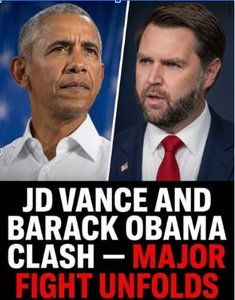
WASHINGTON — A sharp exchange between former President Barack Obama and Vice President JD Vance has brought competing ideas about American identity, immigration and foreign policy back into the national spotlight.
The Clash Behind the Headlines
The disagreement has unfolded across two separate issues this year: Obama's criticism of Vance's views on American identity and their opposing assessments of the Trump administration's agreement with Iran.
Neither episode represents a single sustained personal confrontation between the two men. Instead, their comments have emerged through separate interviews, speeches and responses that increasingly place their political visions in contrast.
The most pointed exchange came in July, when Obama discussed Vance while speaking with author Malcolm Gladwell for a podcast conversation about Reconstruction and American citizenship.
Obama Takes Aim at Vance's Vision
Obama argued that debates over who belongs in the United States have continued from the Reconstruction era into modern American politics.
He then criticized what he described as a “blood-and-soil” conception of the phrase “We the People,” saying Vance had advanced a vision in which ancestry and the length of time a family had been in America matter to belonging.
Obama also pointed to Vance's marriage to Usha Vance, whose parents immigrated from India, as part of his argument about what he viewed as a contradiction.
The remarks were not delivered as a direct debate between Obama and Vance, but they nevertheless represented one of Obama's clearest recent criticisms of the vice president.
What Vance Has Actually Said
Vance has repeatedly argued that American identity involves more than an abstract political creed.
In a 2025 speech referenced by Obama's remarks, Vance said America was “not just an idea,” but a particular place with a particular people, beliefs and way of life.
Vance has also advocated restrictions on immigration and supported efforts to end birthright citizenship, positions that have placed him at the center of Republican debates over immigration and national identity.
Obama's criticism therefore grew from positions Vance has publicly articulated rather than from a completely new policy proposal.
The Immigration Dispute
The disagreement reflects a much broader American argument over citizenship.
Obama has generally emphasized an inclusive conception of national identity rooted in constitutional principles, while Vance has emphasized shared culture, social cohesion and the historical development of American communities.
Supporters of Vance's position describe it as an argument for preserving national cohesion. Critics, including Obama, interpret aspects of it as creating distinctions over who can fully belong.
Those competing interpretations are now part of the broader political debate heading into the 2026 midterm elections.
Then Iran Put Them on Opposite Sides
Months earlier, Obama and Vance had already clashed indirectly over foreign policy.
In June, Obama criticized Trump's agreement with Iran, arguing that the administration's emerging arrangement appeared similar in important respects to the nuclear agreement reached during his presidency.
Vance responded publicly, challenging Obama's comparison and arguing that the Trump administration's approach was fundamentally different from the 2015 agreement.
Vance's Response
During a Fox News appearance, Vance questioned why Gulf Arab governments were reportedly more receptive to the new agreement than they had been to Obama's 2015 nuclear deal.
He argued that the differences between the two agreements were substantial and rejected the suggestion that Trump had simply recreated Obama's approach.
The comparison became particularly significant because the Trump administration had spent years criticizing the Obama-era Joint Comprehensive Plan of Action, commonly known as the JCPOA.
A Deal With Familiar Elements
The comparison nevertheless persisted.
The Washington Post reported that Vance's defense of the new Iran agreement sometimes echoed arguments previously used by Obama-era officials, particularly the idea that diplomacy could combine pressure with negotiations.
The emerging agreement also involved nuclear restrictions and international inspections, subjects that were central to Obama's 2015 deal.
Vance, however, maintained that the new arrangement imposed different and more stringent requirements on Tehran.
The Core Difference
Vance said the Trump administration's agreement would not permit Iran to enrich uranium, contrasting that position with the Obama-era arrangement.
The administration also said Iran would have to give up its enriched uranium stockpile and accept additional restrictions as negotiations continued.
The White House described the agreement as a product of American military and diplomatic pressure rather than the approach used during Obama's presidency.
Critics See Another Interpretation
Some Republican foreign-policy figures nevertheless argued that elements of the new agreement resembled Obama's strategy.
The Washington Post reported that conservative critics questioned whether the agreement was effectively returning to diplomatic principles they had opposed during the Obama administration.
That criticism came from within Vance's own political coalition, demonstrating that the dispute was not simply an Obama-versus-Vance confrontation.
Why Vance Has Become a Central Figure
Vance's role in negotiating and defending the Iran agreement has increased his visibility well beyond domestic politics.
The Associated Press reported that he became the administration's chief public defender of the agreement after previously expressing skepticism about entering another major foreign conflict.
His position has consequently attracted criticism from both Democrats and some Republicans who favor a more aggressive approach toward Iran.
Obama Has Also Returned to the Political Conversation
Obama has remained publicly active despite leaving office in 2017.
In recent months, he has discussed American democracy, historical divisions, artificial intelligence and contemporary political issues, while also participating in Democratic fundraising and public events.
His criticism of Vance therefore comes as part of a broader period in which the former president has become more visible in national political discussions.
The Personal Element
The exchange has attracted attention partly because Obama and Vance represent very different generations of American political leadership.
Obama entered national politics promising a politics centered on pluralism and constitutional ideals, while Vance emerged from a more populist Republican movement associated with Trump.
Their contrasting arguments therefore reflect not only different policy positions but competing interpretations of what American political identity should emphasize.
But There Is No Direct “Showdown”
The viral image describes the situation as a major fight between Obama and Vance.
The available reporting paints a more complicated picture.
Obama's most pointed comments were made during a conversation with Gladwell, while Vance's responses to Obama have largely occurred in interviews and discussions about specific issues such as Iran.
There has been no documented face-to-face confrontation between the two men over these issues.
The 2028 Question Lingers in the Background
Vance's growing national profile has also placed greater attention on his political future.
Several reports have described him as positioning himself for a possible 2028 Republican presidential campaign, although he has not formally launched such a campaign.
That possibility gives his exchanges with prominent Democrats, including Obama, an additional political dimension as both parties begin thinking beyond the current midterm cycle.
Why the Dispute Matters Now
The disagreement comes at a moment when immigration, citizenship, foreign policy and the cost of living are all prominent issues in the 2026 political environment.
Trump and Vance have been campaigning heavily for Republican candidates ahead of the November 3 midterms, while Democrats are attempting to make the election a referendum on the administration's record.
The Obama-Vance exchanges therefore fit into a larger struggle over competing definitions of America's political direction.
Two Arguments, One Country
Obama's criticism focuses heavily on the meaning of citizenship and belonging.
Vance's public arguments emphasize national cohesion, shared culture and limits on immigration, while his foreign-policy arguments stress the differences between Trump's approach and Obama's diplomatic legacy.
Neither side's position can be reduced entirely to the viral headline attached to the photograph.
What Happens Next?
As the midterms approach, Vance is expected to remain highly visible on the campaign trail, while Obama continues selective public and political appearances.
Their disagreements are likely to remain part of the broader national debate, particularly when immigration, citizenship or U.S. foreign policy return to the center of political discussion.
The real story behind the dramatic image is not a single explosive confrontation. It is something slower: two generations of American political leadership offering sharply different answers to questions about who belongs, how America should engage abroad, and what comes next.
Comments (0)
Loading comments...
May You Like

Shocking news from Ohio: an unexpected development ahead of Trump's rally

South Korea–Ukraine Rift Deepens Over North Korean POW Transfer as PURL Draws New Scrutiny

Obama Steps Back Into the Political Spotlight as Democrats Target Trump’s Senate Majority












