
UN Investigators Accuse U.S. Forces of War Crimes in Iran — The Deadly Strikes Putting Trump and Hegseth Under Scrutiny
UN Investigators Accuse U.S. Forces of War Crimes in Iran — The Deadly Strikes Putting Trump and Hegseth Under Scrutiny
A United Nations-backed investigation has placed two deadly American strikes in Iran under renewed scrutiny, raising questions about civilian protection, military intelligence and accountability at the highest levels of government.
The findings, released on September 17, 2026, concern attacks on February 28, the opening day of a conflict involving the United States, Israel and Iran. Investigators said they had reasonable grounds to believe the American military was responsible for strikes that amounted to war crimes.
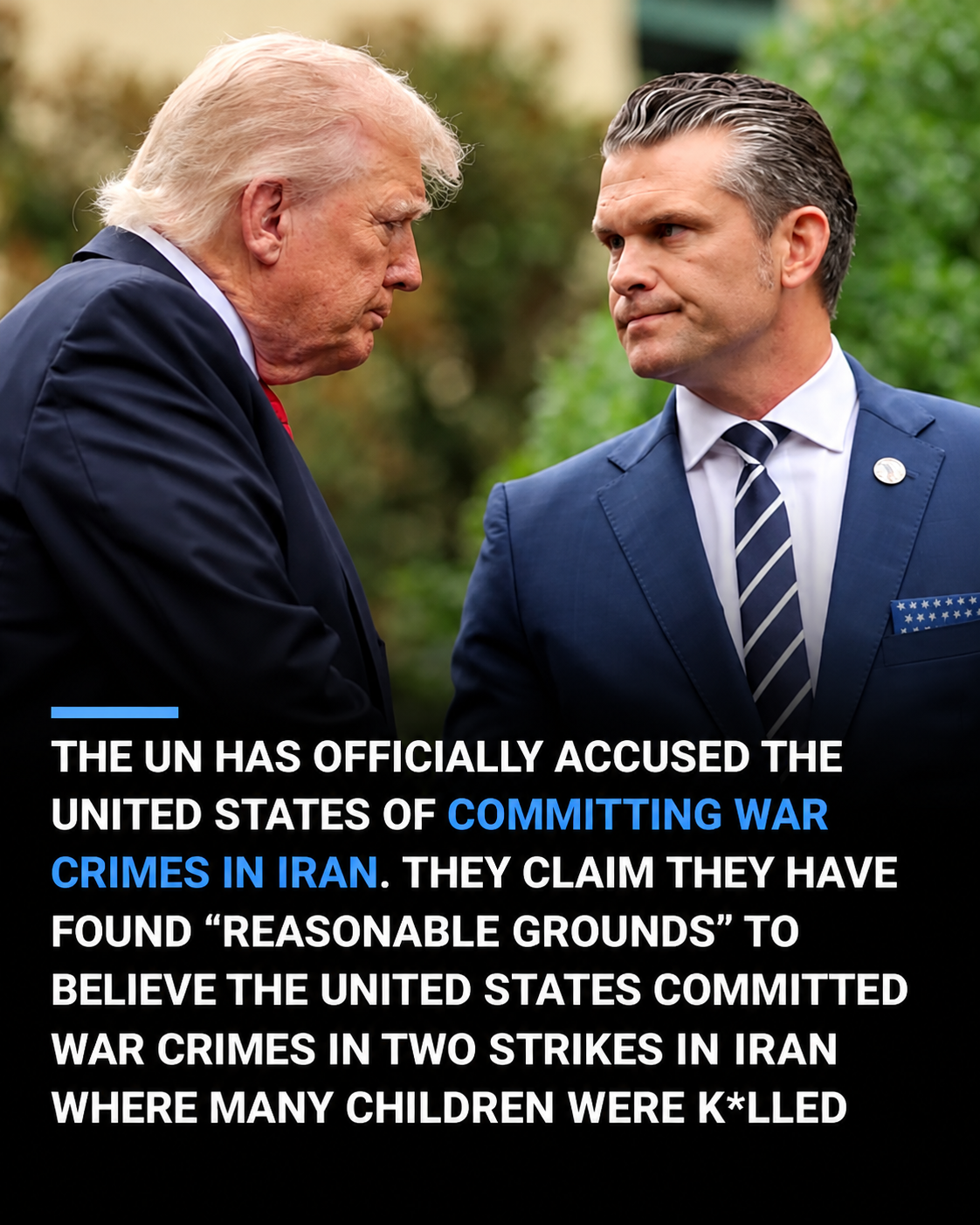
The most devastating incident occurred at the Shajareh Tayyebeh Primary School in Minab, a southern Iranian city. The investigation reported more than 150 deaths there, including approximately 120 children.
Another strike hit a sports complex in Lamerd. The fact-finding mission described civilian deaths and injuries, damage to surrounding buildings, and a failure to take adequate precautions in a populated area.
The investigation did not amount to a criminal conviction. Its conclusions are findings by independent experts working under a mandate from the United Nations Human Rights Council, not a verdict handed down by an international court.
That distinction matters, but so does the seriousness of the findings. The experts concluded that the military actions were not simply unfortunate accidents; in their assessment, the failures of verification and targeting could amount to grave violations of the laws of war.

The Minab school stood near a compound associated historically with Iran’s Revolutionary Guard. Researchers examining satellite imagery and the site’s history reported that the school had been physically separated from military facilities for years.
International humanitarian law requires attacking forces to distinguish military objectives from civilians and civilian structures. Commanders must take feasible steps to verify targets and minimize foreseeable harm.
Questions about whether American planners relied on outdated information became central to the public debate. An obsolete target description can have catastrophic consequences when it fails to reflect how a building is actually being used.
Defense Secretary Pete Hegseth previously said the Pentagon would investigate the school strike. Public discussion has since focused on what that investigation established and whether its conclusions will be disclosed in sufficient detail.
President Donald Trump’s administration has faced demands for explanations from human rights advocates and observers concerned about the deaths of children. The administration has not accepted the UN mission’s conclusions as a legal judgment.

The Lamerd incident raises a different set of targeting questions. Investigators examined the reported use of a weapon that dispersed fragments over a broad area near civilian homes and other buildings.
U.S. Central Command has disputed responsibility for a strike on Lamerd on the date in question. That disagreement is important to any effort to establish a complete factual record and identify who authorized the attack.
The independent mission relied on material including satellite imagery, verified video, weapons analysis and witness accounts. Investigators said they did not receive the access or cooperation they requested from Washington and Israel.
The report also examined serious abuses attributed to Iranian authorities during their suppression of nationwide protests. Investigators described conduct that they said amounted to crimes against humanity, underscoring that the inquiry did not focus solely on American actions.
For the families of those killed, legal categories are only one part of the story. Their immediate questions concern why civilian sites were hit, who made the decisions and whether any meaningful accountability will follow.
The findings have intensified debate over the responsibilities of senior civilian leaders and military commanders. However, the report itself does not establish that Trump or Hegseth personally ordered an unlawful attack.
Any future legal case would require careful examination of individual responsibility, intent, available intelligence and the decisions made before the strikes. These issues cannot be settled by a viral image or a political slogan.
The broader implications extend beyond Iran. Modern warfare depends on rapid intelligence processing, precision weapons and layers of command review, yet civilian protection still hinges on whether those systems correctly identify what is on the ground.
As pressure for transparency grows, the central question remains unresolved: will the evidence behind the Minab and Lamerd strikes lead to a fuller public accounting, or will the findings remain another fiercely disputed chapter of the war?
Comments (0)
Loading comments...
May You Like

AMERICA'S TRADE DEFICIT SURGES — WHAT DOES IT MEAN FOR AMERICAN FAMILIES?

U.S. REPORTEDLY STRIKES OIL TANKER NEAR IRAN — COULD GAS PRICES SURGE?

FCC CLEARS SPACEX FOR ONE MILLION AI SATELLITES AS ASTRONOMERS SOUND ALARM














