UNBELIEVABLE INSIDER BETRAYAL! His closest allies secretly turn on him. Read the story. #USPolitics
“Everyone Hates Him”? Reports of White House Infighting Raise Questions About Trump’s Inner Circle
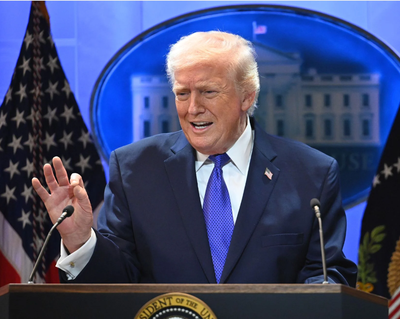
President Donald Trump is facing growing reports of internal disagreements among senior aides as his administration approaches the November 3 midterm elections. Recent investigations by major news organizations describe rivalries, disputes over political strategy and concern among some officials about what could happen if Republicans lose control of Congress.
The viral headline claims that insiders believe “everyone hates” Trump. That wording is stronger than the available evidence supports. Published reports document tensions and criticism among people close to the president, but they do not establish that everyone in his inner circle despises him.

A major Washington Post report published October 16 drew on interviews with 20 aides, advisers and people close to the White House. It described renewed competition for influence and speculation about possible leadership changes after the midterms. Several officials were reportedly positioning themselves for the chief of staff role if Susie Wiles eventually left, although she had not indicated that she planned to resign.
The report suggested that the White House’s internal tensions had become more visible as aides considered the political consequences of a difficult election. Such accounts are based partly on anonymous interviews, which can provide insight into private discussions but are difficult for the public to verify independently.

Reuters reported on October 17 that Trump had been questioning senior aides and political operatives about campaign spending, candidate choices and redistricting strategy. Three people familiar with internal discussions described disagreements over who was responsible for the party’s difficulties heading into the midterms.
The friction reportedly involved James Blair, who leads the pro-Trump political organization MAGA Inc., and Wiles, the White House chief of staff. Trump questioned whether campaign spending was producing results, while some officials reportedly questioned how the political operation was being managed.

The disputes are taking place at a consequential moment for the Republican Party. Republicans are defending their congressional majorities, and losing the House would give Democrats greater ability to investigate the administration and block parts of Trump’s legislative agenda.
Reuters reported that Trump’s approval ratings, concerns about high prices and dissatisfaction with the administration’s handling of the Iran war were weighing on the political environment. These challenges have increased pressure on campaign officials to explain their strategy and demonstrate that their spending can help Republican candidates.

The disagreements have reportedly extended to the president’s outside political advisers. Reuters described tensions over work that Blair and former campaign manager Chris LaCivita undertook in Republika Srpska, a region of Bosnia and Herzegovina. The work prompted questions about potential conflicts of interest and whether political advisers were devoting enough attention to the U.S. midterm campaign. Both men pushed back against criticism of their work.
Trump has publicly defended Wiles despite reports of internal criticism. Reuters quoted him saying she was “smart” and “tough” and that she would remain in her position for a long time. That public support is an important counterpoint to speculation that she is about to be removed.

Other reporting has focused on the president’s shrinking circle of trusted advisers. Semafor reported in August that several prominent aides had departed or were preparing to leave the West Wing, potentially concentrating influence among the smaller group that remains in regular contact with Trump. The article also noted that some former aides continue to advise him through outside political operations.
A smaller inner circle can make coordination easier, but it can also increase the importance of the people who control access to the president. Semafor’s reporting described concerns among some officials that a limited group of gatekeepers could shape which information reaches Trump and which recommendations receive his attention. The White House disputed broader suggestions that the administration’s mission had been weakened by personnel changes.

The possibility of a post-election shake-up has added to the atmosphere of uncertainty. The Washington Post reported that Stephen Miller, Bill Pulte and Lee Zeldin were among officials seen as potential contenders if the chief of staff position became available. But the same report said Wiles had not indicated that she planned to step down, meaning the succession discussion remained speculative.
CNN also reported on October 20 that aides and allies were preparing for the possibility of major personnel changes if Republicans suffered heavy losses. Some officials reportedly feared that Trump would seek to blame members of his team, while others were considering whether to leave. The White House dismissed the focus on internal dynamics as baseless speculation and said Trump remained focused on the midterms.

Signs of the infighting have also appeared publicly through disputes over leaks. The Daily Beast reported on October 25 that deputy chief of staff Dan Scavino had posted an angry message accusing anonymous insiders of planting stories to damage colleagues and position themselves for senior jobs. His post reflected frustration with the flow of damaging accounts from inside the administration, although it did not identify every person he believed was responsible.
Leaked accounts can reveal genuine disagreements, but they can also be used by factions to weaken rivals. That is why the most dramatic descriptions of White House relationships require caution: anonymous sources may have firsthand knowledge, yet they may also have their own interests in how a story is framed.

The internal disputes have reportedly affected communications as well as campaign planning. When senior officials disagree about strategy, their competing accounts can spill into news coverage, making it harder to distinguish policy disagreements from efforts to influence personnel decisions. The recent reporting suggests that some of those tensions are now playing out in public.
Still, disagreement does not necessarily mean personal hatred. People working in a high-pressure political administration can compete for promotions, criticize colleagues and disagree over policy while continuing to support the president. The evidence available publicly does not justify treating the viral headline as a literal description of every senior aide’s feelings.

The midterm results may become a major test of the administration’s internal relationships. If Republicans lose seats, officials could face renewed scrutiny over campaign strategy, spending and the president’s legislative priorities. If the party performs better than expected, some of the current criticism could lose momentum.
For now, the reports point to a White House where political pressure and competition for influence have become more visible. They do not prove that Trump has lost the support of his entire team, nor do they establish that a particular senior official will be fired.

The clearest evidence of the tensions comes from specific reported events: disagreements over campaign spending, questions about outside consulting work, speculation about the chief of staff’s future and public complaints about leaks. Those are concrete developments that can be examined separately from broader claims about personal loyalty.
As Election Day approaches on November 3, further reporting and official personnel announcements may clarify whether the disputes lead to real changes in the West Wing. Until then, the claim that “everyone hates” Trump remains a sensational characterization rather than a verified conclusion.
Fact-check note: The image’s headline exaggerates the available evidence. The Washington Post, Reuters, Semafor and CNN have reported on internal rivalries, strategic disagreements and speculation about possible staffing changes. The White House has disputed some of these portrayals, and no reliable evidence establishes that everyone in Trump’s inner circle despises him.
Comments (0)
Loading comments...
May You Like

Latest Posts

Popular Posts