
US Strikes Iran Tankers: Global Energy Crisis Deepens — Diesel Hits Record High
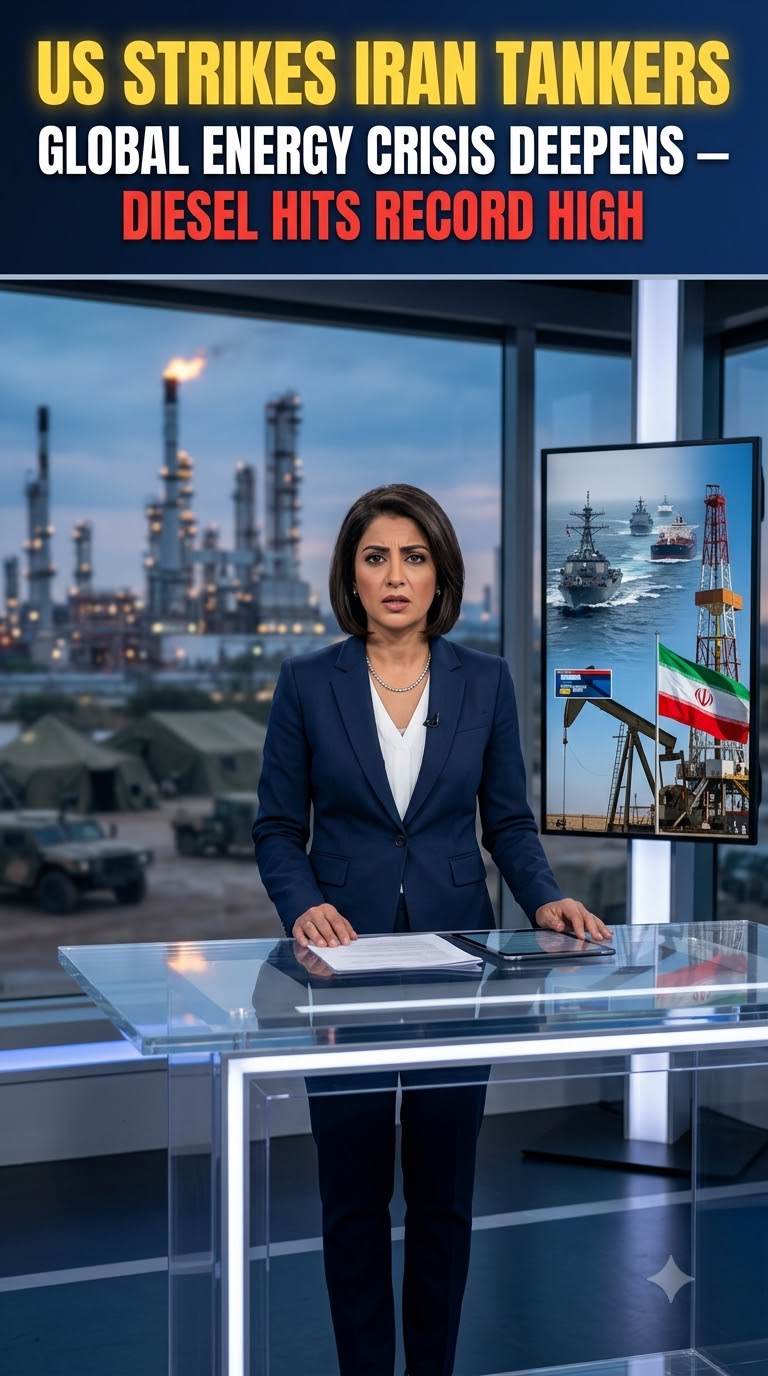
The United States launched a fresh wave of strikes on Iranian oil tankers in the Gulf of Oman on Wednesday, destroying at least five vessels and escalating a conflict that has now pushed diesel prices to an all-time record high of $5.85 per gallon. The attacks, which came in response to Iranian missile strikes on a U.S. base in Jordan, have deepened a global energy crisis that threatens to push the world economy into recession. In Washington, President Trump predicted the war would end "immediately after the midterms," while former President Barack Obama warned that "bullets and bombs alone will not bring peace."
WASHINGTON – The U.S. military has destroyed at least five Iranian oil tankers in the Gulf of Oman, marking the most direct American attack on Iran's oil fleet since the war began six months ago.
According to U.S. Central Command, the strikes were carried out early Wednesday morning local time in international waters. The tankers were reportedly carrying crude oil destined for Asian markets, and their destruction is expected to further tighten global supply.
Iran responded within hours, launching ballistic missiles at a U.S. military base near Al Azraq in eastern Jordan. Air defenses intercepted most of the missiles, and there were no immediate reports of American casualties. But the exchange marks a dangerous new phase in a conflict that has already killed thousands and displaced millions.
Diesel Hits Record High
The energy market’s reaction was swift and severe. According to AAA, the national average price of diesel reached $5.85 per gallon on Wednesday, an all-time high. Diesel is the lifeblood of the global economy — it powers trucks, trains, ships, and farm equipment — and its rising cost is being passed directly to consumers.
“Diesel is the fuel that moves goods,” said Patrick De Haan, head of petroleum analysis at GasBuddy. “When diesel goes up, everything goes up: groceries, Amazon packages, construction materials. This is a tax on every American family.”
Regular gasoline also surged to $4.14 per gallon, a record for the Labor Day weekend. And with the Strait of Hormuz — through which one-fifth of the world’s oil once flowed — now effectively closed by the fighting, analysts warn that prices could climb even higher.
“We are looking at $120 oil if this continues,” said Natasha Kaneva, head of global commodities research at JPMorgan. “The market is pricing in a prolonged disruption.”
Trump: War Ends After Midterms
President Donald Trump, speaking to reporters at the White House on Wednesday, predicted the war would end “immediately after the midterms.” He said Iran was “desperate” to influence the November elections and would collapse under economic pressure once Americans had voted.
“They can’t hold on,” Trump said. “They’re desperately trying to influence the election so they get a bunch of weak people who will let them have nuclear weapons. It won’t work.”
Trump also dismissed concerns about high gas prices, saying they would drop “precipitously” once the war was won. He did not provide a specific timeline for when that might happen, and he rejected calls from some Republicans to seek a ceasefire before the election.
Obama: 'We Can't Bomb Our Way to Peace'
Former President Barack Obama, who has re-emerged as a leading Democratic voice ahead of the midterms, offered a sharp rebuke of the administration’s strategy during a speech in London.
“The notion that we can just bully our way or bomb our way to solutions may sometimes seem appealing, but the fact of the matter is that taking the time to explore diplomacy and exhaust the possibilities of coming up with deals that don’t solve 100% of the problem but solve 80%, 90% of the problem while avoiding the necessity of going to war,” Obama said. “You’d think we would’ve learned that lesson by now.”
Obama called for a return to diplomacy, warning that the current path would only lead to more death and destruction.
The Global Fallout
The energy crisis is being felt far beyond American shores. European diesel prices have also hit record highs, and developing nations in Asia and Africa are struggling to afford fuel imports. In India, which relies heavily on Middle Eastern crude, the government has announced emergency rationing measures. In Japan, utilities are warning of potential blackouts this winter.
“This is not just an American problem,” said Fatih Birol, executive director of the International Energy Agency. “This is a global energy crisis, and it will require a global response.”
For now, however, there is no sign of a diplomatic breakthrough. The U.S. and Iran remain locked in a cycle of retaliation, and the world economy is paying the price.
| Key Detail | Information |
|---|---|
| U.S. Action | Destroyed 5 Iranian oil tankers in Gulf of Oman |
| Iranian Response | Missile strikes on U.S. base in Jordan |
| Diesel Price | $5.85/gallon (all-time high) |
| Gas Price | $4.14/gallon (record for Labor Day) |
| Trump’s Prediction | War ends after midterms |
| Obama’s Warning | “We can’t bomb our way to peace” |
| Global Impact | Energy crisis spreading to Europe, Asia, Africa |
| Analyst Warning | Oil could hit $120/barrel |
This is a developing story. More updates will follow as the situation evolves.
Comments (0)
Loading comments...
May You Like

OBAMA STUNS ON INSTAGRAM: MESSAGE MARKING 34-YEAR MILESTONE SPARKS A BUZZ

gfnhgmnghnmfgnbvvvvvvvvv
TRUMP HIT WITH 26 ARTICLES OF IMPEACHMENT













