U.S. Tells Americans in the Middle East: You're on Your Own
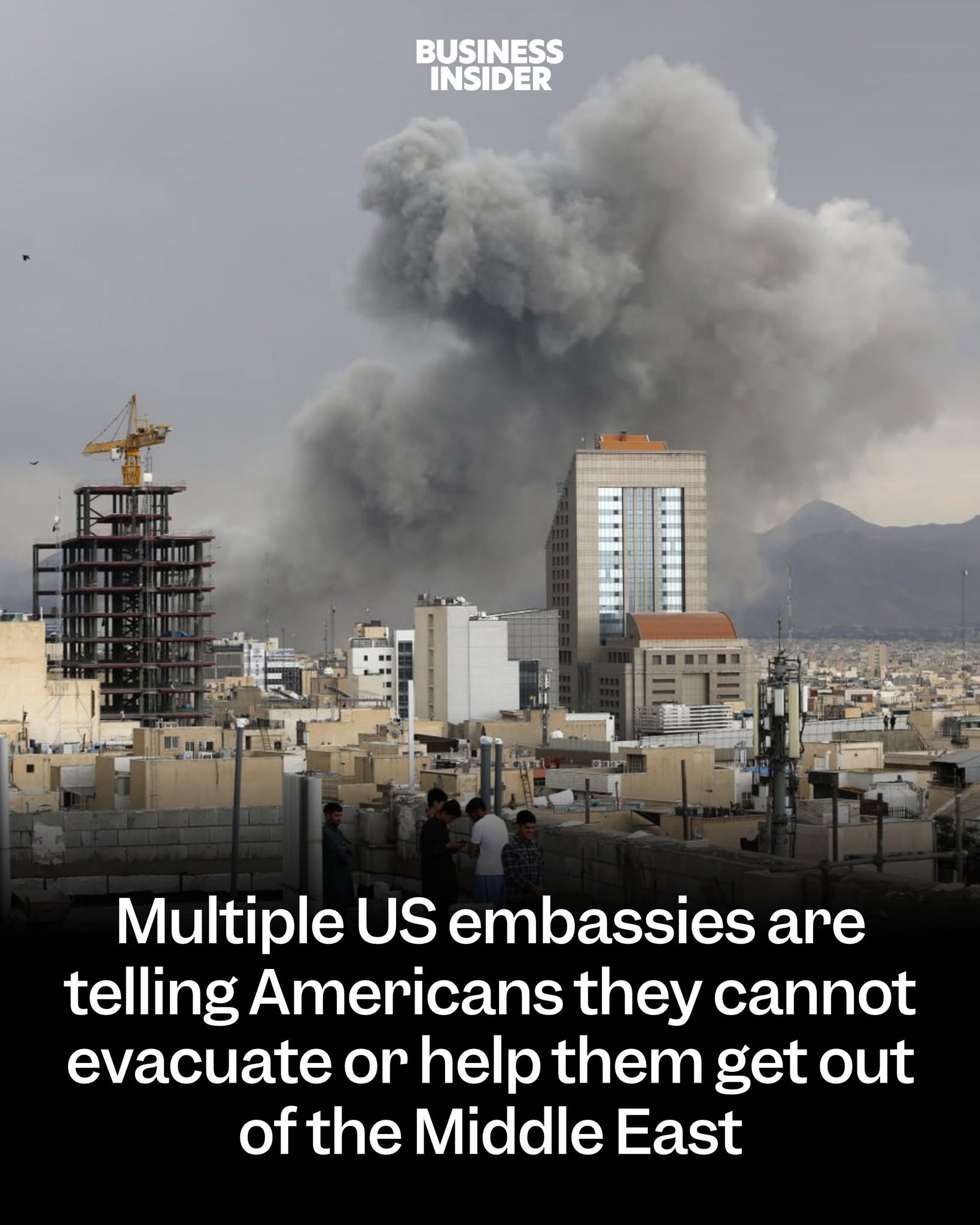
Multiple U.S. embassies across the Middle East have issued urgent warnings telling American citizens they cannot guarantee evacuation or direct assistance in departing the region, even as the State Department urges them to leave immediately amid escalating conflict with Iran.
WASHINGTON – The viral headline is stark: "Multiple U.S. embassies are telling Americans they cannot evacuate or help them get out of the Middle East." It captures a moment of extraordinary crisis as the Trump administration's war with Iran escalates and leaves thousands of U.S. citizens scrambling to flee a region on the brink of wider conflict.
The warnings are real—and the situation is even more chaotic than the headlines suggest.
The Statement That Sparked Outrage
On March 3, 2026, the U.S. Embassy in Jerusalem issued a blunt advisory that sent shockwaves through the American expatriate community:
"The US Embassy is not in a position at this time to evacuate or directly assist Americans in departing Israel" .
The statement, which was also echoed by other embassies in the region, warned that the security environment "remains unpredictable and can deteriorate without notice" and advised Americans to take "personal responsibility for their safety and travel arrangements" .
The embassy noted that the Israeli Ministry of Tourism had begun operating shuttles to the Taba border crossing but added a chilling disclaimer: "The US Embassy cannot make any recommendation for or against the Ministry of Tourism's shuttle. If you choose to avail yourself of this option to depart, the U.S. government cannot guarantee your safety" .
A Crisis Unfolds: The War Spreads
The embassy warnings came just days after the United States and Israel launched a joint military offensive against Iran on February 28, 2026, in an operation that killed then-Supreme Leader Ayatollah Ali Khamenei and more than 1,400 people . Iran responded with waves of missile and drone attacks on U.S. and Israeli bases across the region, while tightening its stranglehold on the Strait of Hormuz .
The conflict quickly spread:
-
U.S. embassies in Saudi Arabia and Kuwait were struck by drones, forcing their closure .
Non-essential embassy staff were ordered to return to the U.S. .
More than 9,800 flights were canceled as airspace across the region closed .
State Department travel advisories placed 14 countries at Level 3 ("Reconsider Travel") or Level 4 ("Do Not Travel") .
The Contradiction: 'Leave Now'—But We Can't Help
The State Department's official position is clear: "The Department has authorized the departure of non-emergency U.S. government employees and, in many cases, their family members from affected countries due to safety risks" . The department is "taking historic action to assist American citizens, who wish to depart the Middle East" .
But on the ground, the reality is far more complicated.
In Israel, the embassy told Americans it cannot help them leave—while simultaneously urging them to depart immediately . In Saudi Arabia, the embassy has suspended all routine consular services and directed all U.S. government employees to shelter in place . In Lebanon, the embassy remains under "mandatory departure," meaning families and non-emergency personnel have already been evacuated .
A retired U.S. general stranded in the United Arab Emirates told reporters: "It's a little bit disheartening to hear that the U.K. government is arranging transport for the British citizens, whereas here as Americans we feel abandoned" .
Political Backlash Erupts
The administration's handling of the crisis has drawn swift and furious condemnation from both sides of the aisle.
Former Representative Marjorie Taylor Greene (R-Ga.) wrote on X: "American taxpayers are forced to give Israel $3.8 BILLION every single year, and here is our own U.S. Embassy in Jerusalem telling Americans good luck getting out, you are on your own. The betrayal is unbelievable" .
Sen. Andy Kim (D-N.J.), who once worked for the State Department, called the evacuation strategy a "clear sign of ZERO strategy and planning by the Trump admin." He noted that warnings to evacuate came "3 days into this war, when airspace is closed," leaving "Americans [with] limited options to evacuate at an extremely dangerous moment with no government assistance" .
Progressive commentator Mehdi Hasan quipped: "Mike Huckabee's embassy is always ready to defend Israel but not to help American citizens, it seems" .
California Governor Gavin Newsom's press office responded bluntly: "No plan. Our brave soldiers dead. Americans abroad abandoned. Donald Trump is a global failure" .
What the State Department Is Actually Doing
Despite the embassy statements, the State Department is not entirely abandoning Americans. According to officials:
-
The department has opened a crisis intake form for Americans in the UAE, Qatar, Saudi Arabia, and Israel to receive departure assistance .
It is facilitating charter flights from the UAE, Saudi Arabia, and Jordan .
It is actively helping Americans book commercial flights where they remain available .
It is coordinating ground transportation for those in countries without flight options .
Americans will not be required to reimburse the government for these travel expenses .
The State Department emphasizes: "There is no higher priority than the safety and security of American citizens for President Trump, Secretary of State Rubio, and the entire Department of State" .
But as one senior official conceded, "the security environment remains complex and can change quickly" , and "the U.S. government cannot guarantee your safety" if you choose to depart via local transport options .
A 'Golden Age' Turned to Chaos
The crisis stands in stark contrast to President Trump's April 2026 declaration of a "Golden Age of the Middle East" after Iran agreed to a ceasefire and reopened the Strait of Hormuz . Just months later, that "Golden Age" has devolved into a regional war that has left thousands dead, embassies shuttered, and American citizens stranded with little more than a warning to fend for themselves.
The Bottom Line
| What the graphic says | What actually happened |
|---|---|
| Multiple U.S. embassies tell Americans they cannot evacuate them | Embassies in Israel and elsewhere have issued such warnings |
| The State Department is not helping | The department is assisting with charter flights and commercial bookings, but cannot guarantee safety |
| The warnings are recent | The warnings escalated in March 2026 following the U.S.-Israel attack on Iran |
| All Americans are affected | Warnings apply to 14+ countries across the region |
The viral image accurately captures the essence of the crisis: a U.S. government caught between urgent warnings and limited capacity to act. As the conflict with Iran deepens, thousands of Americans remain trapped in a region where the nearest embassy may be closed, the nearest airport may be shut, and the nearest exit route may be unsafe.
The message from Washington is clear: "Leave now." But for many, the question remains: leave how?
Comments (0)
Loading comments...
May You Like


Obama Steps Back Into the Political Spotlight as Democrats Target Trump’s Senate Majority

TRUMP HIT WITH 26 ARTICLES OF IMPEACHMENT