U.S. Troops to Withdraw from Last Bases in Iraq by September 30
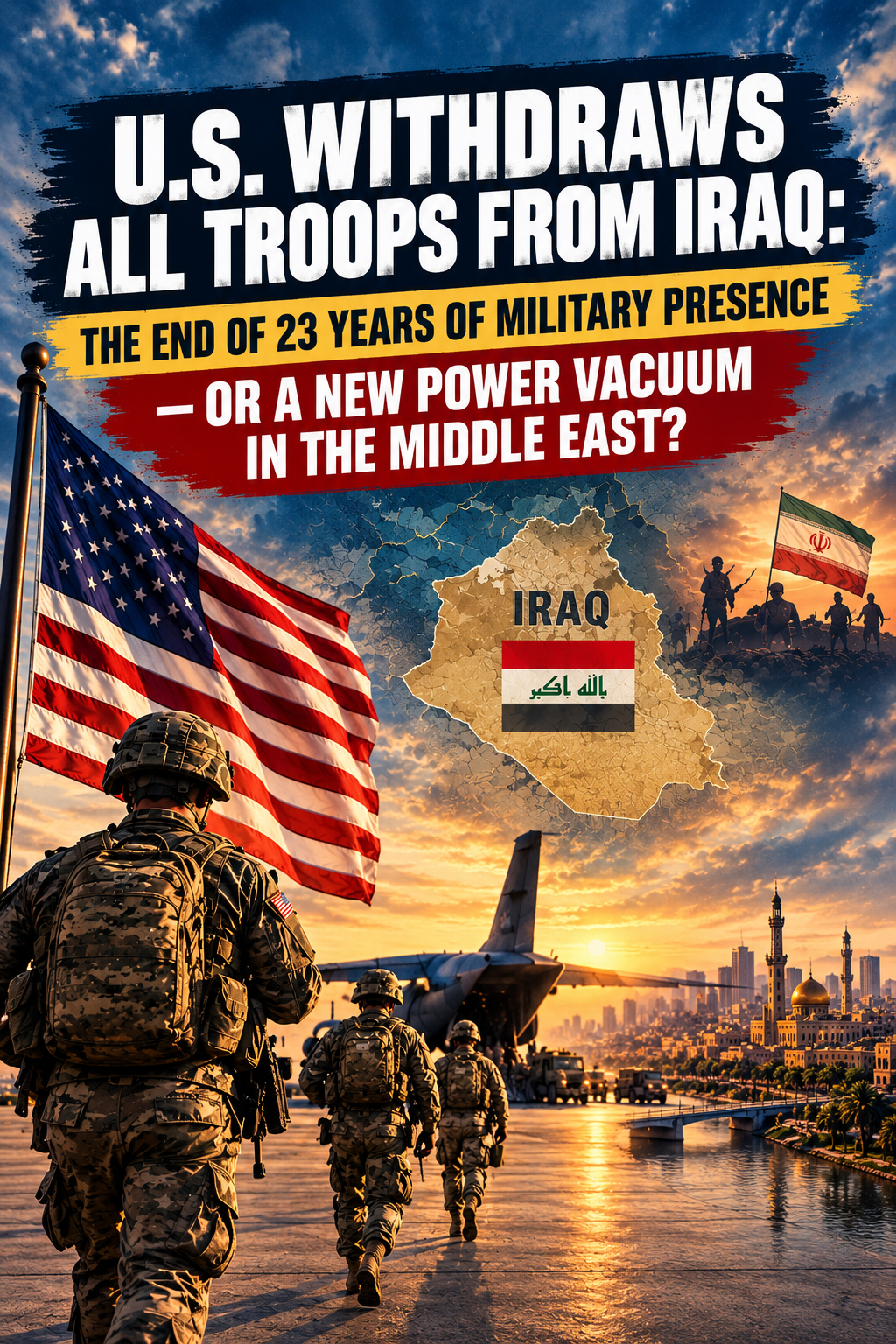
The U.S. military is set to complete its withdrawal from Iraq by September 30, 2026, ending more than two decades of American military presence in the country. The move marks the formal conclusion of Operation Inherent Resolve and shifts full security responsibility to Iraqi forces — but raises concerns about a potential resurgence of ISIS and expanded Iranian influence in the region.
WASHINGTON – The United States will withdraw all remaining troops from Iraq by September 30, 2026, closing a 23-year military chapter that began with the 2003 invasion and continued through the campaign against ISIS, according to reports.
The withdrawal ends Operation Inherent Resolve, the mission launched in 2014 to counter the Islamic State. The U.S. military presence in Iraq had already been significantly reduced in recent years, with Iraqi Security Forces and Peshmerga taking the lead on most operations. Now, Iraq will formally assume full responsibility for its own security.
The Human Cost
The full span of U.S. military involvement in Iraq — from the 2003 invasion through 2011, and the 2014–2026 anti-ISIS mission — has come at a staggering human cost. According to figures cited by President Trump, more than 4,500 U.S. service members were killed and approximately 31,000 wounded over the course of the 23-year engagement.
The post-2014 phase of the mission saw far fewer American casualties, but the cumulative toll reflects the length and intensity of the broader conflict.
What the Withdrawal Means
The U.S. is not disappearing entirely from Iraq. Intelligence-sharing and training ties will remain, and American operations against ISIS continue in neighboring Syria. But the risk and responsibility for Iraq's security now sit squarely with Baghdad and Erbil.
Three key questions will determine what comes next:
1. Can Iraqi forces hold the line?
Iraqi Security Forces and Peshmerga have been leading most operations for years. Success now depends on funding, unity between Baghdad and the Kurdistan Regional Government, and keeping corruption in check.
2. Will ISIS resurge?
The militant group is degraded but not eliminated. It continues to carry out hit-and-run attacks, particularly in rural areas. Without U.S. air support on call, Iraq will rely more heavily on its own air force and on intelligence sharing with the U.S. and coalition partners.
3. What happens to regional influence?
With fewer U.S. troops, Iran-backed groups, Turkey, and other neighbors may have more room to operate. Iraq will have to balance those relationships while maintaining its sovereignty.
A Symbolic Victory for Iran?
The withdrawal is being watched closely across the Middle East. For Tehran, the departure of U.S. forces from a neighboring country is seen as a symbolic victory — and a potential opportunity to expand its already significant influence in Iraqi politics and security.
The U.S. has maintained a military presence in Iraq for more than two decades, and its departure leaves a vacuum that regional powers will likely seek to fill.
The Bottom Line
| What We Know | What Remains Uncertain |
|---|---|
| U.S. withdrawal to be completed by Sept. 30, 2026 | Whether Iraqi forces can prevent an ISIS resurgence |
| Operation Inherent Resolve formally ends | How Iran's influence in Iraq will evolve |
| U.S. intelligence and training ties remain | Whether the withdrawal is permanent or reversible |
| 4,500+ U.S. service members killed over 23 years | What comes next for Iraq's long-term stability |
The U.S. military's chapter in Iraq is closing. Whether the country can hold the line on its own — or whether American forces will one day be pulled back in — is a question that will be answered in the months and years ahead.
Comments (0)
Loading comments...
May You Like

Shocking news from Ohio: an unexpected development ahead of Trump's rally
gfnhgmnghnmfgnbvvvvvvvvv