Viral Machiavelli Quote Sparks Debate Over Fear, Parenting and Children’s Freedom
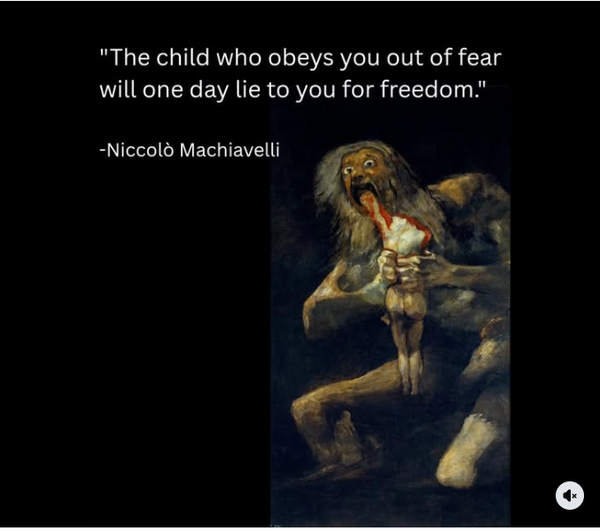
A widely shared quote attributed to Niccolò Machiavelli has sparked renewed discussion about parenting, obedience and whether fear can produce genuine honesty between children and the adults raising them.
The quote reads, “The child who obeys you out of fear will one day lie to you for freedom,” and has recently circulated across social media alongside dramatic historical artwork.
Its central message is straightforward: fear may make someone follow instructions temporarily, but it may not create the trust necessary for honest communication or lasting respect.
The quotation has been repeatedly attributed to Machiavelli online, although the wording does not appear among the commonly documented passages from his major works, including The Prince.
Machiavelli did write extensively about fear, authority and obedience. In The Prince, he famously argued that being both loved and feared would be ideal, while fear could be safer when both were impossible.
That historical connection helps explain why the modern quote feels consistent with Machiavelli’s broader ideas, even though its specific attribution should be treated cautiously.
The image accompanying the quote uses Francisco de Goya’s disturbing painting Saturn Devouring His Son, one of the artist’s celebrated Black Paintings created during the final period of his life.
Goya’s painting depicts the mythological Saturn violently consuming his child, creating an unsettling visual contrast with the quote’s discussion of parental authority, fear and a child’s desire for freedom.
The combination has helped transform the quotation into a powerful social-media message about controlling parenting and the potential consequences of demanding obedience through intimidation.
Psychologists and child-development researchers generally emphasize the importance of supportive relationships, responsive caregiving and communication rather than relying exclusively on fear to influence children’s behavior.
The American Psychological Association advises parents to establish open communication and build trust so children and teenagers feel comfortable turning to adults when they need help.
The organization also recommends making children feel safe when difficult conversations occur, particularly because children may become fearful that they are being punished when adults suddenly question them.
Research summarized by Harvard University’s Center on the Developing Child similarly emphasizes that responsive relationships with caring adults provide important protection against excessive stress and support healthy development.
Harvard researchers explain that prolonged, excessive activation of a child’s stress-response system can become harmful, while supportive relationships can help buffer children from the effects of adversity.
The issue of lying is also more complicated than simple disobedience. Child Mind Institute notes that children may lie for several reasons, including avoiding punishment, seeking attention, anxiety or protecting themselves from consequences.
Experts therefore encourage parents to respond to dishonesty in ways that preserve opportunities for children to tell the truth, rather than automatically treating every lie as evidence of bad character.
One suggested approach is giving children another opportunity to answer honestly and making clear that mistakes do not define who they are, while still maintaining appropriate consequences for serious behavior.
This distinction matters because effective parenting involves more than securing immediate compliance. Children eventually become independent adults who must make decisions without parents supervising every action.
The viral quote consequently resonates because it frames a familiar parenting dilemma: whether children should obey primarily because they fear consequences or because they understand expectations and trust the adults guiding them.
Supportive parenting does not mean eliminating boundaries or consequences. Instead, developmental research emphasizes stable, responsive relationships that allow children to experience guidance while also developing emotional regulation and resilience.
Ultimately, the quote’s popularity reflects a broader conversation about authority, independence and trust, while its Machiavelli attribution remains uncertain and should not be presented as a verified quotation from his writings.


Editor’s note: The quote in the viral image is widely attributed online to Niccolò Machiavelli, but I would recommend labeling it “attributed to Machiavelli” rather than presenting it as a verified quotation from The Prince.
Comments (0)
Loading comments...
May You Like

FIGHT OVER OBAMA’S IRAN POLICY
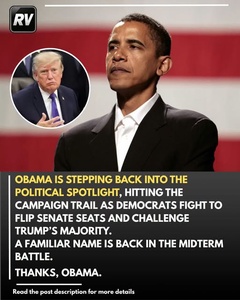
Obama Steps Back Into the Political Spotlight as Democrats Target Trump’s