Viral Obama Deepfake Rumors Collide With a High-Stakes Senate Campaign
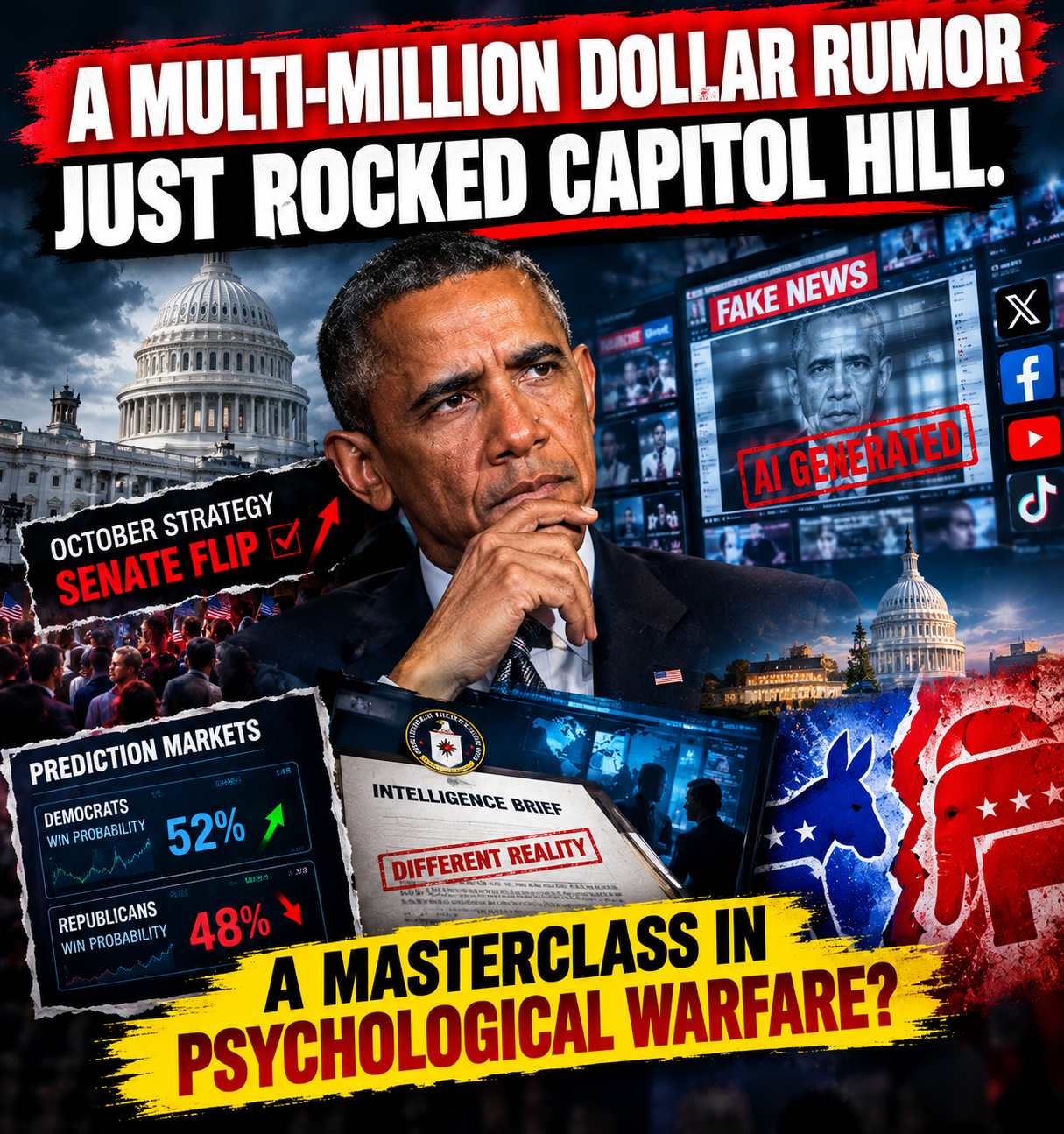
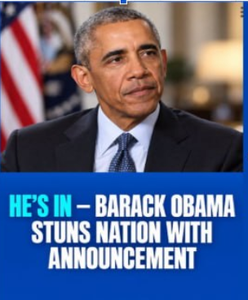
A dramatic online narrative linking Barack Obama, artificial intelligence and the 2026 U.S. Senate elections is gaining attention—but several of the claims circulating alongside the imagery go beyond what can currently be verified.
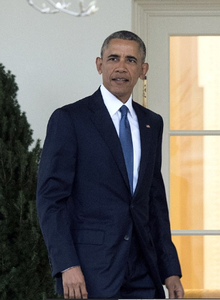
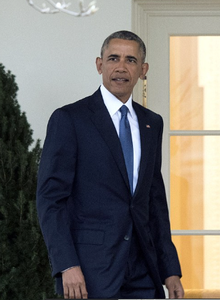
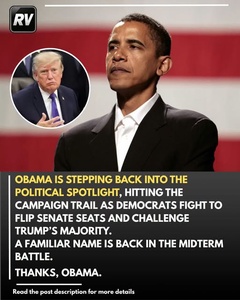
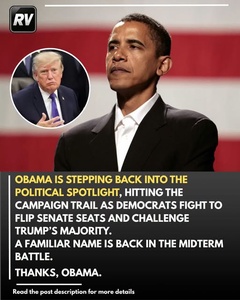
The central development is real: Obama is increasing his involvement in Democratic campaigning ahead of the November 3 midterm elections. Reports say he is scheduled to headline a Democratic Senatorial Campaign Committee fundraiser in the Washington area on October 7.
What remains unestablished is whether the synthetic-media material circulating online is connected to a coordinated political operation, who created it, or whether millions of dollars were spent to distribute it.
Obama is returning to the campaign trail
Obama's involvement in the 2026 cycle is not simply an internet rumor.
Earlier this year, he appeared alongside Texas Senate candidate James Talarico during a campaign stop in Austin.


Barack Obama campaigning alongside Texas Senate candidate James Talarico in Austin in May 2026. Photo: Joel Angel Juarez-Pool/Getty Images.
The appearance was part of Obama's broader involvement in Democratic campaigns. AP reported that the former president's visit was intended to boost Talarico's Senate campaign.
The planned October fundraiser would put Obama back in the national spotlight as Democrats attempt to compete for control of the Senate.
Recent Reuters reporting says Democrats are contesting a broader group of Republican-held Senate seats than previously expected, while Republicans are reallocating campaign resources in response.
Capitol Hill becomes the backdrop
The supplied graphic places the controversy directly against images of the U.S. Capitol, suggesting that the alleged deepfake operation is part of a larger struggle over Senate control.


The U.S. Capitol, where control of the Senate will be contested in the November 2026 midterm elections.
The Capitol itself is not evidence of a connection between the building, Senate campaigns and the viral Obama material. It is better understood as visual context for the political stakes of the election.
The distinction is important because the graphic also contains phrases such as “INTELLIGENCE BRIEF,” “SENATE FLIP” and “PSYCHOLOGICAL WARFARE?” None of those labels establishes that an actual intelligence assessment or coordinated psychological operation exists.
The deepfake problem is real
The broader technological issue, however, is genuine.
AI-generated political media has become an established concern for election researchers and journalists. Synthetic video can combine facial manipulation, artificial voices, fabricated backgrounds and misleading captions to make an event appear authentic.


Illustrative imagery showing how artificial intelligence and synthetic media can be used to create misleading political content. One election-security analysis has documented the use of AI-manipulated political material involving prominent public figures.
Obama himself has previously been used as an example in discussions about political deepfakes. More recently, he has also publicly discussed the risks and opportunities created by artificial intelligence.
In September, The New York Times reported that Obama had urged Democrats to develop a clearer public framework for AI policy, warning that rapidly developing technology could be dangerous if it is not properly managed.
That creates an interesting overlap between the subject of the viral material and the technology being used to produce it.
What about the “multi-million-dollar” claim?
This is where the available evidence becomes much thinner.
The graphic describes a “multi-million dollar rumor”, but there is currently no reliable evidence establishing that a specific multi-million-dollar fund financed the Obama-related synthetic media shown in the graphic.
Political spending during the 2026 cycle is substantial, and outside groups are spending heavily on Senate races. But documented campaign expenditures should not automatically be attributed to an anonymous deepfake simply because they occurred during the same period.
Likewise, prediction markets measure the positions of market participants. They are not intelligence assessments and should not be presented as official forecasts from U.S. intelligence agencies.
The “psychological warfare” question
The phrase appears prominently in the supplied artwork:
“A MASTERCLASS IN PSYCHOLOGICAL WARFARE?”
The question mark matters.
There is currently no publicly established evidence demonstrating that the Obama deepfake material represents a coordinated psychological-warfare campaign.
There are several possibilities whenever political synthetic media suddenly spreads:
- an individual creates fabricated material for attention;
- coordinated accounts amplify it;
- political activists distribute it;
- financially motivated actors exploit the controversy;
- or multiple unrelated pieces of misinformation become connected through social media.
Determining which explanation applies requires forensic analysis of the original files, distribution networks, timestamps, accounts and funding sources.
Virality alone cannot establish the answer.
The election environment makes the timing significant
The material is circulating at a particularly consequential point in the 2026 campaign.
Reuters reported October 1 that Democratic candidates are competing in a wider range of Republican-held Senate states, while Republican strategists are shifting resources toward races they consider increasingly important.
That means political information—both authentic and fabricated—is likely to receive unusually intense attention as November approaches.
But timing is not proof of coordination.
A deepfake appearing during an election campaign does not, by itself, establish that it was designed to alter the campaign's momentum or that a political organization commissioned it.
What can actually be established?
| Claim in the viral narrative | Evidence available |
|---|---|
| Obama is increasing his political activity | Supported by current reporting |
| Obama is participating in 2026 Democratic fundraising | Supported by current reporting |
| Obama has campaigned alongside Democratic candidates | Documented |
| AI-generated political content is a genuine election concern | Well documented |
| Obama has previously been targeted by synthetic political imagery | Documented |
| A specific multi-million-dollar operation created the current material | Not established |
| The material is part of a coordinated psychological-warfare campaign | Not established |
| The prediction-market numbers constitute an intelligence assessment | No |
| The viral graphic proves Obama was detained | No |
Comments (0)
Loading comments...
May You Like
South Korea–Ukraine Rift Deepens Over North Korean POW Transfer as PURL Draws New Scrutiny
Shocking news from Ohio: an unexpected development ahead of Trump's rally