
Viral Rubio-Araghchi Confrontation Over Strait of Hormuz
Viral Rubio–Araghchi Showdown Over Strait of Hormuz: Real Policy Dispute, Unverified Quotes
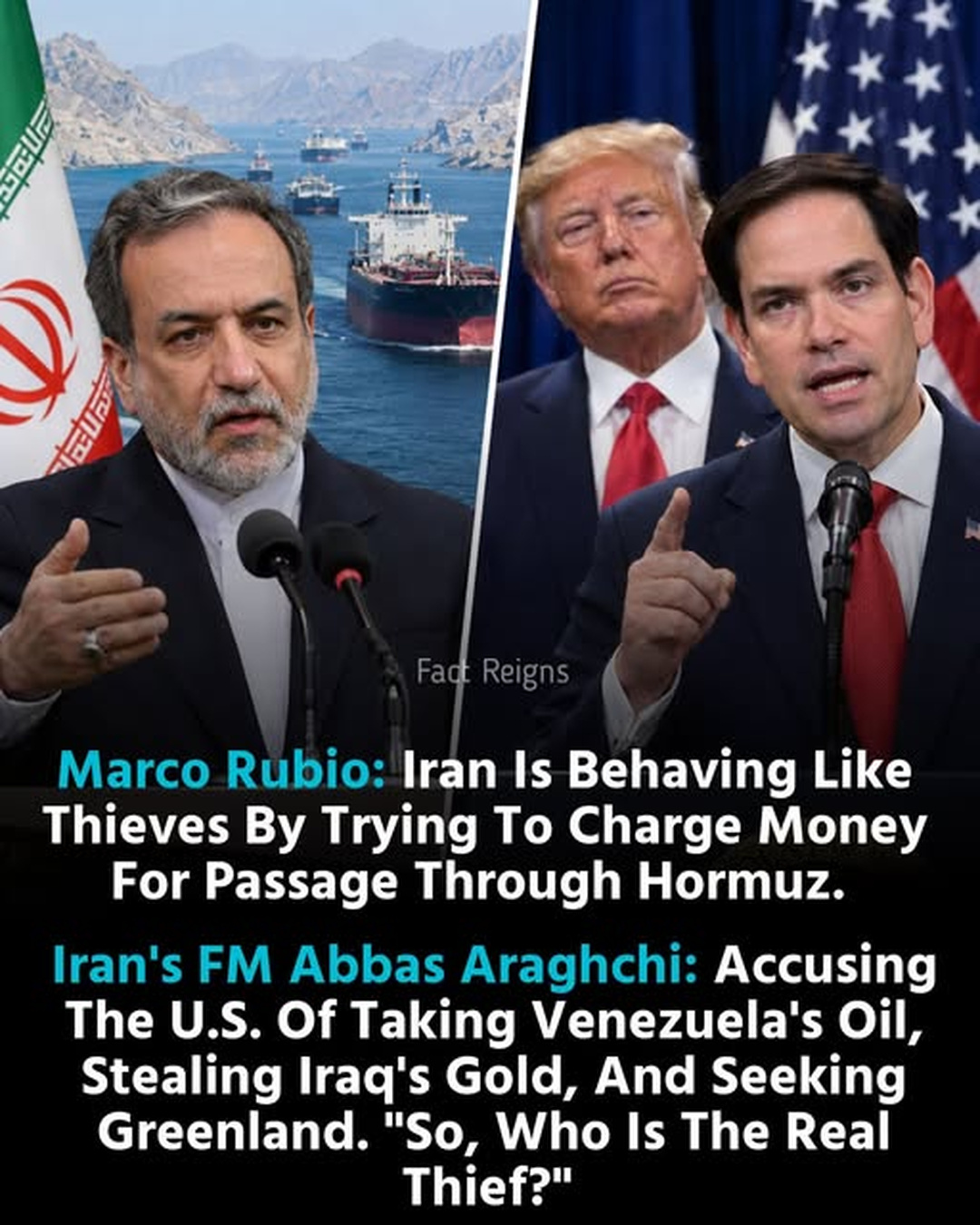
The image presents what appears to be a dramatic verbal exchange between U.S. Secretary of State Marco Rubio and Iranian Foreign Minister Abbas Araghchi. However, the available evidence does not establish that this exchange happened.
Rubio has repeatedly opposed Iran imposing tolls on ships using the Strait of Hormuz, describing the waterway as an international route that should remain open to global shipping.
During a Gulf visit in June 2026, Rubio warned that allowing a country to charge for passage through an international waterway could create a dangerous precedent for other maritime routes.
He argued that the principle of freedom of navigation should apply regardless of a waterway’s proximity to a particular country's territory. His public position was clear: Washington would not accept Iranian transit tolls.
But the graphic changes the wording. It attributes the phrase “Iran is behaving like thieves” to Rubio, yet the credible reports and transcripts located do not substantiate that specific quotation.
The distinction matters. Rubio's opposition to Iranian fees is documented, but presenting that position as a personal insult toward Iranians adds inflammatory language that cannot currently be verified.
The second half of the graphic attributes an equally provocative response to Araghchi, accusing Washington of taking Venezuelan oil, stealing Iraqi gold, and seeking Greenland.
No reliable transcript, official statement, or credible news report located in this review confirms that Araghchi delivered this exact response to Rubio.
There is, however, a possible source of confusion. Araghchi has publicly criticized Israeli Prime Minister Benjamin Netanyahu and shared a video in which Netanyahu discussed countries including Iran, Iraq, Libya, Venezuela, and Greenland.
That separate political criticism may help explain some of the countries mentioned in the viral graphic. It does not prove that Araghchi made the alleged statement about Rubio.
The underlying dispute over Hormuz is real. The strait is one of the world's most strategically important maritime chokepoints, connecting the Persian Gulf with international shipping routes.
Before the conflict, roughly one-fifth of global oil supplies normally passed through the waterway. Any restrictions or new charges could affect energy markets, shipping costs, and international trade.
Iran has sought greater influence over maritime traffic and has discussed mechanisms involving fees or payments for services. The United States and several regional governments have strongly opposed unilateral tolls.
The legal question is more complicated than the viral image suggests. International maritime law protects transit passage through natural international straits, while certain negotiated services may involve separate charges.
In June, Rubio reiterated that Washington expected the strait to remain open without a general toll on commercial shipping. The disagreement became a major issue in diplomatic discussions between Washington and Tehran.
Iran, meanwhile, has argued that the security arrangements governing the waterway cannot simply return to their previous conditions after the conflict. Tehran sees control over Hormuz as significant diplomatic leverage.
The broader confrontation also reflects competing accusations over sovereignty, military intervention, economic pressure, and control of strategic resources. Both governments have used strong political language to defend their positions.
However, political criticism should not be confused with a verified direct exchange. The graphic provides no date, video, interview, official transcript, or original source for either alleged quotation.
Its presentation uses recognizable political figures and a real international dispute to make the supposed confrontation appear authentic. That visual approach does not establish that the words were actually spoken.
For now, the responsible conclusion is that Rubio's opposition to Iranian tolls is documented, while the alleged “thieves” exchange and Araghchi's quoted comeback remain unverified.
The Strait of Hormuz dispute is real and consequential. But this particular graphic should not be shared as a confirmed record of a direct confrontation between the two officials.
Comments (0)
Loading comments...
May You Like



I-75 THANKSGIVING NIGHTMARE — MAIL TRUCK CRASH RAISES OVERPASS COLLAPSE FEARS!
Latest Posts









Popular Posts



