
WALNUT HILL LANE ATM HEIST: BANK WORKER DISAPPEARS AFTER FORKLIFT THEFT!
Dallas ATM Theft Captured on Video as Police Recover Forklift and Investigate Suspect's Identity
DALLAS — November 20, 2026 — Dallas police are searching for a suspect who used a heavy-duty forklift to remove an ATM from a Bank of Texas drive-through early Wednesday, an unusual theft captured on video by a nearby resident. Hours later, a jogger discovered the damaged machine and the abandoned equipment beneath a bridge.
The burglary occurred November 18 at a bank in the 8200 block of Walnut Hill Lane, near Texas Health Presbyterian Hospital Dallas. Police responded to a burglary report at approximately 3:27 a.m.
The recording shows a person operating a large industrial lifting machine, struggling to dislodge the ATM before carrying it away.
The case has raised questions about how the equipment was obtained, whether the thief acted alone and what evidence might identify the operator.
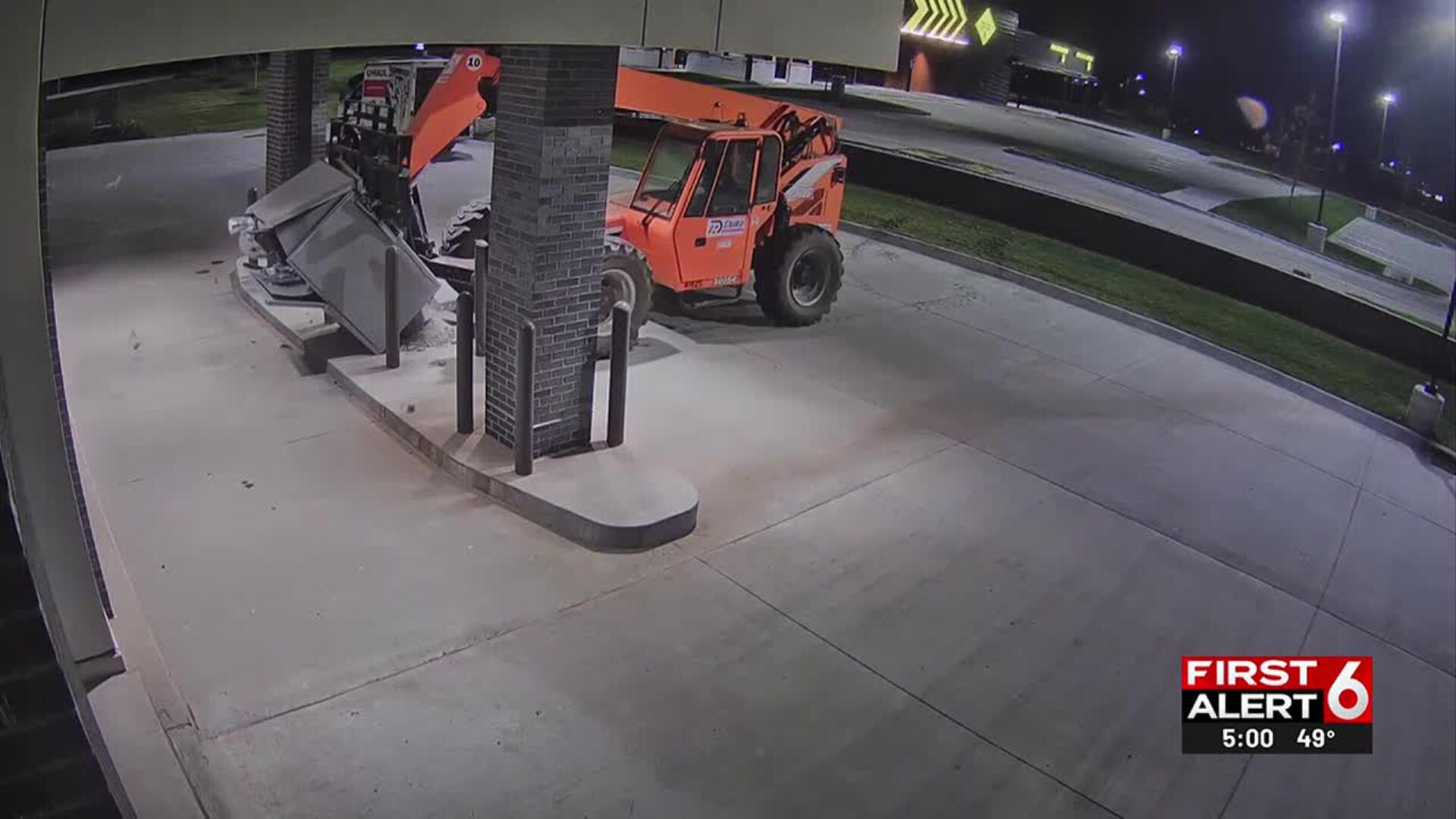
The incident began while most residents of the surrounding neighborhood were asleep.
Shortly before 3:30 a.m., the sound of heavy machinery echoed near the bank.
The equipment produced metallic scraping noises and the warning beeps commonly heard when large industrial vehicles reverse.
The unusual sounds woke residents in a nearby apartment building.
Liz Anderson looked outside and saw a person maneuvering a large forklift around the bank's drive-through ATM.
She began recording.
The footage shows the operator attempting to position the machine's lifting arms beneath the ATM.
The equipment pushes and drags the structure before lifting it away.
The suspect then drives away carrying the machine.
The theft was unusual not only because of its target but because of the size and visibility of the equipment involved.
Anderson initially believed the noises came from a garbage truck.
When she looked outside, she realized that a large machine was operating beside the bank.
She captured the incident on her phone and contacted police.
Speaking to NBC 5 Dallas-Fort Worth, Anderson described the suspect as wearing dark clothing and what appeared to be a ski mask.
She also said the person appeared to be wearing slide-style footwear.
The recording shows the operator struggling with the ATM rather than removing it in one smooth movement.
That detail matters because it establishes that the suspect spent time at the location while the equipment was making substantial noise.
Anderson's recording became one of the central pieces of publicly available evidence.
The equipment was not an ordinary warehouse forklift.
CBS Texas identified it as a Skyjack SJ843 telehandler, a heavy-duty machine designed to lift and move materials at construction and industrial sites.
According to the manufacturer's specifications cited by CBS, the model can lift up to 8,000 pounds.
Its maximum travel speed is approximately 17 mph.
Those capabilities explain how the machine could move a large ATM.
They also highlight an unusual aspect of the crime.
The equipment was powerful enough to remove the machine but not designed for a fast getaway on city streets.
The video shows the operator using its lifting arms to pry the ATM away from its installed position.
The theft left visible damage at the bank.
The drive-through lane was later blocked and boarded up.
An ATM installed in a bank drive-through is not intended to be moved casually.
The machine is normally secured in place and connected to supporting infrastructure.
Removing it can damage the surrounding installation.
In the Dallas video, the telehandler repeatedly pushes against the ATM before successfully lifting it.
The operation leaves scrape marks on the pavement.
Part of the machine or its installation remains damaged at the bank.
CBS Texas reported that a mangled piece of the ATM was left behind.
The difficulty of removing the machine is important because it distinguishes the theft from a quick attempt to steal cash.
The suspect targeted the entire physical unit.
That decision required heavy equipment and created an obvious disturbance.
The suspect drove away from the bank carrying the ATM.
The video captures the departure but does not document the entire route.
The following morning, the machine was discovered beneath a bridge near Walnut Hill Lane and White Rock Creek.
The location is accessible from a trail off Fair Oaks Avenue.
Both the ATM and the telehandler had been abandoned.
Dallas police confirmed their recovery.
The discovery significantly changed the investigation.
Instead of searching only for the missing ATM, officers could examine the recovered equipment.
That potentially included the damaged machine, the telehandler and any physical evidence left at the location.
Cris Martin was on his morning run when he noticed the abandoned equipment beneath the bridge.
He recognized the ATM and realized the scene was unusual.
Martin told FOX 4 Dallas that the machine appeared to have been broken open.
He did not see cash scattered around the area.
He also said the keys were still inside the telehandler.
The discovery provided investigators with the location of the stolen equipment.
FOX 4 reported that both the ATM and the telehandler were taken into police custody.
The presence of the keys is an important witness observation.
But it does not establish how the suspect obtained the equipment or whether the operator had authorization to use it before the theft.
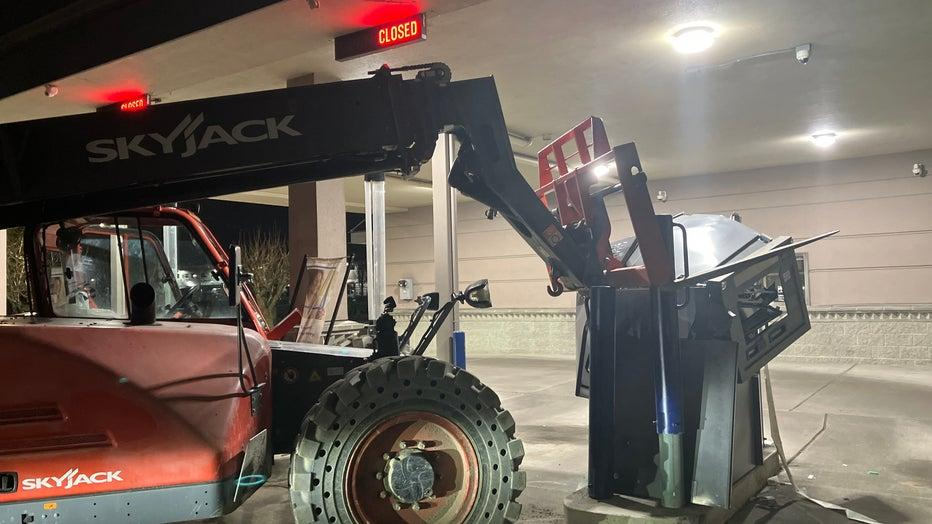
The recovery site provides a second location for investigators to examine.
The bank's drive-through contains evidence of the initial removal.
The area beneath the bridge contains evidence of what happened afterward.
Police may be able to compare damage at both locations and establish how the ATM was transported.
The recovered equipment could also help determine whether the suspect attempted to open the machine.
Martin's observation that the ATM appeared damaged is relevant, although it does not establish whether its cash compartment was successfully breached.
The fact that the machine was abandoned also raises questions about the suspect's original plan.
Police have not publicly explained why the equipment was left there.
The discovery confirms the recovery of the stolen property, but it does not identify the person responsible.
One of the most important unanswered questions concerns the cash inside the ATM.
ATMs contain security features intended to protect stored currency.
The physical removal of a machine is only one part of a potential theft.
The recovered ATM appeared damaged, according to the jogger who discovered it.
But damage to the exterior does not establish that the internal cash compartment was opened successfully.
Investigators may need to examine the machine and reconcile its contents with bank records.
Those records could help determine whether money was missing.
Until police or the bank provide a confirmed figure, the amount stolen remains unknown.
Bank of Texas confirmed that it was cooperating with law enforcement.
A bank spokesperson told CBS Texas that the branch remained open after the incident.
Customers who needed drive-through ATM services were directed to other nearby locations.
That statement established the bank's immediate operational response.
It did not identify a suspect or disclose the amount of money involved.
The distinction is important because the theft involved a financial institution, but the available evidence concerns a physical attack on an outdoor cash machine.
A claim of employee involvement would require separate evidence connecting a worker to the crime.
The published reports from NBC 5, CBS Texas and FOX 4 do not identify a missing Bank of Texas employee connected to the theft.
Dallas police have not publicly announced a related missing-person investigation in the coverage reviewed.
There is also no verified account of a bank employee disappearing after the machine was removed.
The person shown operating the telehandler has not been publicly identified.
That individual cannot be assumed to be a bank employee.
The presence of a masked suspect at a bank does not establish an employment relationship.
Investigators would need independent evidence, such as employment records or authenticated identification, before making that connection.
The publicly documented search concerns the person who operated the equipment and removed the ATM.
The claim that investigators discovered an employee accessing ATM files is not established in the available reporting.
Banks maintain records concerning ATM operations, servicing and cash management.
Those records can be relevant when investigating a theft.
However, the existence of such records does not establish unauthorized access.
A legitimate employee may review operational information as part of routine duties.
To demonstrate misconduct, investigators would need evidence showing that a particular person accessed information improperly and that the access was connected to the crime.
That could require authenticated access logs, employment records and other investigative findings.
No such evidence has been publicly described by Dallas police in the reports reviewed.
The documented investigation remains focused on identifying the person who stole the machine.
The circumstances may prompt questions about whether the suspect had prior knowledge of the location.
The thief arrived with heavy equipment and targeted a specific ATM.
But those facts do not establish inside assistance.
A drive-through ATM is visible from outside the bank.
Its location can be observed without access to confidential bank information.
The video shows the suspect struggling to remove the machine, which also does not establish specialized knowledge of its installation.
Investigators could examine whether anyone provided information or assistance.
However, no police statement has identified an employee, contractor or other insider as a suspect.
There is no publicly established evidence of an internal conspiracy.
The supported conclusion is narrower: an unidentified person used heavy machinery to steal an ATM, and police are investigating.
A major unresolved question is how the suspect obtained the industrial machine.
A telehandler is expensive, conspicuous equipment generally used at construction and industrial sites.
Its operation requires familiarity with heavy machinery.
But the ability to operate one does not establish that the suspect worked in construction.
Nor does it establish that the equipment was stolen.
The available reporting confirms that the telehandler was used in the burglary and later recovered.
It does not establish its lawful owner or how the suspect acquired access.
Those details could be important to identifying the operator.
Ownership records, equipment identification markings and witness accounts might help investigators trace the machine.
The witness recording shows what appears to be a single operator controlling the telehandler.
Anderson described the person as dressed in black and apparently wearing a ski mask.
The footage does not provide a clear facial identification.
It also does not establish whether anyone else assisted outside the camera's view.
Police have not released a suspect's name or an official detailed description.
That limits what can be said about the person's identity.
The operator's use of heavy equipment may suggest some practical familiarity with its controls.
However, that observation cannot establish a profession, employer or previous criminal activity.
CBS Texas reported that a nearby resident noticed damage to a Chase ATM near Skillman Road and Walnut Hill Lane.
The machine was still standing.
The resident described visible damage along its side and top.
CBS contacted Dallas police about the condition of that ATM.
Police information officers said they were unaware of a second ATM theft.
The Chase machine was reportedly being guarded.
The discovery raised questions about whether the damage was connected to the Bank of Texas burglary.
Investigators would need to compare damage, timing, surveillance recordings and other evidence.
The presence of another damaged machine nearby is noteworthy.
The use of heavy machinery to steal an ATM is unusual, but it is not unprecedented in Dallas.
In December 2017, police investigated another incident involving a forklift and a stolen ATM.
That case occurred near Irving Boulevard and Inwood Road.
Authorities located the forklift and ATM a short distance from the bank.
Police searched for suspects but did not immediately find anyone.
The earlier incident provides historical context for the method used in November 2026.
It does not establish that the same individuals were involved.
The two cases occurred nearly nine years apart.
Without evidence connecting the suspects, equipment or other circumstances, the similarity remains a comparison of methods rather than proof of a common criminal organization.
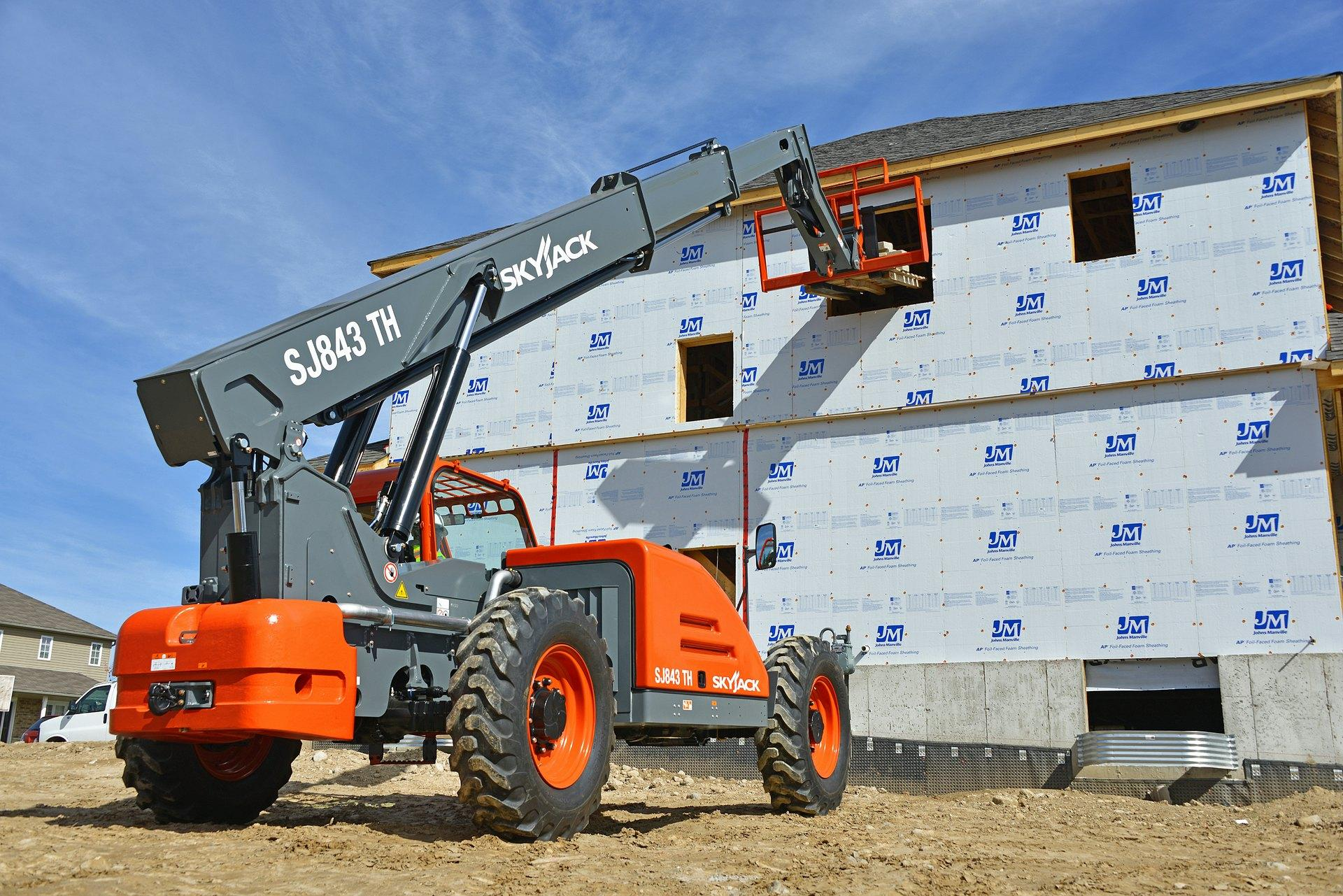
Recovering the telehandler gives investigators a physical object that may contain useful evidence.
Its identification numbers could help establish ownership.
The condition of the lifting arms may also be compared with damage to the ATM.
Investigators may examine the operator's compartment and other accessible surfaces.
However, the public reporting does not establish whether fingerprints, DNA or other forensic material were recovered.
Nor does it establish that the keys found inside belonged to the suspect.
Physical evidence must be collected, documented and evaluated before conclusions can be drawn.
The recovery is significant because the equipment was central to the crime.
Whether it ultimately identifies the operator remains an open question.
The burglary damaged the drive-through ATM area, temporarily preventing customers from using that machine.
Bank of Texas said its branch remained open.
Customers needing ATM services could use other nearby locations.
The incident therefore disrupted a specific service rather than forcing the entire bank to close.
The bank has not publicly disclosed any broader customer-account losses associated with the theft.
An ATM being physically stolen does not, by itself, establish that customers' account information was compromised.
That would require separate evidence concerning the machine's systems and stored data.
The publicly documented impact includes damage to the ATM installation, the loss and subsequent recovery of the machine, and the continuing police investigation.
The investigation has several unresolved questions.
Police need to identify the person who operated the telehandler.
They must determine how that individual obtained the equipment.
They also need to establish whether the suspect acted alone and whether any cash was successfully removed.
The abandoned ATM and forklift may help answer some of those questions.
Witness video may help reconstruct the suspect's movements at the bank.
Additional evidence could clarify the route taken after the theft.
Those claims remain outside the established evidence.
Dallas police have not announced an arrest.
The suspect's identity remains undisclosed.
The witness recording shows a person operating heavy machinery, but it does not provide enough publicly established information to name that individual.
The discovery beneath the bridge recovered the stolen property without locating the operator.
Investigators may continue examining evidence from the bank, the recovery site and witness accounts.
The damaged Chase ATM nearby also presents a separate question requiring verification.
The case remains an active burglary investigation.
Any later identification or criminal charge would need to be supported by an official announcement or reliable court records.
The November 18 burglary began with an unidentified person arriving at a Bank of Texas drive-through in a large telehandler.
The suspect used the machine to dislodge and carry away the ATM.
A resident recorded the theft.
Hours later, a jogger found the damaged ATM and the abandoned equipment beneath a bridge near White Rock Creek.
Police recovered both.
Those facts establish the central sequence of the crime.
The next confirmed developments will depend on the Dallas Police Department's investigation.
Comments (0)
Loading comments...
May You Like

AMERICA’S NEW-GENERATION AIRCRAFT CARRIERS — MILITARY MIGHT BUILT AT THE EXPENSE OF THE PEOPLE

PACIFICA PIER IN CALIFORNIA COLLAPSE REVEALS MASSIVE CRACK BENEATH THE OCEANs!

PENTAGON'S PATRIOT MISSILE DELAY — A MAJOR SETBACK FOR UKRAINE'S AIR DEFENSE?












