
Trump Endorses Netanyahu Days Before Israeli Election, Warning U.S. Could Face Iran Alone
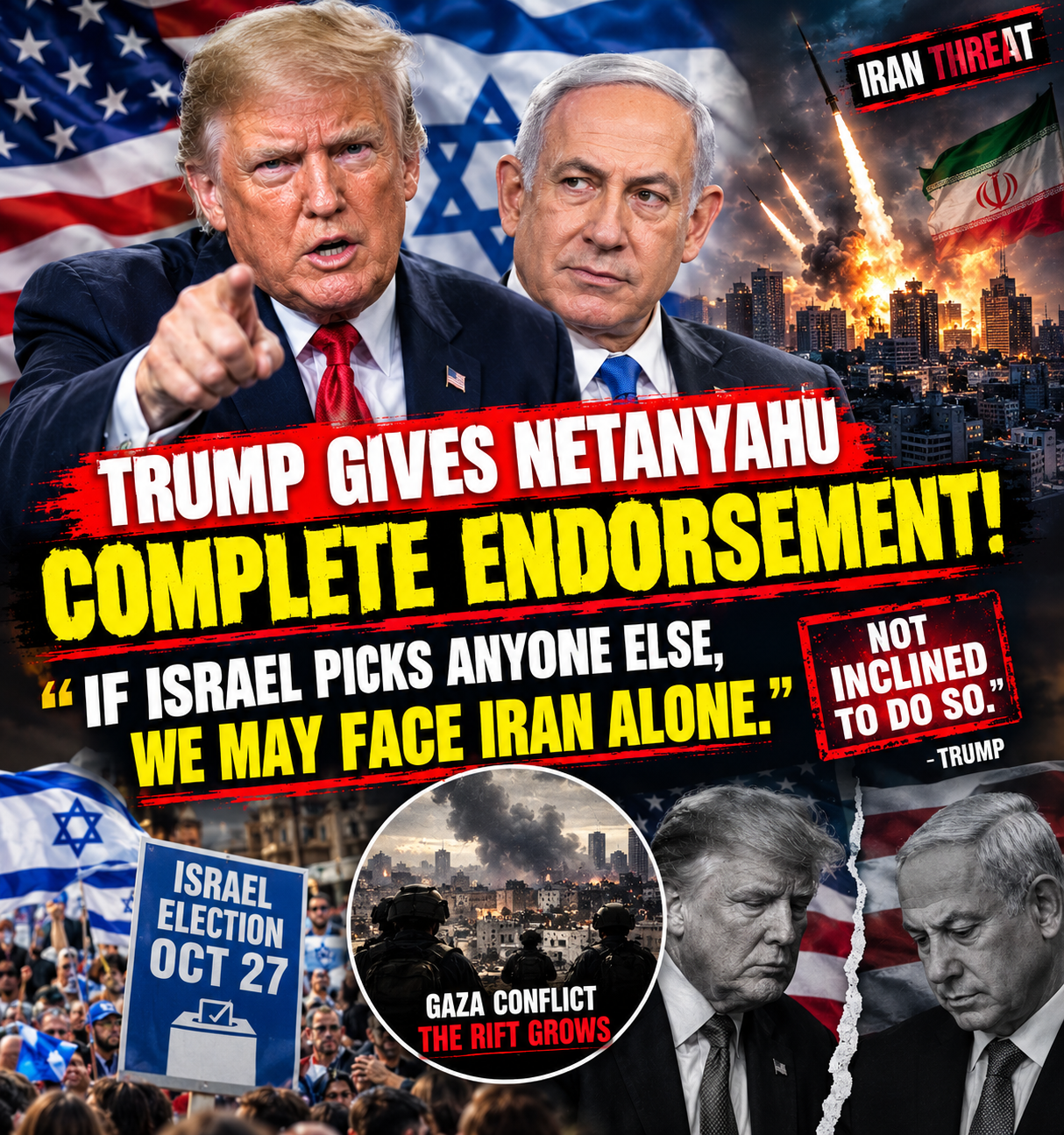
President Donald Trump has thrown his support behind Benjamin Netanyahu just eight days before Israel’s October 27 parliamentary election, calling the Israeli prime minister a “Great Warrior Prime Minister” and warning that a different leader could leave Washington confronting Iran without the same level of cooperation. The endorsement comes after months of tensions over the Iran war and the future of Gaza, placing the two leaders’ relationship back at the center of Israel’s election debate.
Trump and Netanyahu in the supplied photograph. The image illustrates their longstanding political relationship; it is not necessarily a photograph of the latest endorsement.
JERUSALEM, October 19, 2026 — With Israeli voters preparing to head to the polls on October 27, Trump has made his position unmistakable: he wants Netanyahu to remain in power. In a post on Truth Social on Sunday, October 18, the U.S. president gave the Israeli leader his “Complete and Total Endorsement,” praising him as “Strong, Brave, and Brilliant” and describing him as a key partner in confronting Iran. Trump also wrote that Netanyahu “WILL NEVER LET YOU DOWN!” and warned that if Israel chose anyone else, the United States might have to take on the confrontation with Iran itself.
The intervention is notable not only for its timing but also for its bluntness. Trump had avoided endorsing Netanyahu for months, despite their longstanding political alliance and close cooperation on security matters. According to the Associated Press, the president’s hesitation reflected growing differences over the conduct and outcome of the war with Iran, as well as disagreements about a U.S.-backed plan to end the fighting in Gaza. His latest statement therefore represents a public reaffirmation of support after a period in which the relationship had appeared less predictable.

Trump and Netanyahu at a previous White House meeting. Illustrative archival image; verify the original date and photo credit before publication.
Trump’s message went beyond a conventional expression of diplomatic support. He tied Netanyahu’s leadership directly to the future of the U.S. confrontation with Iran, saying that an Israeli leader other than Netanyahu could leave America to “do this work” alone. He also warned Tehran that the United States could resume or intensify its campaign unless Iran changed its behavior rapidly. The remarks make the Israeli election part of a wider strategic argument: Trump is presenting Netanyahu as a partner whose approach to Iran aligns with U.S. security interests.
For Netanyahu, the endorsement arrives at a politically consequential moment. Israel’s October 27 vote will be the first national election since Hamas’s October 7, 2023, attack and the wars that followed. Netanyahu, Israel’s longest-serving prime minister, is facing an electorate divided over security, responsibility for the failures surrounding the 2023 attack, military service requirements, the cost of living and the future direction of the country. His opponents argue that his government has not adequately answered for the security failures and the consequences of the conflicts, while his supporters emphasize his experience and hard-line approach to national security.

Election campaign materials featuring Netanyahu in Israel ahead of the October 27 vote. AP photographed a Likud billboard in Bnei Brak on October 18.
Israel’s electoral system makes the contest more complicated than a direct vote for prime minister. Voters elect parties to the 120-member Knesset, and the government is formed by a coalition able to command at least 61 seats. No single party has won an outright majority in Israel’s parliamentary history, so the outcome depends not only on Likud’s performance but also on the strength of allied parties and whether rival factions can assemble a workable alternative. The Associated Press has reported that neither side appears assured of reaching the required majority, leaving smaller parties potentially important in post-election negotiations.
That arithmetic places limits on what Trump’s endorsement can accomplish. His support may reinforce Netanyahu’s argument that close ties with Washington are an important security asset, particularly while the confrontation with Iran remains unresolved. But it cannot determine how Israelis vote, ensure that Likud’s allies win enough seats or guarantee that Netanyahu can assemble a governing coalition. The endorsement’s actual political effect will become clearer only through voter behavior and the coalition negotiations that follow the election.
The opposition has emphasized that the Israeli electorate—not the American president—must decide the country’s leadership. Former military chief Gadi Eisenkot, Netanyahu’s principal challenger through the centrist Yashar! party, has focused on questions including security responsibility, military service and domestic priorities. Naftali Bennett and Yair Lapid are also linked through a rival political bloc. Their challenge is to persuade voters that a change in leadership could offer a different response to the security and political strains that have accumulated since 2023.
Trump’s intervention also revives a larger question about the extent to which outside leaders can influence another country’s election. American presidents have long expressed preferences about foreign leaders, especially close allies. In this case, however, the endorsement is unusually explicit in connecting the result of another country’s election to the future U.S. approach to a major regional conflict. Netanyahu has responded warmly, thanking Trump for his support and emphasizing their shared objectives. His Likud party also circulated a video highlighting the two leaders’ relationship.

Netanyahu speaks during a public appearance. Illustrative image; verify the event and original photograph before publication.
Yet the relationship has not been free of friction. Trump and Netanyahu were closely aligned during the joint U.S.-Israeli strikes against Iran, but the AP reports that differences emerged over the course of the nearly eight-month conflict. Trump criticized Israel’s decision to strike a key Iranian gas field in the early weeks of the war and later expressed frustration that fighting between Israel and Hezbollah in Lebanon was complicating efforts to reach an understanding with Tehran. In June, Trump publicly called Netanyahu “crazy,” a sharp contrast with the language of praise he used in his October endorsement.
Gaza has been another source of disagreement. Trump’s administration has pressed for a ceasefire framework that envisages phased Israeli withdrawals and new arrangements for Gaza’s security and administration. Netanyahu, however, has rejected aspects of the plan and maintained that Hamas must be genuinely disarmed before Israel withdraws further from territory it controls. Hamas has disputed the sequencing of those obligations, arguing that Israel must first fulfil its own commitments, including ending attacks and withdrawing forces. Those differences have prevented a comprehensive settlement from being implemented.

Damage in Gaza following years of war. Illustrative photograph; confirm the date and location from the original source before publication.
These disagreements matter to the election because voters are weighing not only Netanyahu’s relationship with Washington, but also the consequences and unresolved objectives of Israel’s military campaigns. Trump’s endorsement presents the prime minister as a necessary partner in confronting Iran. Critics of Netanyahu, by contrast, question whether the government’s strategy has achieved the security and diplomatic outcomes it promised. The two perspectives reflect a real debate over whether continuity or a change of leadership would better serve Israel’s interests; the endorsement itself does not resolve that question.
The West Bank has added further pressure to the political environment. On October 18, U.S. diplomats visited the Christian Palestinian village of Taybeh following attacks by masked Israeli settlers on European diplomats and Palestinian civilians in the area. Reuters reported that a Washington Post photojournalist had also been hospitalized after being assaulted while covering an olive harvest. Trump has opposed Israeli annexation of the West Bank, but his administration has faced criticism for not applying stronger pressure on Netanyahu’s government over settler violence. The issue underscores a tension between Washington’s support for the Israeli prime minister and its stated objections to actions that could further destabilize the region.
The Iran question remains the most prominent feature of Trump’s endorsement. In his statement, he argued that Tehran would continue to threaten Israel and the United States unless its behavior changed. That reflects the administration’s security position, but the future course of the conflict remains uncertain. Military action, deterrence and diplomacy each carry risks, and disagreement over tactics has already strained the Washington-Jerusalem relationship. Trump’s warning makes clear that he wants Netanyahu to be the Israeli leader handling that challenge, yet it also implies that U.S. policy could change if the election produces a different government.
Trump’s endorsement also arrives as regional diplomacy remains fragile and the consequences of the wars continue to shape Israel’s international relationships. Washington and Jerusalem share concerns about Iran’s military capabilities, but agreement on the threat has not always meant agreement on the best response. The recent tensions show how two governments can remain close security partners while disagreeing over the timing of military operations, negotiations and the concessions necessary to secure an end to fighting.
For Netanyahu, the public backing offers a reminder of the value he places on his relationship with Trump. For Trump, the endorsement communicates support for an established ally while reinforcing his administration’s position on Iran. But neither leader can fully control the political or strategic consequences that follow. Israeli voters will choose their parliamentary representatives, coalition talks will determine whether Netanyahu can form a government, and the direction of the Iran and Gaza conflicts will continue to depend on decisions by multiple actors.
As October 27 approaches, the central question is whether Trump’s intervention changes the domestic political conversation or simply reinforces divisions that already exist. His words are unequivocal, but the election’s outcome will be shaped by Israeli voters’ assessments of security, accountability, economic conditions and the country’s future—not by an American endorsement alone.
What is clear is that Trump has placed his support for Netanyahu directly on the record and tied the prime minister’s leadership to his own argument about confronting Iran. That makes the election more than a contest over the composition of Israel’s next government: it is also a public test of how voters view Netanyahu’s management of the wars and the strategic partnership with Washington. The result will determine the next stage of Israeli coalition politics, while the tensions over Iran, Gaza and the West Bank will remain major issues regardless of who leads the government.
Comments (0)
Loading comments...
May You Like

WWE BRONSON REED—STAR COLLAPSES AT COMPANY EVENT, FATAL DRUG REACTION SUSPECTED!

EAST COAST MEGASTORM—2 MILLION HOUSES DAMAGED, 5 MILLION AT RISK OF BLACKOUTS, WATER FAILURES!

WWE BRONSON REED DEAD AT 38, STIMULANTS DETECTED, $11M INSURANCE PAYOUT FROZEN!










Popular Posts



